🔍 Executive Summary
- The quest for sustainable and scalable AI infrastructure has led Silicon Valley to the open ocean. Panthalassa, a pioneering startup in offshore computing, has secured $200 million in investment to bring its vision of floating AI data centers to life. This significant funding round reflects a growing consensus that the traditional, land-based data center model is reaching its environmental and logistical limits. As AI models require ever-increasing amounts of power and cooling, the ocean offers a compelling alternative: a vast heat sink with the potential for direct integration with renewable ...
Strategic Deep-Dive
The quest for sustainable and scalable AI infrastructure has led Silicon Valley to the open ocean. Panthalassa, a pioneering startup in offshore computing, has secured $200 million in investment to bring its vision of floating AI data centers to life. This significant funding round reflects a growing consensus that the traditional, land-based data center model is reaching its environmental and logistical limits.
As AI models require ever-increasing amounts of power and cooling, the ocean offers a compelling alternative: a vast heat sink with the potential for direct integration with renewable energy sources. The capital injection will primarily fund the fabrication of modular computing pods designed to withstand the corrosive and volatile conditions of high-seas deployment.
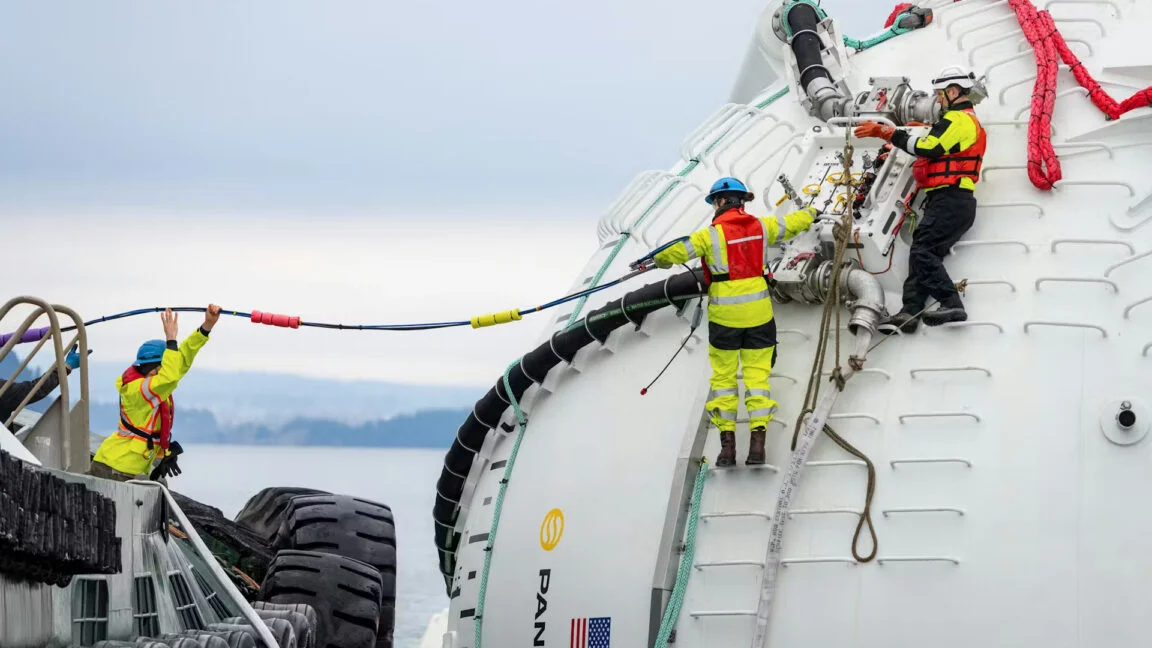
Panthalassa’s core innovation lies in its mobile computing nodes designed to harness wave energy for power. By placing these nodes in the Pacific, the company intends to utilize the consistent motion of the ocean to generate the electricity required for high-density AI workloads. The upcoming 2026 Pacific testing phase will be a critical proof-of-concept for the industry.
This trial aims to demonstrate not only the durability of sensitive hardware in a maritime environment but also the efficiency of decentralized, water-cooled processing. If successful, this ‘ocean-cloud’ could provide a scalable solution for AI giants looking to bypass the grid constraints and real estate costs associated with terrestrial infrastructure. Beyond energy, the logistical benefits are immense: these floating pods can be moved to areas with higher connectivity or more favorable weather conditions, providing a level of physical agility that fixed structures lack.
The Panthalassa vision extends beyond mere power efficiency; it explores the concept of a truly global, decentralized AI infrastructure. These floating nodes can, in theory, be deployed in international waters, potentially creating new frontiers for data residency and regulation. As terrestrial governments tighten their grip on data centers via zoning laws and energy quotas, the ‘high seas’ offer a unique regulatory gray area.
These ‘Compute Havens’ could host models that require massive scale without burdening national power grids or being subject to localized environmental restrictions. However, the engineering challenges remain formidable. Protecting hardware from salt-air corrosion, ensuring high-bandwidth connectivity via satellite constellations like Starlink or Kuiper, and maintaining stability during extreme weather events are all hurdles that the 2026 tests must address.
As the race for AI supremacy continues, the ability to deploy vast amounts of compute power outside the constraints of traditional national grids could become a definitive competitive advantage. Panthalassa is effectively betting that the future of intelligence isn’t rooted in the soil, but floating on the waves, utilizing the 70% of our planet that has remained untapped by the digital revolution. This shift could redefine how we think about ‘cloud’ computing, turning it into a literal, physical presence on the global commons.