🔍 Executive Summary
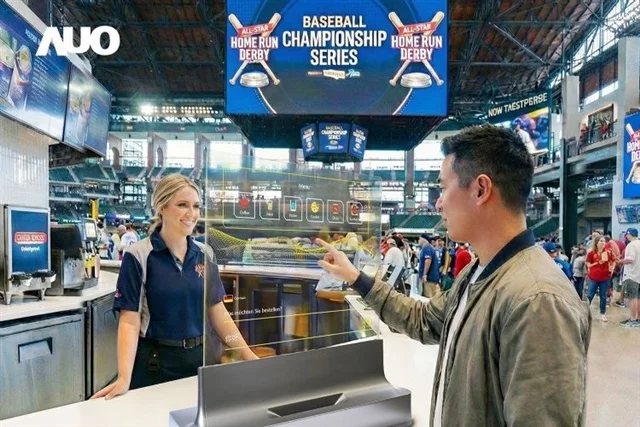
- At SID Display Week 2026, AUO is set to showcase its Micro LED innovation, focusing on transparent, interactive displays that integrate optics and sensing. The company positions Micro LED not merely as a screen but as an interaction platform for AR and smart mobility.
Strategic Deep-Dive
AUO is positioning its Micro LED technology as the cornerstone of a new era in ‘Interactive Optics’ at the SID Display Week 2026. The company’s latest exhibition underscores a strategic move beyond traditional display metrics—such as brightness and contrast—focusing instead on the convergence of Micro LED, advanced packaging, and integrated sensing. By embedding optical sensors directly into the Micro LED backplane, AUO has created a platform where the display serves as both the emitter and the receiver of information.
This ‘In-Cell’ sensing capability allows for a significantly thinner and more responsive interface compared to traditional touch layers. This technology is particularly relevant for the smart mobility sector; transparent Micro LED panels can be integrated into automotive windshields, providing head-up displays (HUD) that respond to eye-tracking and hand gestures without obstructing the driver’s view. The physics of Micro LED—specifically its inorganic nature and high pixel density—enable these displays to function as high-resolution interaction layers that remain visible even in direct sunlight.
For the augmented reality (AR) market, AUO’s focus on ultra-low-power sensing and high-efficiency optics addresses the primary bottlenecks of heat dissipation and battery longevity in smart glasses. By leveraging AI-driven power management, these displays can selectively illuminate pixels and activate sensors based on user proximity, drastically reducing power consumption during idle states. This synthesis suggests a future where the display is the primary sensor-integrated interaction layer for autonomous vehicles and next-generation wearables.
AUO is moving away from the commodity display market, pivoting toward high-value, specialized sectors where the reliability and integrated functionality of Micro LED provide a significant competitive edge over OLED and other incumbent technologies. The transition highlights a broader industry shift: displays are no longer just passive output windows; they are becoming the central nervous system of human-machine interaction.