🔍 Executive Summary
- In a strategic pivot reflecting internal R&D failures, Volkswagen has become the largest stakeholder in Rivian, aiming to integrate the startup's advanced software stack into its legacy fleet.
Strategic Deep-Dive
The Strategic Decoupling from Internal R&D
In a landmark shift for the global automotive hierarchy, Volkswagen has officially emerged as the largest investor in Rivian, surpassing the long-standing position held by Amazon. To understand the gravity of this move, one must look back at the historical context: when Rivian went public in November 2021, Amazon sat on a 20 percent stake, having anchored the startup with a $700 million check in 2019 and a massive order for 100,000 electric delivery vans. At its peak, Amazon saw its investment surge to more than $15 billion.
However, as of May 2026, the strategic rationale has evolved from logistics and retail support to a matter of fundamental industrial survival. Volkswagen is not entering this partnership to buy trucks or utilize Rivian’s assembly lines; it is buying the software infrastructure that its own internal engineering teams, despite billions in investment, failed to build.
Overcoming the Legacy Architecture Bottleneck
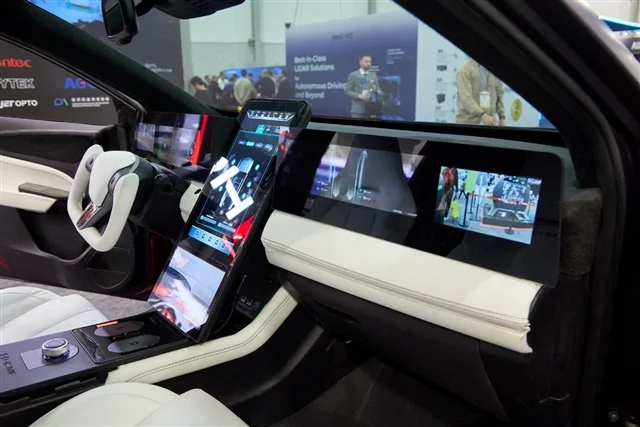
For years, Volkswagen and other legacy OEMs have struggled with the transition to ‘Software-Defined Vehicles’ (SDV). The friction lies in the architectural divide between traditional CAN bus systems—where dozens of disconnected Electronic Control Units (ECUs) govern separate functions—and modern, compute-centric architectures. Volkswagen’s internal software unit, Cariad, became a symbol of ’technical debt,’ unable to reconcile the complexity of legacy hardware with the requirements of a unified digital brain.
Rivian, by contrast, was engineered from the ground up with a centralized, ethernet-based communication stack. By becoming Rivian’s primary investor, Volkswagen is effectively admitting defeat in its internal software development race and opting for a massive injection of external expertise. This is a move toward ‘vertical integration’ via partnership, ensuring that future Volkswagen models are powered by an operating system that can actually compete with Tesla and emerging Chinese rivals.
A New Power Balance in the Mobility Ecosystem
The move signals a permanent change in how automotive value is perceived. The $15 billion valuation benchmark once set by Amazon’s stake in 2021 now serves as a reminder of how high the stakes have become for legacy players. Volkswagen’s decision to outsource its digital soul to a startup marks the end of the era where hardware manufacturing expertise guaranteed market dominance.
As software becomes the primary differentiator in the electric age, the ability to control the code—and the data it generates—outweighs the importance of the chassis it sits on. This alliance between a German manufacturing giant and an American software-first startup creates a new blueprint for the industry: one where legacy scale is traded for digital agility to avoid technological obsolescence.