🔍 Executive Summary
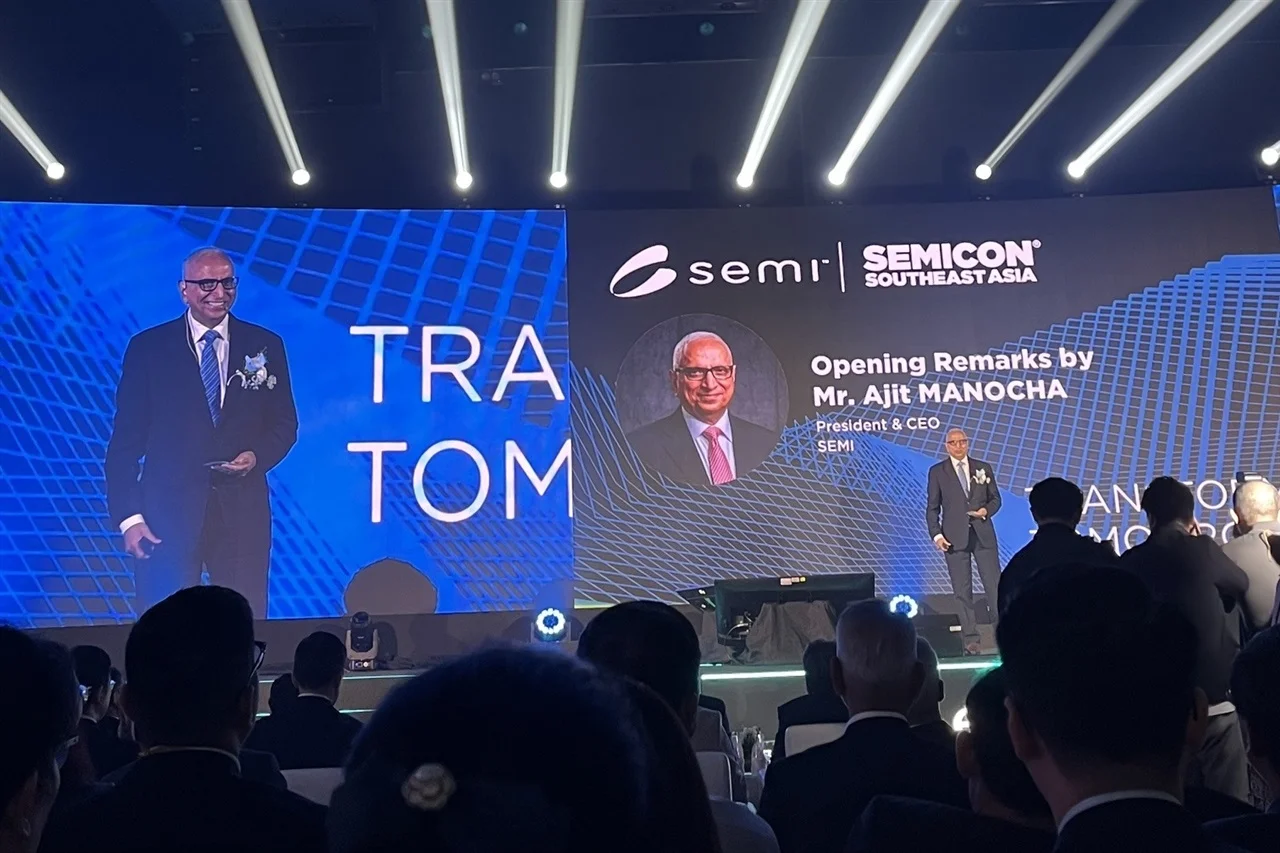
- At SEMICON Southeast Asia 2026, Ajit Manocha, President and CEO of SEMI, redefined the roadmap for regional success. He argued that as the industry embarks on a 'multi-trillion-dollar journey,' the focus must shift from 'ambitious facility construction' to 'coordinated ecosystem development.' This paradigm shift emphasizes the need for synchronized policy, talent, and supply chain synergy over isolated industrial projects.
Strategic Deep-Dive
During his keynote address at SEMICON Southeast Asia 2026, Ajit Manocha, the President and CEO of SEMI, delivered a sophisticated strategic mandate to the region’s policy makers and industry titans. Characterizing the current era as a ‘multi-trillion-dollar journey,’ Manocha emphasized that the semiconductor industry is moving beyond its historical cyclicality into a phase of sustained structural growth. However, he was quick to contrast ‘raw ambition’ with ‘strategic coordination.’ For Southeast Asia to secure its future in this expanding market, the focus must evolve from the singular goal of building fabrication plants (fabs) to the more complex task of architecting holistic industrial ecosystems.
An ecosystem, in the context of advanced electronics manufacturing, is a multifaceted construct. It encompasses not only the physical manufacturing sites but also a robust Tier-2 and Tier-3 supplier base, specialized chemical and gas pipelines, consistent green energy sources, and a steady pipeline of PhD-level engineering talent. Manocha’s thesis is that an isolated fab, regardless of its technological sophistication, cannot survive without a surrounding infrastructure that supports its operational demands.
This reflects a significant paradigm shift in how regional industrial policy should be formulated. Instead of zero-sum competition between neighbors like Malaysia, Vietnam, and Thailand, Manocha advocates for regional synergy. This involves creating a cross-border framework where different nations specialize in various niches of the value chain—such as silicon carbide (SiC) production, advanced interposer technologies, or design services—and interlink them through streamlined logistics and shared regulatory standards.
This approach recognizes that the semiconductor market has transformed into a critical utility for the global digital economy, driven by the insatiable compute requirements of generative AI and edge computing. The challenge for Southeast Asia is to prove that it can offer more than just low-cost labor; it must demonstrate ’ecosystem stability.’ As the industry marches toward a US$2 trillion valuation, the regions that will thrive are those that have replaced fragmented industrial projects with integrated, long-term strategic plans. Manocha’s vision highlights that the true currency of the future chip market is not just silicon, but the coordination of resources, people, and policy.
Success in the ‘multi-trillion-dollar journey’ will be measured by the depth of a region’s industrial integration, making the role of organizations like SEMI crucial in bridging the gap between national interests and global supply chain imperatives.