🔍 Executive Summary
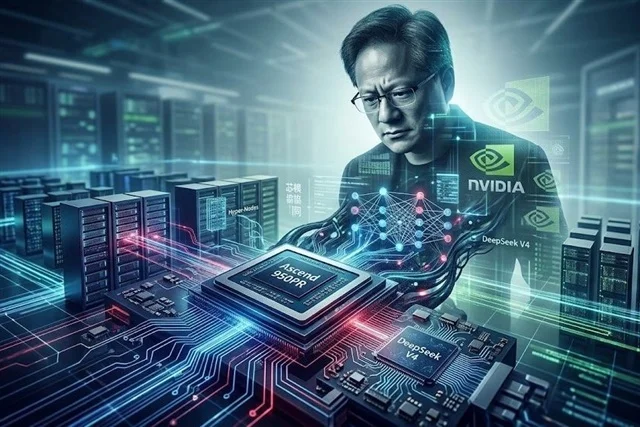
- Huawei is bracing for a massive $12 billion in AI chip revenue this year, fueled by a 60% YoY growth from domestic tech giants. As Alibaba, ByteDance, and Tencent shift orders away from Western suppliers, Nvidia’s market share in China is reportedly cratering.
Strategic Deep-Dive
The Chinese AI hardware landscape is witnessing a seismic shift as Huawei projects a staggering $12 billion in AI chip revenue for the current fiscal year. This 60% year-over-year surge is fueled by massive procurement orders from domestic titans including Alibaba, ByteDance, and Tencent. These firms, facing the reality of tightening U.S.
export controls on Nvidia’s high-end GPUs, are pivoting aggressively toward Huawei’s Ascend 910B/C series to sustain their Large Language Model (LLM) training and inference requirements. The resulting impact on Nvidia has been catastrophic in the region, with its market share described as ‘cratering’ as local enterprises choose long-term stability and political alignment over the cut-down versions of Western silicon. However, this growth trajectory is not without technical hurdles.
The long-term sustainability of Huawei’s dominance is currently tethered to the production yields of domestic fabs like SMIC. Operating under severe lithography constraints, these fabs face significant bottlenecks in the 7nm and 5nm nodes. Yet, Huawei is mitigating these hardware limitations by building a robust, self-sustaining software ecosystem, such as the CANN (Compute Architecture for Neural Networks) stack, which competes directly with Nvidia’s CUDA.
This strategic decoupling is creating a ‘Sovereign AI’ stack that bypasses traditional Western supply chains entirely. Looking forward, the 60% growth rate suggests that if Huawei can stabilize its supply chain and improve yields, it will likely monopolize the domestic Chinese AI market by 2027. This permanent displacement of Western hardware means that even if sanctions were lifted, the high cost of migrating back to CUDA-based systems would prevent Nvidia from ever regaining its former dominance.
Huawei’s success is a blueprint for how a sanctioned entity can leverage a captive domestic market to build a vertically integrated technological fortress, effectively bifurcating the global AI industry into two distinct and incompatible hemispheres.