🔍 Executive Summary
- Samsung Electronics has achieved a historic $1 trillion market capitalization, driven by a relentless AI memory supercycle that has propelled the KOSPI index to a record-breaking 7,000 points. This surge reflects a fundamental re-rating of Korean semiconductor giants.
Strategic Deep-Dive
The global semiconductor landscape is undergoing a profound structural shift, as evidenced by Samsung Electronics officially crossing the $1 trillion market capitalization threshold. This milestone, achieved on May 6, 2026, places Samsung in the elite league alongside TSMC, validating the ‘AI-first’ strategy that has seen its stock price quadruple in a single year. The technical catalyst for this unprecedented growth is the AI memory supercycle, which has decoupled semiconductor valuations from traditional consumer electronics cycles.
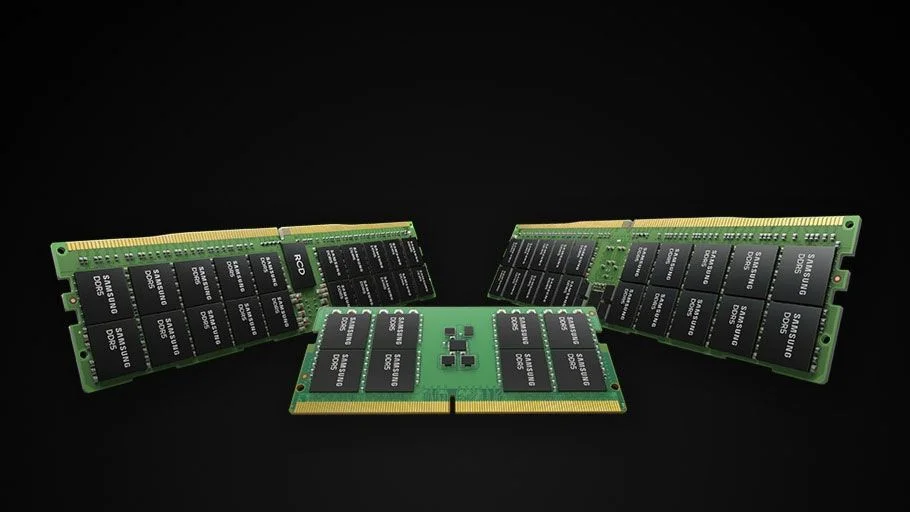
As Large Language Models (LLMs) and specialized AI workloads demand exponential increases in memory bandwidth, Samsung’s high-bandwidth memory (HBM) solutions—specifically its HBM3e and emerging HBM4 protocols—have become the literal backbone of global compute clusters. This rally has fundamentally transformed the South Korean equity market. The KOSPI index has breached the 7,000-point mark for the first time in history, a feat driven almost entirely by the semiconductor sector.
Remarkably, Samsung and its domestic peer now account for a combined 42% of the KOSPI’s total market capitalization. From the perspective of a data systems architect, this concentration is a direct reflection of the physical necessity of memory in the AI era; without the massive throughput and reduced latency offered by Samsung’s stack-die technology, the current generation of GPU clusters would face severe thermal and performance bottlenecks. Samsung’s internal forecasts provide a bullish outlook, asserting that the supercycle has not yet peaked.
This assessment is rooted in the transition to 16-high HBM stacks and the integration of logic layers within the memory architecture to facilitate near-memory processing. The market is effectively valuing Samsung not as a hardware vendor, but as a critical infrastructure partner for the sovereign AI movement. However, this 42% index concentration introduces a unique systemic profile.
While the upside is tethered to the infinite demand for AI training and inference capacity, the Korean market’s vulnerability to a specialized ‘sector shock’ has never been higher. As long as hyperscalers continue their capital expenditure expansion for AI data centers, Samsung’s dominance in high-density enterprise SSDs and advanced HBM will likely maintain this $1 trillion valuation. The technical moat established through vertical integration—from silicon fabrication to advanced packaging—positions Samsung as the indispensable gatekeeper of the next decade’s computing infrastructure.