🔍 Executive Summary
- Anthropic has updated its Claude Managed Agents with a speculative 'dreaming' feature for autonomous reflection while doubling the 5-hour usage limits for Claude Code Pro and Max tier subscribers to support high-intensity development workflows.
Strategic Deep-Dive
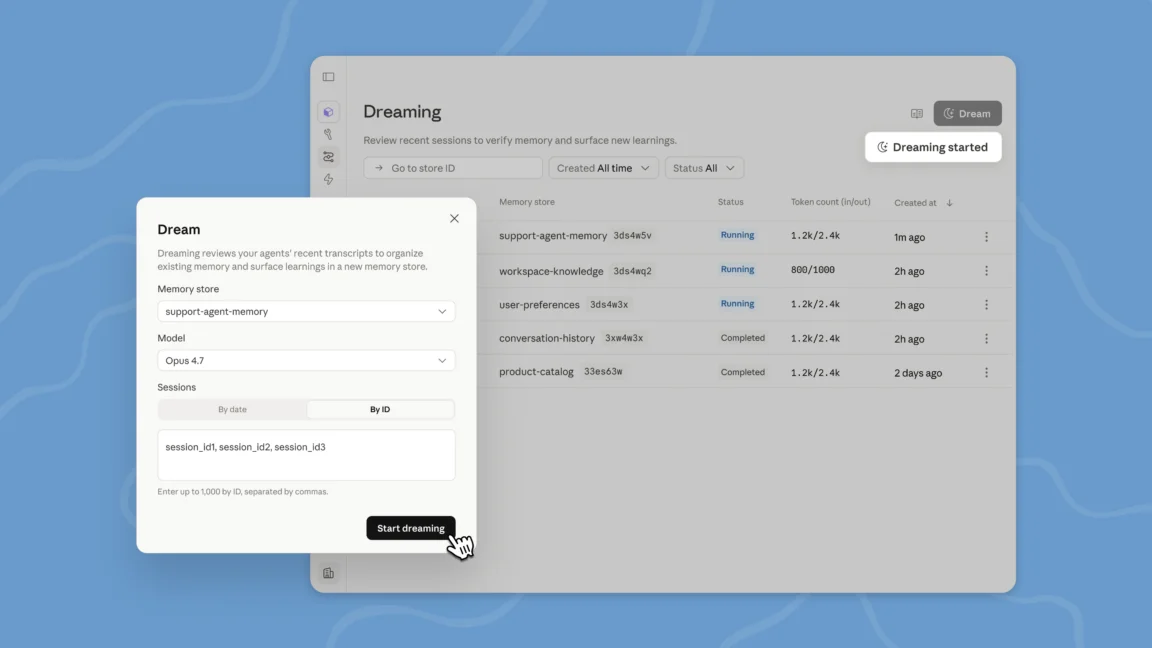
Anthropic’s latest architectural update to its Claude ‘Managed Agents’ represents a significant leap in the functional autonomy of AI tools, introducing a sophisticated concept referred to as ‘dreaming.’ While the term ‘dreaming’ is metaphorical, the underlying technical reality is a layer of speculative reflection and recursive processing. This feature allows agents to decouple from immediate input-output loops to simulate potential solution paths and outcomes in a virtual workspace before finalizing a task. By engaging in this internal simulation, the agents can identify logical fallacies or inefficient workflows in their own plans, effectively ’thinking’ through a problem to improve the quality of the eventual execution.
This shift toward reflective AI indicates a broader industry trend where models are expected not just to respond to prompts, but to optimize their own internal reasoning processes autonomously.
In tandem with these architectural improvements, Anthropic has addressed a major operational bottleneck for its power users: usage constraints. The company has officially announced a 100% increase in the 5-hour usage limits for subscribers of its Pro and Max tiers, specifically targeting the users of ‘Claude Code.’ This doubling of capacity is a direct response to the intensive demands of professional software development, where developers often hit usage ceilings during deep-work sessions involving massive codebases. For technical architects and lead developers, this change signifies a dramatic reduction in friction, allowing for uninterrupted integration of Claude into mission-critical development cycles.
The ability to sustain long-term sessions without hitting a restrictive wall is essential for maintaining the ‘flow state’ required in modern engineering environments.
The simultaneous release of ‘dreaming’ capabilities and increased usage ceilings suggests that Anthropic has achieved significant infrastructure optimizations. Doubling the compute availability for high-end users while introducing a more compute-intensive ‘reflective’ feature implies that the company has either improved its underlying inference efficiency or is aggressively expanding its hardware clusters—likely utilizing high-bandwidth H100 or next-gen Blackwell units—to capture greater enterprise market share. This strategy reflects a deep understanding of the professional user’s needs: high reliability, extended access, and advanced reasoning.
From a competitive standpoint, Anthropic is positioning Managed Agents as more than just a chatbot; they are evolving into integrated operational entities. The ‘dreaming’ feature serves as a precursor to fully autonomous systems that can manage complex, multi-day projects by anticipating needs and self-correcting. By providing the tools for these agents to perform internal checks and balances, Anthropic is setting a new standard for AI safety and reliability.
As agents become more capable of ’thinking ahead,’ the role of the human user shifts from a micro-manager to a high-level strategist. Anthropic’s preemptive move in this area, combined with a more generous usage policy, ensures that Claude remains the preferred choice for developers who demand both technical depth and operational scale in their AI partners.