🔍 Executive Summary
- In a strategic move highlighting the shift in global tech infrastructure, UAE-based G42's subsidiary Core42 has secured a 20MW lease in a converted Minneapolis office building, signaling the aggressive expansion of Middle Eastern AI capital into the US heartland for high-capacity AI processing.
Strategic Deep-Dive
The global landscape of technology infrastructure is undergoing a profound and somewhat paradoxical transformation, as evidenced by G42’s recent maneuvers in the United States. In the heart of downtown Minneapolis, the building located at 1001 Third Avenue South—once a conventional corporate office space—has been strategically repurposed into a high-capacity data center. The anchor tenant for this facility is not a household name from Silicon Valley, but rather Core42, the cloud and AI infrastructure subsidiary of Abu Dhabi’s G42 Group.
This move involves a substantial 20-megawatt (MW) lease, serving as a powerful symbol of the current shift in both commercial real estate and the geopolitical distribution of AI infrastructure power.
From a Lead Data Architect’s perspective, this conversion represents a monumental technical pivot. Retrofitting a Tier II office building for Tier III or IV data center operations is no small feat. Traditional office spaces are typically designed for human-centric occupancy, with floor loads and cooling systems optimized for desks and air conditioning.
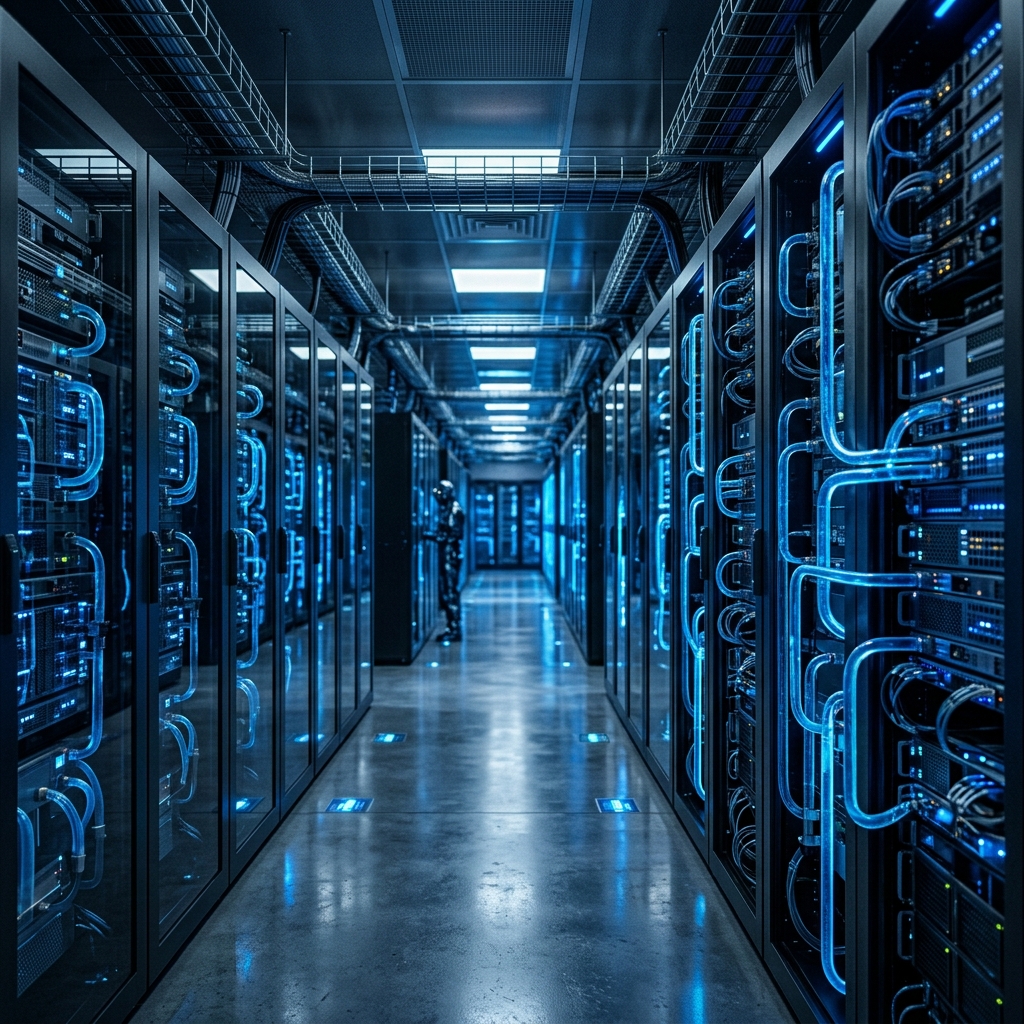
In contrast, modern AI workloads, particularly those utilizing NVIDIA’s Blackwell or H100 clusters, require staggering power densities and advanced liquid cooling solutions. The 20MW capacity secured by Core42 suggests a dense architectural deployment capable of handling massive LLM inference or training tasks. Minneapolis, while not a primary tech hub like Northern Virginia, offers a unique advantage: a reliable power grid and a climate that allows for ‘free cooling’ during significant portions of the year, reducing the Power Usage Effectiveness (PUE) ratio—a critical metric for sustainability-conscious firms like G42.
Analyzing the geopolitical implications, G42’s aggressive anchoring in the US heartland reflects a broader strategy by Abu Dhabi to become a global leader in artificial intelligence. By securing physical assets within the United States, G42 is not just providing cloud services; it is building a strategic bridge between Middle Eastern capital and Western technological requirements. This expansion into secondary US markets suggests that specialized AI infrastructure providers are finding opportunities in areas where traditional hyperscalers might face bureaucratic or electrical grid bottlenecks.
The irony noted by industry observers—that an Abu Dhabi firm is revitalizing a US office building to house high-end AI chips—underscores the paradoxical nature of modern tech supremacy.
Furthermore, this move signals a tactical shift from ‘hyperscaler dominance’ to ‘specialized infrastructure control.’ As the demand for 20MW+ facilities grows, we can expect more sovereign wealth-backed players to emerge, utilizing vast capital to capture the physical foundations of the AI economy. These entities are often more agile in identifying and converting unconventional real estate to meet the immediate demands of the AI sector. This Minneapolis deal is likely just the beginning of a larger trend where the physical location of data processing becomes increasingly decoupled from the traditional headquarters of the firms managing that data, leading to a truly globalized and decentralized AI architecture.
This shift forces US policymakers to reckon with the reality that the physical hardware of the future ‘American AI’ may be owned and operated by foreign strategic partners.