🔍 Executive Summary
- The DOJ has indicted former Supermicro employees for allegedly smuggling restricted Nvidia-powered AI servers to China via complex transshipment networks.
- The $2.5 billion smuggling operation highlights a massive failure in internal controls during a year when revenue is projected to hit $40 billion.
- The case raises critical questions about global hardware supply chain compliance and the company's long-term relationship with key vendors like Nvidia.
Strategic Deep-Dive
The striking contrast between Supermicro’s record-breaking financial trajectory and its deepening legal quagmire has become the defining narrative of the fiscal 2026 AI hardware market. While the company is on a trajectory to surpass $40 billion in annual revenue—a feat that solidifies its role as the premier integrator of AI infrastructure—the shadow of a $2.5 billion smuggling indictment cast by the Department of Justice (DOJ) has introduced a level of systemic risk that no margin recovery can mask. CEO Charles Liang was forced to confront this reality head-on, addressing allegations that former employees orchestrated a sophisticated illicit trade network to bypass US export controls.
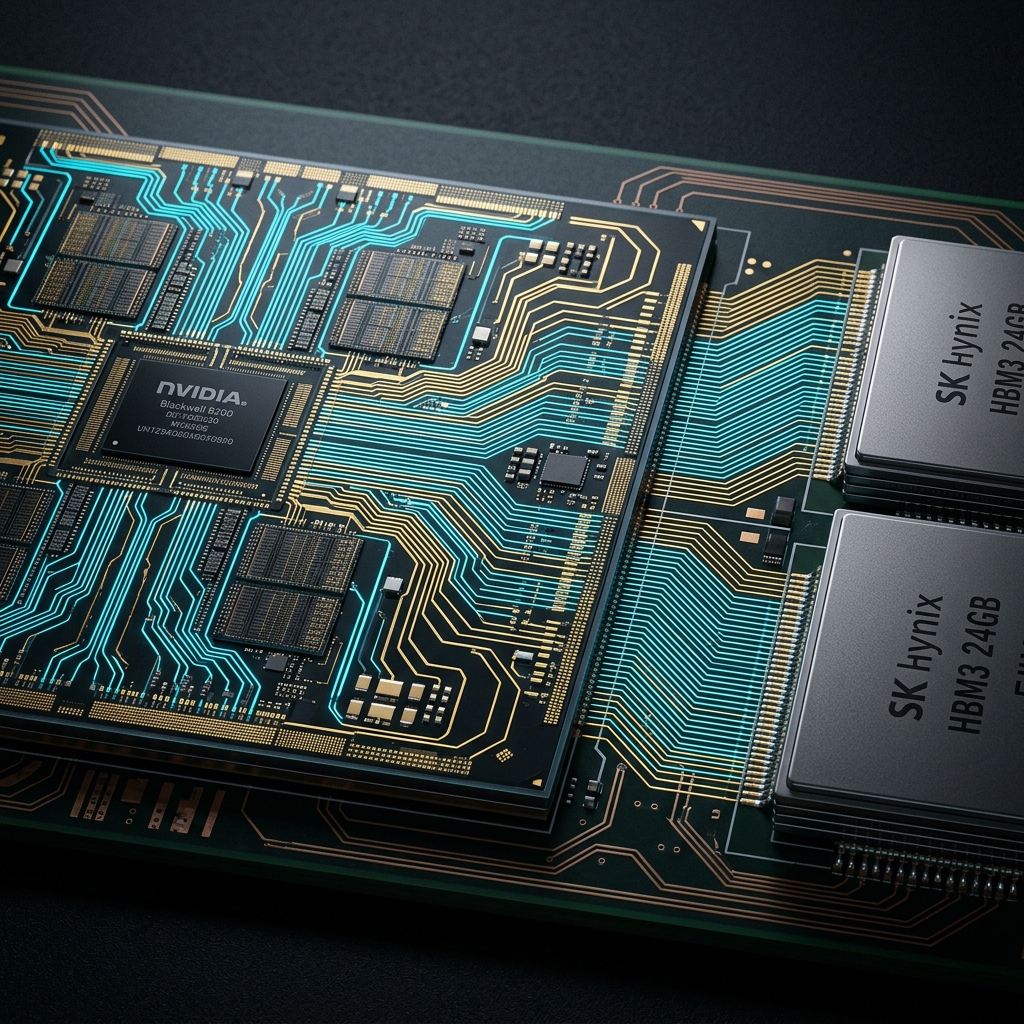
The scheme reportedly involved the diversion of high-end AI servers, powered by restricted Nvidia H-series and B-series GPUs, to China. This was not a simple border-crossing operation; it utilized intricate ’transshipment networks’ across Southeast Asia, leveraging regional trade hubs as black boxes to obscure the final destination of critical high-tech assets. For a company of Supermicro’s scale, the failure to monitor $2.5 billion in inventory—nearly 6% of its projected annual revenue—suggests a profound breakdown in internal controls and Information Architecture.
This is a hard-hitting investigative moment for the industry: it raises the question of whether the company’s explosive growth was facilitated by a ‘don’t ask, don’t tell’ culture regarding the end-users of its products. The implications are potentially catastrophic. If the DOJ investigation finds evidence of systemic negligence or institutional complicity, Supermicro faces repercussions that extend far beyond monetary fines.
The company’s entire business model depends on early and preferential access to Nvidia’s silicon. Should Nvidia or the US government deem Supermicro a liability to national security or a weak link in the strategic supply chain, that access could be throttled or revoked entirely. Furthermore, this case serves as a ‘whack-a-mole’ warning to the broader semiconductor ecosystem.
It illustrates that as the US tightens the noose on advanced AI exports to China, the incentives for high-margin illicit trade become irresistible for rogue actors within the supply chain. For Supermicro, the friction between its $40 billion milestone and this $2.5 billion scandal underscores a fundamental truth in the modern geopolitical era: regulatory integrity is now a core component of enterprise value. Moving forward, the market will not just be grading Supermicro on its thermal engineering or rack-scale integration, but on its ability to implement rigorous ‘know-your-customer’ (KYC) protocols and real-time asset tracking.
In the current climate, a single breach in compliance is a single point of failure for the entire corporate entity. The DOJ’s scrutiny represents a watershed moment for AI hardware compliance, signaling that the era of unmonitored global distribution is over.