🔍 Executive Summary
- In a landmark infrastructure deal, SpaceX has rented out access to its massive supercomputing facility to AI rival Anthropic. The deal includes access to over 220,000 Nvidia GPUs and a 300-megawatt power capacity, highlighting the strategic convergence between aerospace infrastructure and advanced AI training, with future sights set on orbital computing.
Strategic Deep-Dive
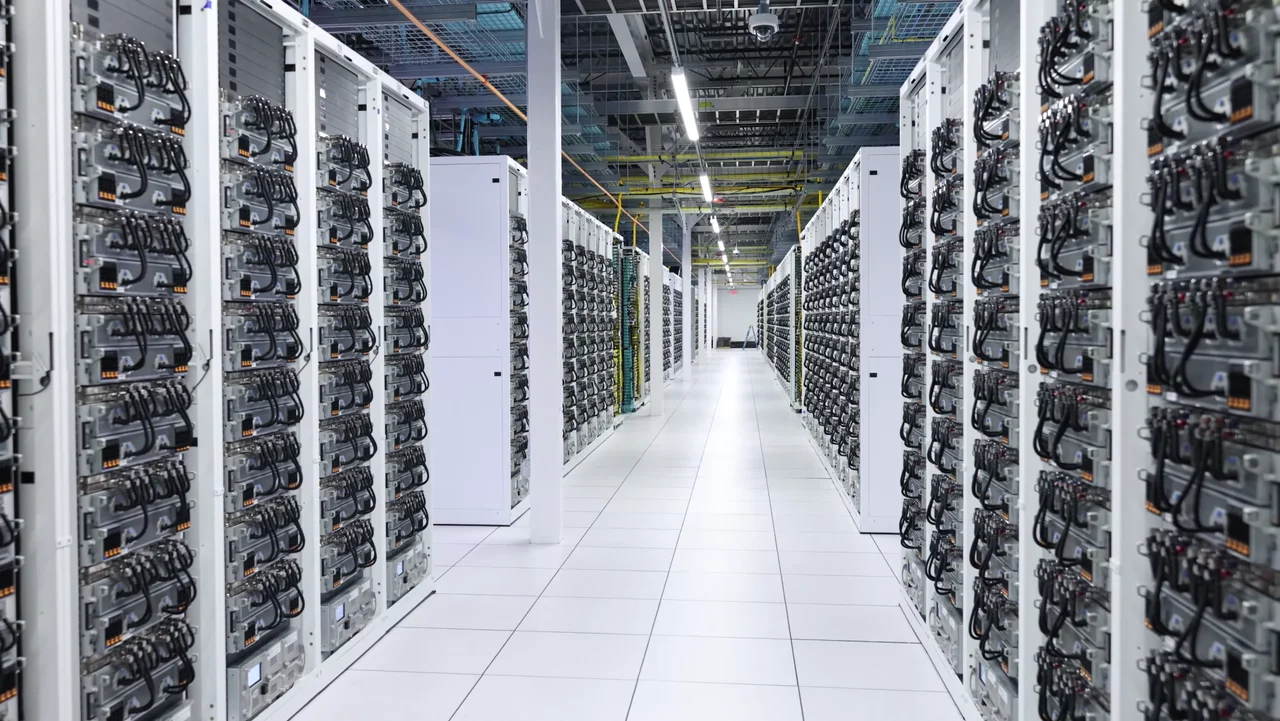
SpaceX has entered into a monumental infrastructure partnership with Anthropic, signaling a strategic pivot in the global AI race where access to raw power and silicon has become the ultimate currency. Under the terms of the agreement, Anthropic will gain exclusive rental access to a SpaceX-managed supercomputing facility that boasts a staggering 300-megawatt power capacity. To put this in perspective, this is enough energy to power a mid-sized city, all dedicated to the training of next-generation large language models.
The hardware backbone is equally impressive, featuring over 220,000 Nvidia GPUs networked in a high-bandwidth fabric. Elon Musk’s public endorsement of the deal—stating that Anthropic did not set off his ’evil detector’—highlights a pragmatic approach to infrastructure monetization, even when dealing with direct rivals to his own AI ventures.
The logistics of managing a 300MW facility are unprecedented. Thermal management alone for 220,000 GPUs requires specialized cooling architectures that most traditional data center providers cannot support. SpaceX, leveraging its experience in high-performance aerospace engineering, has built a facility that can handle the extreme power densities required for state-of-the-art AI training.
However, the most forward-looking aspect of this deal is the joint exploration into ‘Orbital Data Centers.’ Anthropic has expressed significant interest in the technical advantages of hosting compute resources in space. In the vacuum of space, the absence of an atmosphere allows for unique radiant cooling strategies, and the proximity to unfiltered solar energy provides a virtually limitless power source that is free from the carbon constraints and grid limitations of Earth.
By utilizing SpaceX’s Starship for heavy-lift deployment and the Starlink constellation for low-latency global connectivity, the two companies are laying the groundwork for an orbital compute network. This could solve the escalating energy crisis facing terrestrial AI development, where data centers are increasingly competing with residential and industrial sectors for electricity. Furthermore, orbital centers would be immune to many terrestrial geopolitical risks and natural disasters.
This partnership marks the transition of the AI industry from a software-centric field to one defined by massive, high-stakes infrastructure logistics. The sheer scale of 220,000 GPUs being leased to a single partner underscores that the future of artificial intelligence is no longer just about who has the best algorithm, but who has the physical capacity to run it at a planetary—and now, an orbital—scale. SpaceX is positioning itself as the landlord of the AI era, providing the essential ‘soil’ in which the world’s most powerful digital minds will grow.