🔍 Executive Summary
- Luxshare and Flex are leading a strategic pivot from consumer electronics to AI infrastructure, driven by annual hyperscaler capital expenditures exceeding US$800 billion focused on AI servers, cooling systems, and high-speed interconnects.
Strategic Deep-Dive
The global landscape of Electronic Manufacturing Services (EMS) and Original Design Manufacturing (ODM) is undergoing a profound and permanent structural transformation, catalyzed by the explosive growth of generative artificial intelligence. As hyperscalers—the dominant titans of cloud and internet services—accelerate their annual capital expenditures to a staggering threshold exceeding US$800 billion, the strategic focus of the entire electronics supply chain is shifting decisively from consumer-centric hardware toward specialized AI infrastructure. This transition is not merely a lateral move in market segment; it represents a fundamental evolution in engineering complexity and margin profiles.
Historically, the EMS sector was defined by its reliance on the high-volume, low-margin assembly of smartphones and consumer electronics. However, the current pivot is exemplified by the tactical maneuvers of industry leaders like Luxshare and Flex. Luxshare, which has long been a linchpin in the smartphone supply chain, is aggressively redirecting its research and development resources toward AI infrastructure opportunities to mitigate its exposure to the maturing consumer market.
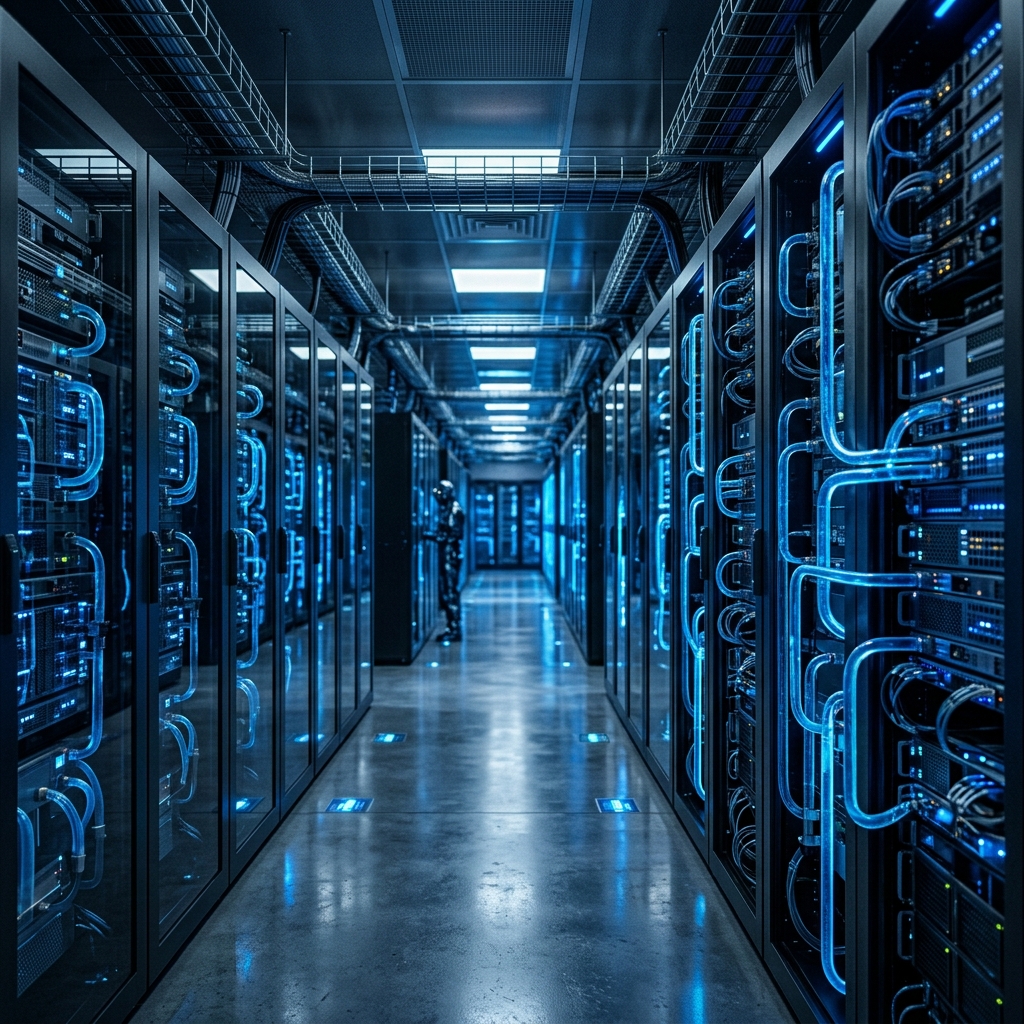
Simultaneously, U.S.-based Flex is undergoing a rigorous internal restructuring, centering its future growth strategy on data center power delivery systems and thermal management architectures. This systemic realignment is necessitated by the specific, extreme technological demands of AI workloads. Unlike consumer devices, AI servers require sophisticated power density management and advanced cooling solutions, such as liquid-to-chip and immersion cooling, to maintain operational stability under massive computational loads.
Furthermore, the integration of high-speed interconnect technologies—essential for reducing latency across vast clusters of GPUs—has become a non-negotiable requirement. For EMS providers, this shift means moving away from the ‘box-moving’ business model toward becoming integrated technology partners. The US$800 billion capex cycle is creating a new hierarchy where technical moats are built on the ability to solve the complex heat and power bottlenecks inherent in AI clusters.
This ‘decoupling’ from traditional consumer electronics cycles provides a more stable, long-term revenue stream, but it also increases the dependency on a concentrated group of high-spending hyperscalers. Consequently, the industry is witnessing a polarization: firms that can deliver high-level system integration, specialized thermal engineering, and high-speed signal integrity are securing massive contracts, while those stuck in legacy assembly models face diminishing relevance. As AI processing demands continue to scale exponentially, the ability to deliver these integrated, high-efficiency server architectures will be the primary differentiator in the global manufacturing sector for the next decade.