🔍 Executive Summary
- Anthropic has reached a landmark $30 billion revenue run rate, fueling its transition into a massive infrastructure-heavy AI power player.
- The company is committing to an unprecedented 3.5GW power target using Google’s custom TPU clusters, equivalent to the output of multiple nuclear reactors.
- Silicon giant Broadcom, while benefiting from the order volume, has labeled Anthropic a 'high-risk' partner due to the startup's aggressive capital burn and potential grid stability challenges.
Strategic Deep-Dive
The narrative of the AI revolution is shifting from the elegance of neural networks to the brutal physics of power consumption and silicon yields. Anthropic’s revelation of a $30 billion revenue run rate is a staggering milestone, but the true significance lies in its massive infrastructure commitment: a 3.5-gigawatt (GW) power target leveraging Google’s Tensor Processing Units (TPUs). To put 3.5GW into perspective, this capacity is equivalent to the output of approximately three to four large-scale nuclear reactors, enough to power a major metropolitan area.
This shift toward hyper-scale power demands signifies that AI supremacy is now a game of ‘power and silicon’ dominance. For Anthropic, securing this much energy is a prerequisite for training the next generation of foundation models, where the scaling laws dictate that more compute and more power lead to exponentially more capable intelligence.
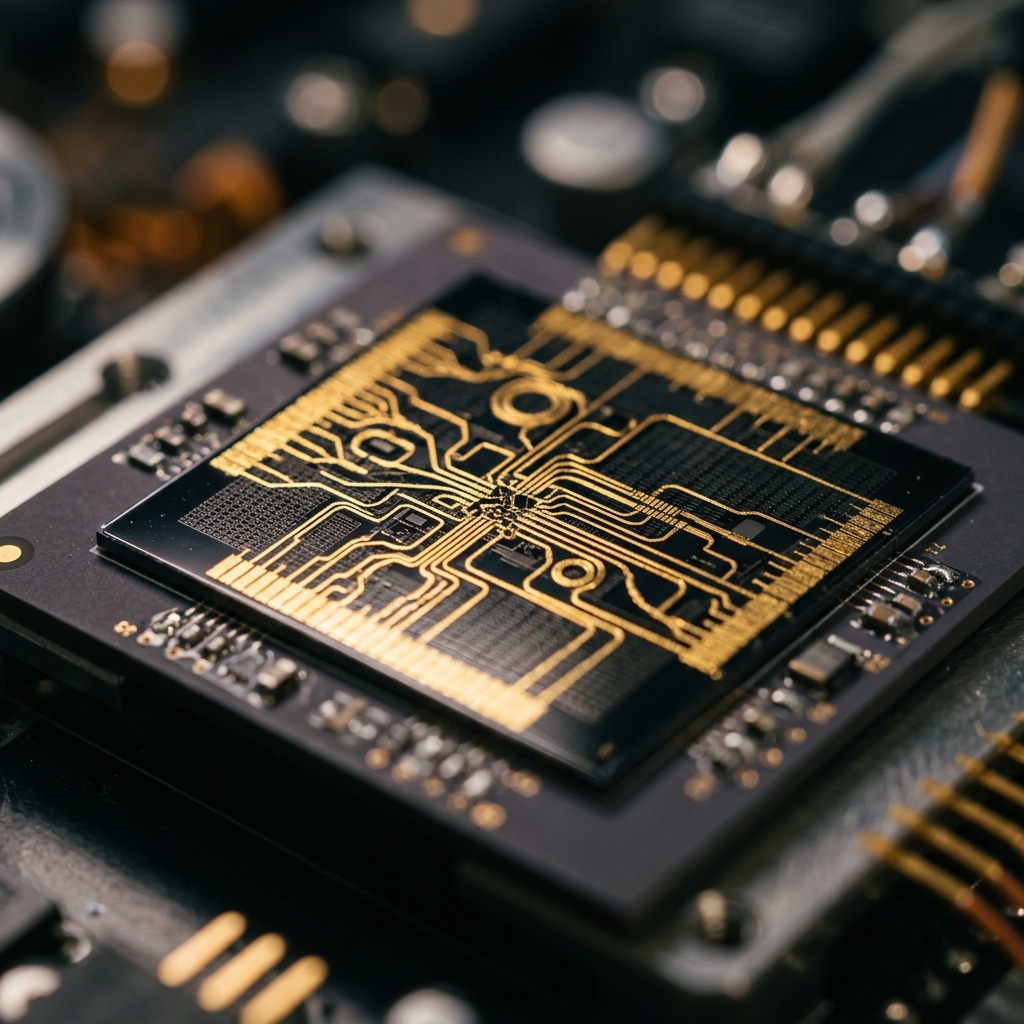
At the center of this technological push is Broadcom, the silent giant behind Google’s custom AI silicon. While Broadcom is ‘chuffed’ with the massive order volumes generated by Anthropic’s growth, its internal risk assessment tells a more cautious story. Broadcom analysts view Anthropic as a high-risk partner, primarily due to the volatility of the startup ecosystem and the extreme capital intensity required to sustain such growth.
Despite the $30bn run rate, the capital expenditure (CAPEX) required to build and maintain a 3.5GW infrastructure footprint is immense. Silicon providers like Broadcom are wary of becoming over-exposed to a single high-burn partner that could face financial instability if investor sentiment shifts or if the revenue growth fails to outpace the escalating energy costs. This tension underscores a fundamental risk in the modern AI industry: the reliance on a few hyper-growth entities to fund the massive development costs of next-generation silicon.
Beyond financial risks, the 3.5GW target introduces unprecedented challenges for grid stability and geopolitical energy security. Data centers with this level of power density require a complete rethink of energy procurement and cooling infrastructure. Standard air cooling is insufficient for the heat generated at this scale, necessitating a transition to advanced liquid cooling and potentially direct-to-chip thermal management systems.
Furthermore, such a concentrated demand for power can strain local utility grids, leading to regulatory friction and environmental scrutiny. Anthropic’s strategy highlights a new era of ‘Infrastructure Geopolitics,’ where the ability of a tech company to negotiate energy deals with national grids is as critical as its ability to write code. As the AI sector scales toward these nuclear-level power demands, the competitive advantage will likely shift to those who can not only design the best models but also manage the most resilient and high-density energy pipelines.
Anthropic’s gamble is clear: the future of AI belongs to the organization that can burn the most power the most efficiently.