🔍 Executive Summary
- Nvidia is pivoting to silicon photonics as copper interconnects reach their physical limit due to skin effect and signal degradation at 224Gbps frequencies.
- The shift to optical interconnects enables a unified, disaggregated compute fabric, allowing thousands of GPUs to function as a single, coherent silicon entity.
- By leveraging photonics, Nvidia aims to overcome the signal-to-noise ratio (SNR) bottlenecks and crosstalk that currently constrain the scale of AI supercomputers.
Strategic Deep-Dive
The ‘Quest for Scale’ in AI infrastructure has encountered a formidable adversary in the form of fundamental physics. As we move toward 224Gbps and 448Gbps signaling rates, traditional copper interconnects are failing to maintain signal integrity over distances longer than a few centimeters. This is due to the ‘Skin Effect,’ where high-frequency electrons migrate to the surface of the conductor, increasing resistance and generating parasitic heat.
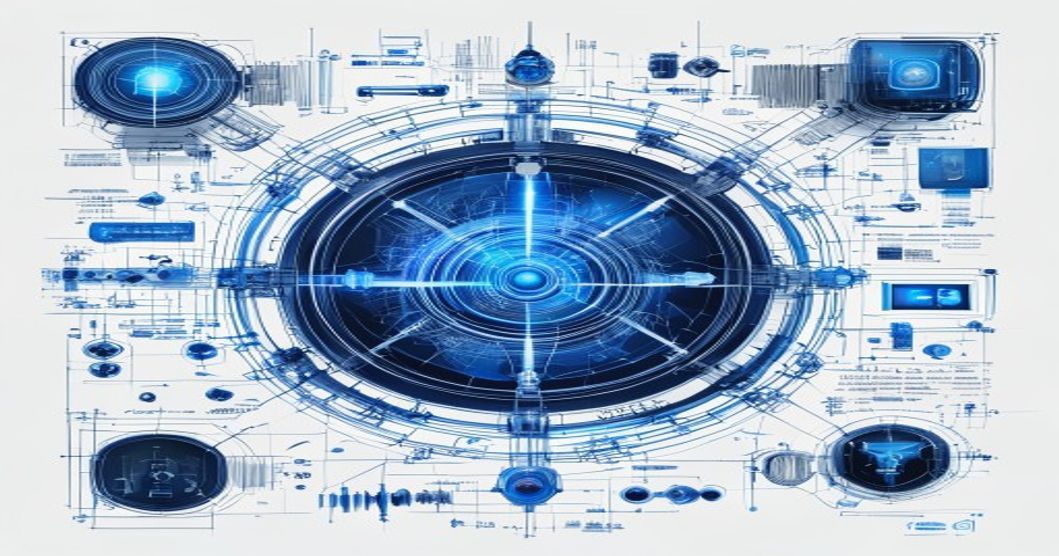
For a company like Nvidia, which aims to cluster tens of thousands of GPUs into a single AI supercomputer, copper has become a technical bottleneck that threatens to halt progress. The transition to silicon photonics—integrating optical engines directly onto the GPU package—was not just a strategic choice; it was an inevitability dictated by the laws of electromagnetics.
Silicon photonics utilizes light instead of electrons to transport data, offering a transformative leap in Signal-to-Noise Ratio (SNR) and a dramatic reduction in latency. By embracing an ‘Optical Scale-up’ strategy, Nvidia is moving toward a disaggregated architecture. In traditional data centers, compute and memory are tightly coupled within a server chassis due to the distance limitations of copper.
With optical interconnects, the physical constraints vanish. This allows for a ‘Disaggregated Optical Fabric’ where memory pools and GPU clusters can be located in separate racks or even separate rooms, yet communicate as if they were sitting on the same die. This architecture enables a level of resource orchestration previously impossible, allowing the infrastructure to dynamically reconfigure itself based on the specific demands of a training or inference workload.
It effectively turns the entire data center into a unified, massive compute fabric.
Furthermore, the shift to photonics addresses the escalating power crisis in data centers. Moving data via light consumes significantly less energy per bit than pushing electrons through high-resistance copper. This efficiency is critical for maintaining a manageable Thermal Design Power (TDP) for the entire cluster.
Beyond the energy gains, the elimination of electromagnetic interference (EMI) and crosstalk—the bane of high-speed copper design—allows for denser interconnect layouts. Nvidia’s mastery of these optical interconnects creates a massive competitive moat; the precision required to align laser sources with silicon-based waveguides is an order of magnitude higher than traditional PCB assembly. As the industry approaches the post-copper era, the winners will be defined by their ability to weave a web of light across their silicon estates.
The move to optical scale-up represents the final evolution of the data center from a collection of interconnected servers into a singular, cohesive optical compute engine.