🔍 Executive Summary
- Elon Musk is directing a massive US$119 billion investment into a Texas-based 'Terafab,' positioning SpaceX as a vertically integrated AI powerhouse. This strategic move aims to achieve total independence in semiconductor design and manufacturing, potentially disrupting the global foundry ecosystem and securing Musk's AI supply chain against external shocks.
Strategic Deep-Dive
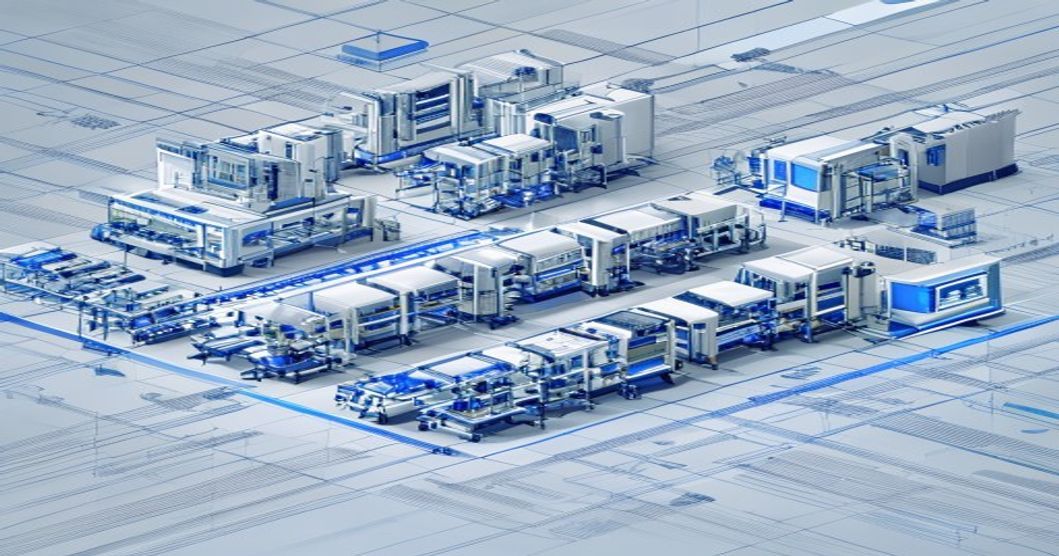
Elon Musk is orchestrating a seismic shift in the global technology landscape, moving to consolidate SpaceX’s position as a vertically integrated AI infrastructure titan. At the heart of this ambition is a US$119 billion investment in the Texas ‘Terafab,’ a facility designed to transcend the limitations of current semiconductor manufacturing. This is not just a capital expenditure; it is a declaration of ‘hard-tech’ sovereignty.
By integrating semiconductor design, wafer fabrication, AI model training, and advanced robotics under one roof, Musk is attempting to bypass the vulnerabilities of the global supply chain and the perceived bottlenecks of the current foundry model dominated by TSMC.
The strategic rationale for the Terafab is rooted in the concept of application-specific vertical integration. While generic AI accelerators are powerful, Musk’s diverse portfolio—ranging from Tesla’s FSD (Full Self-Driving) to xAI’s LLMs and SpaceX’s orbital telemetry systems—demands silicon that is precisely tuned to specific algorithms. By manufacturing its own chips in the Terafab, SpaceX can achieve performance-per-watt efficiencies that are unattainable through off-the-shelf hardware.
Furthermore, this move addresses the geopolitical risk of relying on East Asian manufacturing hubs. The Terafab represents a massive reshoring effort that aligns with U.S. national interests, positioning Texas as the new epicenter of high-tech manufacturing and reducing the influence of traditional semiconductor powerhouses.
From an investigative standpoint, the Terafab poses a direct threat to the established order of the semiconductor industry. If SpaceX successfully applies its aerospace-grade automation and rapid prototyping methodology to chip fabrication, it could significantly shorten the design-to-production cycle, which currently takes years. Moreover, the synergy between the Terafab’s compute power and the Starlink satellite constellation creates a global, decentralized AI network that no other entity can replicate.
The US$119 billion price tag, while staggering, reflects the cost of total independence. As SpaceX moves toward 2026 and beyond, the success of the Terafab will be the ultimate test of whether a single private entity can own the entire stack of human intelligence, from the silicon wafers on the ground to the satellites in the stars. This venture marks the end of the era of specialization and the dawn of a new age of the integrated AI megacorp.