🔍 Executive Summary
- Nvidia is implementing a radical shift in the cooling architecture for its upcoming Vera Rubin platform, signaling a new era in thermal management.
- The reported architectural changes have already triggered significant volatility in the Taiwan equity market among key hardware suppliers.
- Thermal design is becoming a primary differentiator in AI server performance, with the Vera Rubin platform sitting at the center of this high-stakes evolution.
Strategic Deep-Dive
The semiconductor industry is currently transfixed by Nvidia’s strategic maneuvers regarding its next-generation Vera Rubin platform. As AI models grow in complexity and scale, the underlying hardware must process increasingly dense workloads, leading to unprecedented thermal output that traditional air-cooling methods are no longer equipped to handle. Nvidia’s reported pivot in cooling architecture for the Vera Rubin series represents a critical juncture in AI server design, moving toward a unified liquid-cooling standard that integrates more deeply with the rack-level infrastructure.
This shift is not merely a minor update but a fundamental reimagining of how heat is dissipated in high-density computing environments where TDP (Thermal Design Power) per chip is expected to exceed 1,000 watts. The implications for the global supply chain are profound and immediate. In the Taiwan equity market, investors are closely monitoring every detail of this transition, as the fortunes of major cooling solution providers like Auras Technology and Cooler Master are now inextricably linked to Nvidia’s architectural choices.
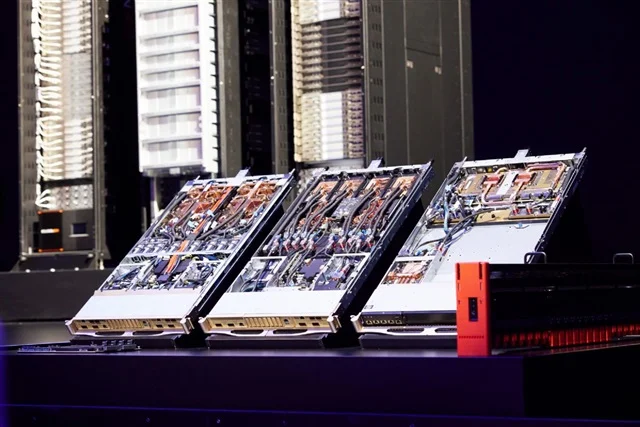
The Vera Rubin platform is expected to push the boundaries of current direct-to-chip liquid cooling and potentially introduce sophisticated immersion cooling modules as standard components. From a Data Systems Analyst perspective, this transition is driven by the urgent need to lower the Total Cost of Ownership (TCO) for hyperscalers. High thermal output results in thermal throttling, which directly degrades the throughput of expensive H100 or Blackwell successor clusters.
By optimizing the cooling envelope of Vera Rubin, Nvidia ensures that its customers can extract maximum utilization from their silicon investment. Furthermore, as rack power density climbs toward 120kW and beyond, the mechanical engineering of cooling manifolds and coolant distribution units (CDUs) becomes as vital as the circuit design itself. For suppliers, the high stakes of this architectural change mean that those who can meet Nvidia’s rigorous new standards for the Vera Rubin platform—including zero-leak tolerances and high-pressure durability—will secure a dominant position in the next phase of the AI infrastructure boom.
Conversely, the volatility in the Taiwanese market reflects the anxiety of a supply chain forced to adapt to rapid-fire innovation cycles where the physical limits of silicon are being tested by thermodynamics. Technical analysts suggest that the Vera Rubin era will be defined as much by its thermal management breakthrough as by its raw teraflops, marking a shift where advanced cooling becomes the primary differentiator in the AI arms race. The market is effectively pricing in a ‘cooling premium,’ recognizing that the thermal bottleneck is the single greatest obstacle to the continued scaling of generative AI capabilities.