🔍 Executive Summary
- Moving beyond the marketing allure of NVMe Gen 5 and SATA interfaces, this technical deep-dive examines how internal controller logic, SLC caching exhaustion, and NAND density define the 'slower reality' of modern storage devices.
Strategic Deep-Dive
The Interface Fallacy: Why Bandwidth is a Red Herring
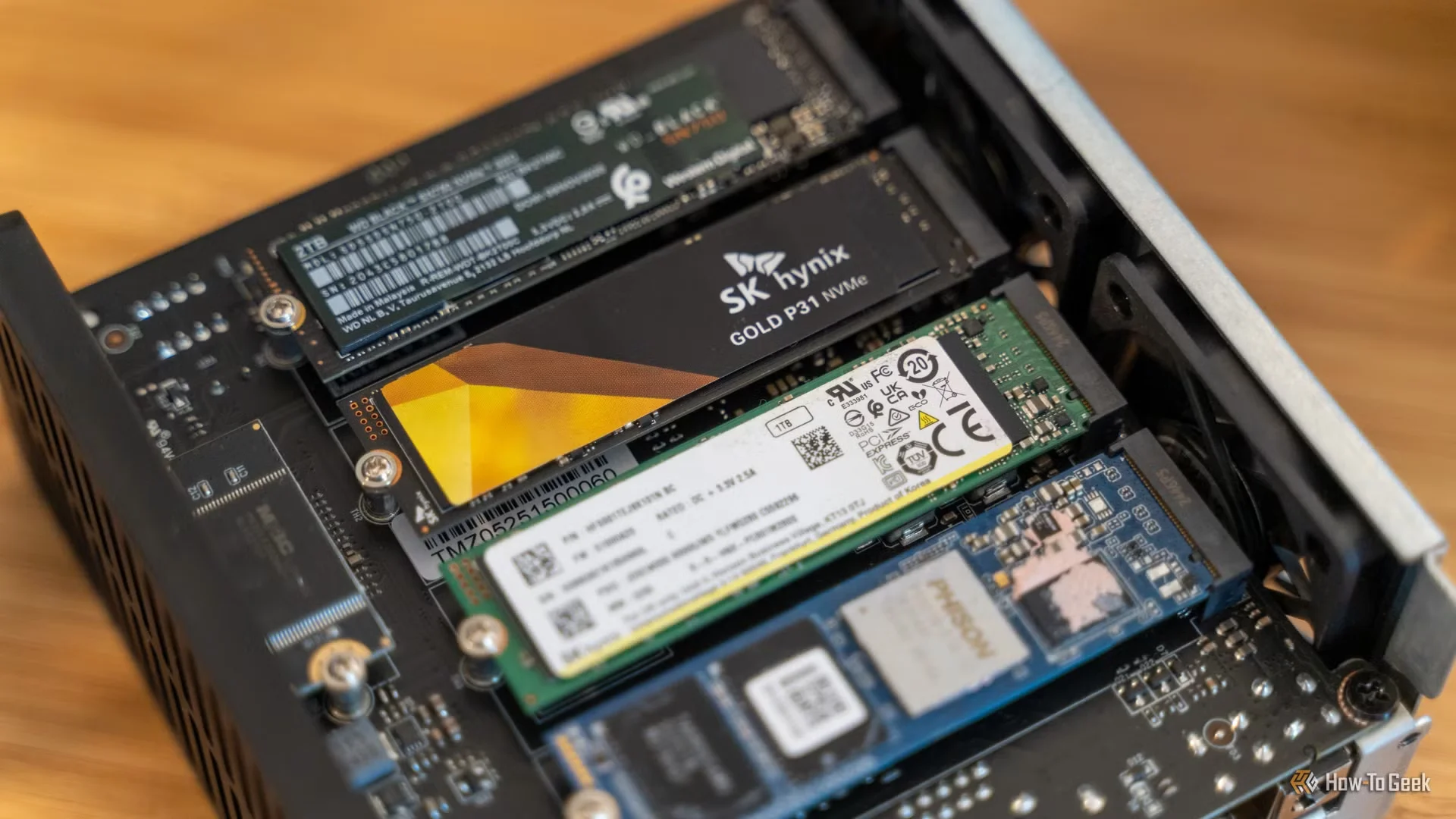
In the high-stakes world of semiconductor marketing, terms like ‘NVMe Gen 5’ and ‘SATA III’ are often wielded as absolute proxies for speed. However, as a Technical Data Architect, I must emphasize that an interface is merely a theoretical maximum—a pipeline diameter that does not account for the viscosity of the fluid or the efficiency of the pump. The source context poignantly notes a ‘faster interface’ often masks a ‘slower reality.’ This discrepancy arises because sequential read speeds, the headline figure in every press release, represent the best-case scenario for hardware.
In the trenches of real-world computing, where small file transfers and random I/O dominate, the raw bandwidth of a PCIe 5.0 lane is rarely the limiting factor. Instead, the bottleneck shifts to the internal architecture of the drive itself, specifically the controller and the NAND flash management logic.
Deciphering the NAND and Controller Hierarchy
The ‘fine print’ that goes unread by the average consumer contains the true DNA of a drive’s performance. Consider the distinction between TLC (Triple-Level Cell) and QLC (Quad-Level Cell) NAND. While QLC allows for higher densities and lower costs, its native write speed is abysmal.
Manufacturers mask this by using an SLC (Single-Level Cell) cache—a small portion of the drive that acts as a high-speed buffer. Once this buffer is exhausted during a sustained transfer, the ‘slower reality’ manifests as the write speed drops from gigabytes per second to mere megabytes. Furthermore, the prevalence of DRAM-less controllers in the budget NVMe segment introduces significant latency.
Without dedicated memory for the Flash Translation Layer (FTL), the drive must access the system RAM via Host Memory Buffer (HMB) technology, adding nanoseconds of delay that aggregate into a sluggish user experience during multi-tasking or heavy database operations.
IOPS, Latency, and the Thermal Envelope
Beyond raw throughput, we must analyze 4K random access performance at low queue depths (QD1 to QD4), which is where most OS-level operations occur. A drive with a high-speed interface might still suffer from poor QD1 performance if its controller is optimized solely for throughput rather than latency. Another critical factor hidden in the technical manuals is the thermal envelope.
High-performance NVMe drives generate substantial heat; without robust thermal management, the controller will invoke ’thermal throttling,’ slashing clock speeds to protect the hardware. This means your ‘fast’ Gen 5 drive might only maintain its peak speed for thirty seconds before falling behind a well-cooled Gen 4 drive.
Conclusion: Shifting the Hardware Evaluation Paradigm
For the global tech community, the lesson is clear: the interface has outpaced the practical requirements of 90% of use cases. The real battleground for performance consistency lies in the ignored specifications: sustained write speeds, IOPS consistency, and controller reliability. To build a truly optimized system, one must look past the SATA and NVMe labels.
We must hold manufacturers accountable for the performance they hide in the small print, such as the total bytes written (TBW) ratings and the specific controller models used. True hardware excellence is defined not by how fast a drive starts a race, but by how consistently it finishes a grueling marathon of data processing. Only by deconstructing these hidden metrics can we align our hardware investments with the actual demands of our data architectures.