🔍 Executive Summary
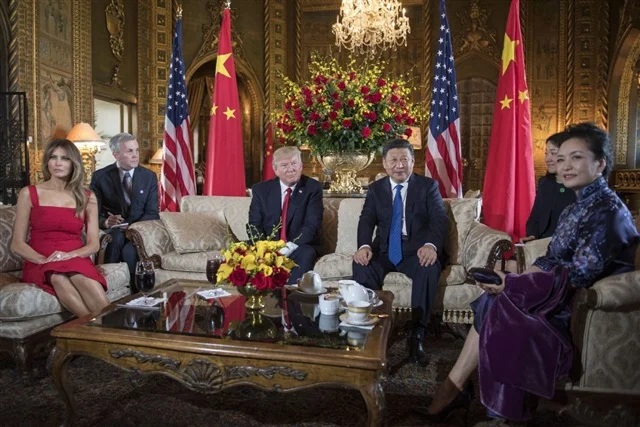
- US President Donald Trump is scheduled to meet Chinese President Xi Jinping in Beijing on May 14-15, with Taiwan's semiconductor industry expected to be a central topic of the high-stakes summit.
Strategic Deep-Dive
As President Donald Trump prepares for his visit to Beijing on May 14-15, the international community is bracing for what could be the most consequential diplomatic engagement of the decade. This summit is not merely a meeting of two leaders; it is a direct confrontation of two competing visions for the global digital order. At the core of these deliberations is the ‘Taiwan Center’ theory, which posits that the stability of the modern world relies entirely on the output and security of a single island’s semiconductor fabrication plants.
The timing of this summit is particularly poignant when viewed alongside the massive investment shifts analyzed in Article 1. The commitment of US$35 billion by Taiwanese firms to establish a manufacturing foothold in the United States is a clear indicator that the industry is no longer waiting for geopolitical stability—it is building it. By proactively diversifying their production bases to the US, Taiwanese companies are mitigating the ‘geopolitical premium’ that investors have placed on their stocks due to potential cross-strait instability.
This strategic alignment with the US domestic manufacturing agenda gives President Trump significant leverage in his discussions with Xi Jinping, while simultaneously providing Taiwan with a ‘silicon shield’ that is both economic and physical.
For President Xi, the challenge is to manage a global supply chain that is increasingly ‘de-risking’ away from Chinese influence. The Beijing summit will likely address technology sovereignty, export controls, and the future of legacy versus advanced nodes. The ‘Taiwan Center’ theory suggests that any disruption to this hub would lead to global economic contagion, making it the most dangerous and yet most protected flashpoint in history.
As Trump and Xi sit across the table, the US$35 billion investment in the US acts as a silent participant—a testament to a world that is already re-ordering its supply lines in anticipation of a new, fragmented era of tech diplomacy. The outcome of these two days in May will determine whether the ‘Taiwan Center’ remains a stable pillar of global growth or becomes the epicenter of a tectonic shift in the tech war.