🔍 Executive Summary
- NASA has achieved a landmark engineering feat by testing helicopter rotors at supersonic tip speeds (Mach 1.08) in a simulated Martian atmosphere, paving the way for larger, more capable aerial platforms in future planetary missions.
Strategic Deep-Dive
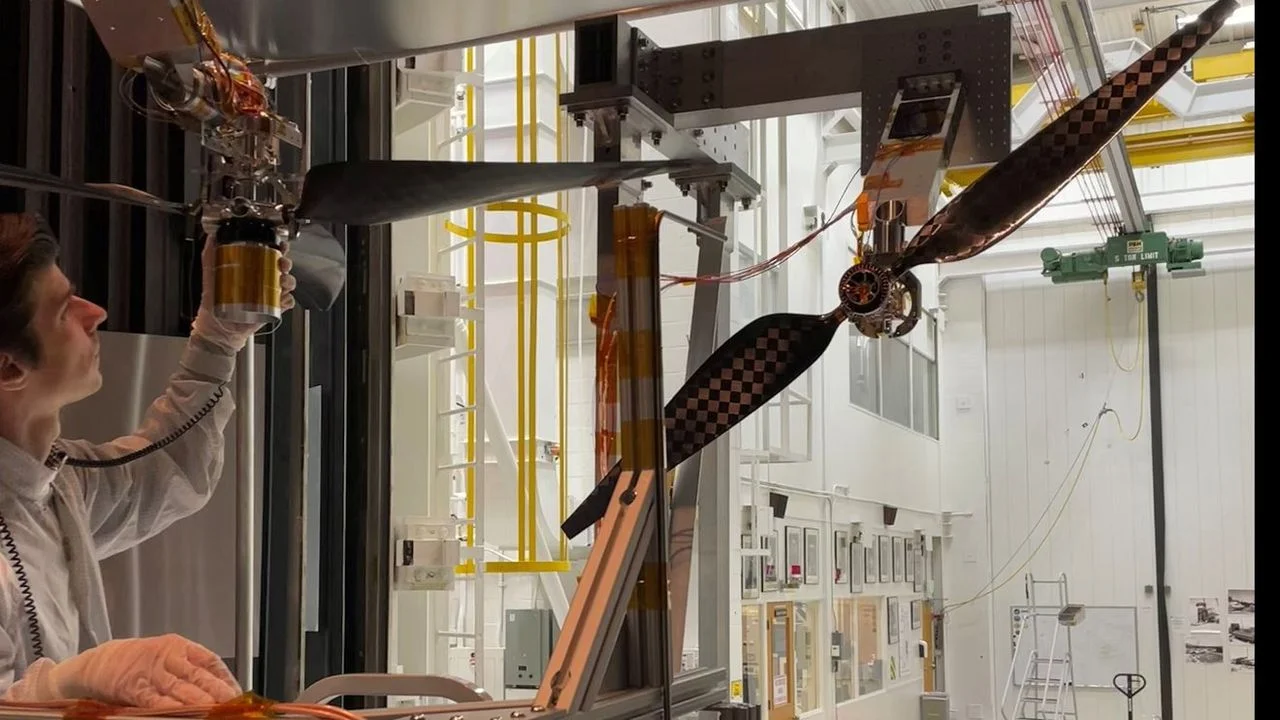
Aeronautical engineering on Mars is a constant battle against low atmospheric density. To generate sufficient lift for a functional science platform, NASA’s SkyFall project has moved beyond the subsonic limits of traditional rotorcraft. During recent high-stakes testing inside the Jet Propulsion Laboratory’s (JPL) Mars Simulator—a vacuum chamber that mimics the Red Planet’s thin CO2 atmosphere—the next-generation rotors reached a staggering 3,750 RPM.
At this velocity, the tips of the blades surpassed the Martian speed of sound, clocking in at Mach 1.08. This is an order of magnitude faster than helicopters operating on Earth, representing a leap in rotary-wing physics.
The technical challenges of sustaining Mach 1.08 are immense. As the blade tips enter the supersonic regime, they encounter shockwaves that create massive wave drag and localized heating. This requires a radical departure from Earth-bound aerodynamic profiles.
Using advanced Computational Fluid Dynamics (CFD), NASA engineers designed a blade geometry that manages these shockwaves to maintain stability. The materials science is equally impressive; the rotors are constructed from high-modulus carbon fiber layers, specifically oriented to handle the extreme centrifugal forces and aeroelastic flutter that occur at 3,750 RPM. Any structural failure at these speeds would be catastrophic, making the success of these tests a testament to modern composite manufacturing.
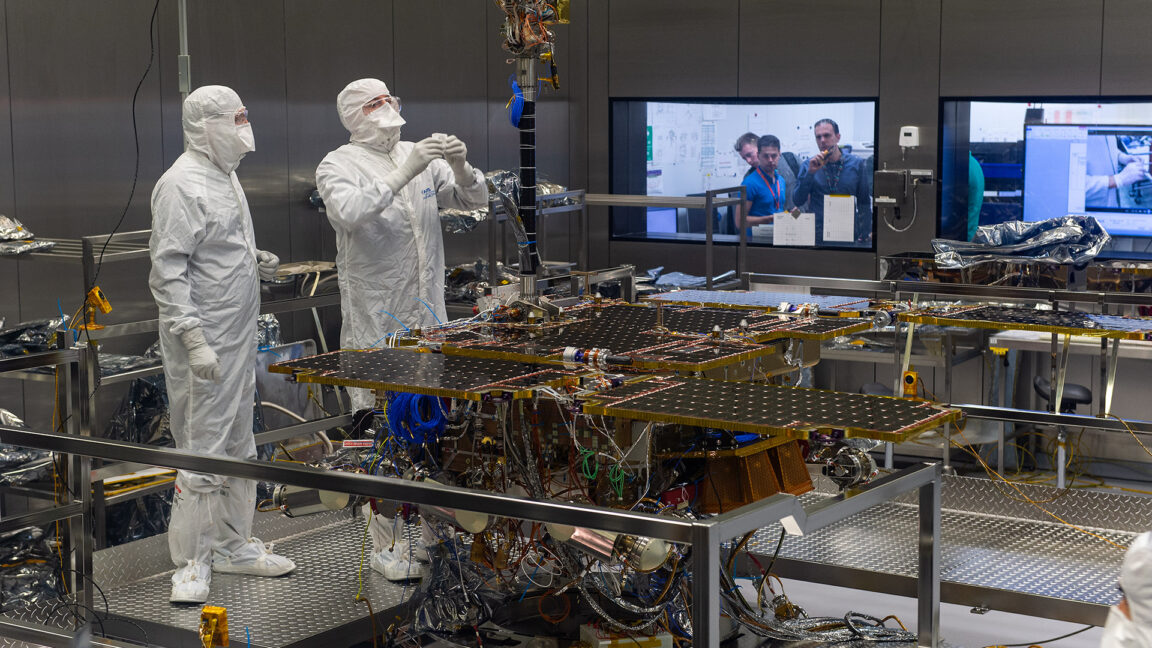
This hardware milestone is the cornerstone of the proposed SkyFall mission. While the Ingenuity scout was a small-scale technology demonstrator, SkyFall aims to be a primary science platform. By proving that supersonic rotor operation is stable and efficient in low-density environments, NASA has opened the door for larger, autonomous aircraft capable of carrying heavy payloads—such as high-resolution spectrometers and drill systems—across hundreds of kilometers of Martian terrain.
This transition from slow-moving rovers to high-speed aerial reconnaissance fundamentally shifts the strategy of planetary exploration. It allows for the mapping of ancient riverbeds and volcanic regions that are physically inaccessible to ground units. As we look toward the 2030s, the SkyFall rotors represent the technical bridge between mere presence on Mars and true, high-mobility exploration, showcasing how hardware limits are being rewritten through the synthesis of materials science and supersonic aerodynamics.