🔍 Executive Summary
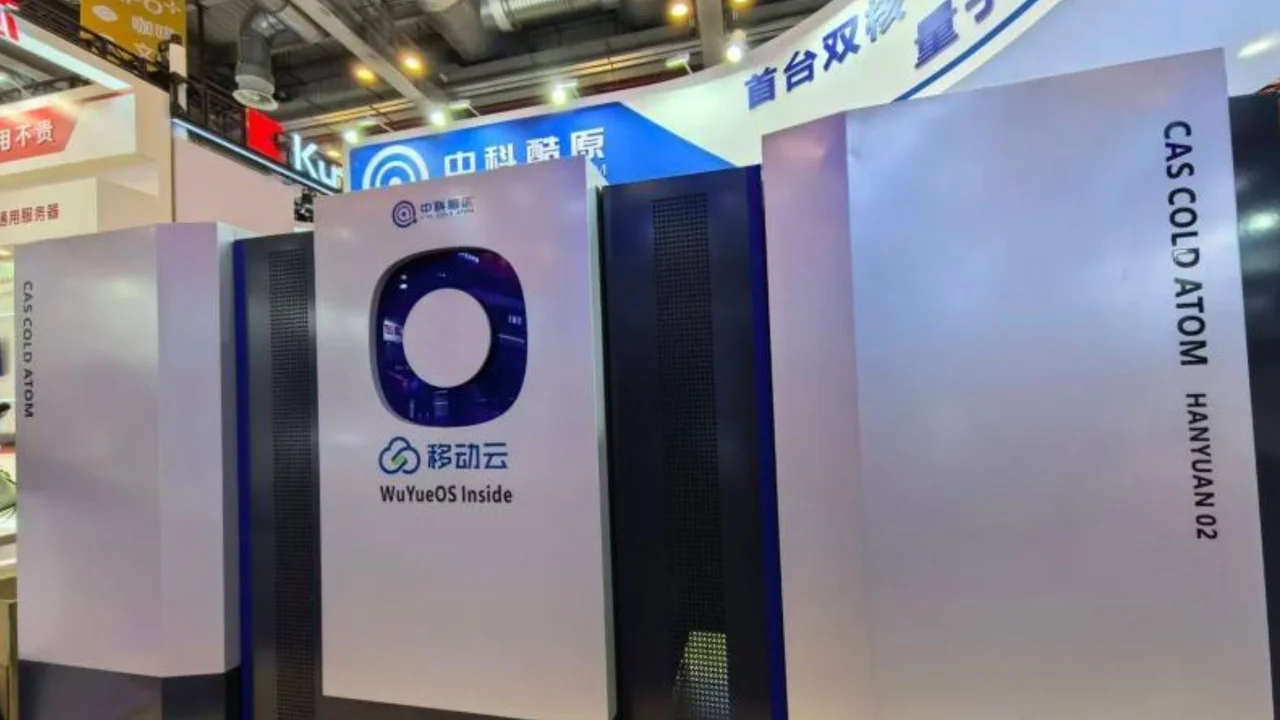
- CAS Cold Atom Technology has introduced 'Hanyuan-2,' touted as the world's first dual-core quantum computer featuring 200 qubits. While the architecture promises scalability, the lack of standardized performance metrics like Quantum Volume fuels industry skepticism.
Strategic Deep-Dive
The debut of the ‘Hanyuan-2’ by CAS Cold Atom Technology represents a provocative escalation in the global pursuit of quantum supremacy. This Wuhan-based entity, an offshoot of the prestigious Chinese Academy of Sciences (CAS), claims to have engineered the world’s first ‘dual-core’ quantum computer. At its heart lie 200 qubits, a figure that on paper rivals the top-tier systems developed by Western titans like IBM and Google.
However, the significance of this announcement hinges not on the raw qubit count but on the implementation of a modular, dual-core architecture. This approach theoretically addresses the ‘wiring nightmare’ and thermal management issues that plague monolithic quantum processors, suggesting a future where quantum computing power can be scaled through interconnected processing units rather than simply packing more qubits into a single, unstable environment.
From a technical perspective, the choice of ‘Cold Atom’ technology is particularly noteworthy. Unlike the superconducting loops used by IBM, which require extreme dilution refrigeration, or the trapped ion systems utilized by IonQ, cold atom systems employ lasers to trap and manipulate neutral atoms. This method can potentially offer longer coherence times and easier scaling for certain types of quantum simulations.
If CAS Cold Atom Technology has indeed mastered a low-latency interconnect between two such 100-qubit cores, it would mark a genuine architectural breakthrough in quantum hardware design, potentially leading to superior power efficiency and task parallelization.
Nevertheless, as a data journalist and analyst, one must treat these claims with extreme caution due to the ‘dark’ nature of the performance data. The total absence of standardized benchmarks—specifically Quantum Volume, which measures both capacity and error rates, and gate fidelity metrics—renders the 200-qubit claim functionally unverifiable. In the quantum realm, a high qubit count with poor fidelity is effectively useless for complex computation as errors accumulate faster than they can be corrected.
The lack of peer-reviewed documentation suggests that Beijing may be prioritizing geopolitical messaging over scientific transparency. Until the Hanyuan-2 is subjected to independent verification or releases comparative data against established benchmarks like the LINPACK for quantum, the global tech community will likely view it as a sophisticated functional prototype rather than a production-ready system. The ‘Hanyuan-2’ illustrates a widening rift between the rapid, state-backed hardware announcements coming out of China and the data-driven, transparent validation processes required by the international scientific community.