🔍 Executive Summary
- Ukraine’s 'Tryzub' system represents a paradigm shift in electronic warfare, utilizing AI-guided directed energy to neutralize suicide drones at a near-zero cost-per-shot, providing a sustainable solution to asymmetric aerial threats.
Strategic Deep-Dive
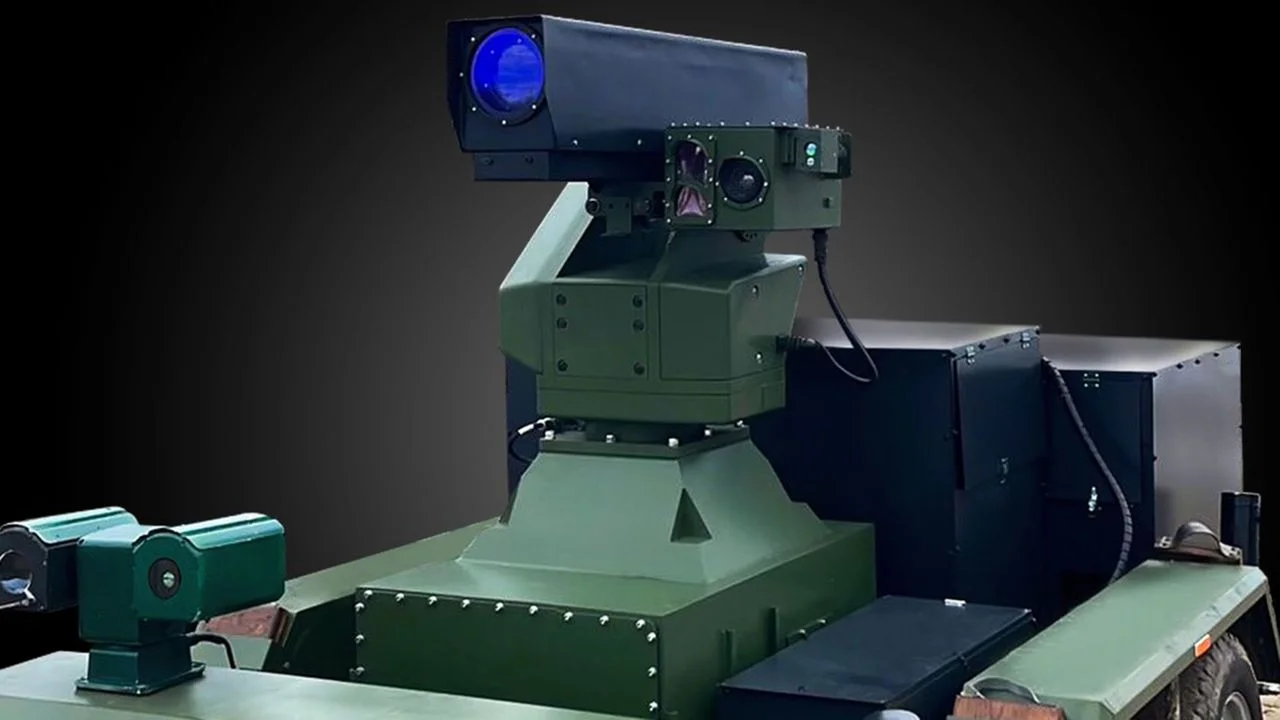
The conflict in Ukraine has become a crucible for rapid hardware innovation, and the latest emergence is the ‘Tryzub’—an AI-driven directed energy weapon (DEW) designed to break the economic asymmetry of drone warfare. Developed by Celebra Tech, the Tryzub is a trailer-mounted laser system capable of burning through the airframes of Shahed suicide drones from a distance of up to 3.1 miles (5km). This system is not merely a prototype; it is in the final stages of testing, marking a significant transition from laboratory physics to battlefield utility.
From a strategic standpoint, the Tryzub addresses the primary weakness of modern air defense: the cost-to-kill ratio. When defending critical infrastructure against swarms of drones costing $20,000 each, using kinetic interceptors like the Starstreak or even the Gepard’s 35mm ammunition becomes an unsustainable financial and logistical burden. The Tryzub, however, operates on a near-zero cost-per-shot model.
As long as the mobile generator has fuel or a connection to the grid, the weapon has an ‘infinite magazine.’ The technical heart of the Tryzub is its AI guidance unit. Unlike manual or semi-automatic systems, the AI utilizes high-speed computer vision to distinguish between birds, debris, and hostile munitions. Once a threat is locked, the system employs rapid-response servo-mechanisms to keep the high-energy beam focused on a single point—such as the engine manifold or the guidance sensor—for the few seconds required to achieve structural failure.
Furthermore, the Tryzub’s hardware is designed for dual-use versatility. Beyond its primary role as a drone killer, it is being utilized in humanitarian demining operations. By focusing the laser on unexploded ordnance or surface-laid mines, it can trigger controlled thermal detonations from a safe standoff distance, protecting demining crews from the hazards of manual neutralization.
This integration of AI-guided energy marks a new chapter in autonomous defense infrastructure. As drone technology becomes increasingly accessible to both state and non-state actors, systems like the Tryzub provide a high-tech, sustainable shield. It represents a fundamental shift toward electronic and directed-energy dominance, where the winner is determined not by the number of missiles in a stockpile, but by the efficiency of the AI algorithms and the stability of the power supply.
For global defense analysts, the Tryzub is a clear signal that the era of cost-prohibitive kinetic defense is being challenged by the precision and economy of AI-driven hardware.