🔍 Executive Summary
- The historic AMD K5 is being phased out in Linux kernel version 7.2. Despite its 30-year legacy, the lack of Time Stamp Counter (TSC) support has become a significant 'coding burden,' forcing developers to prioritize modern architecture over legacy compatibility.
Strategic Deep-Dive
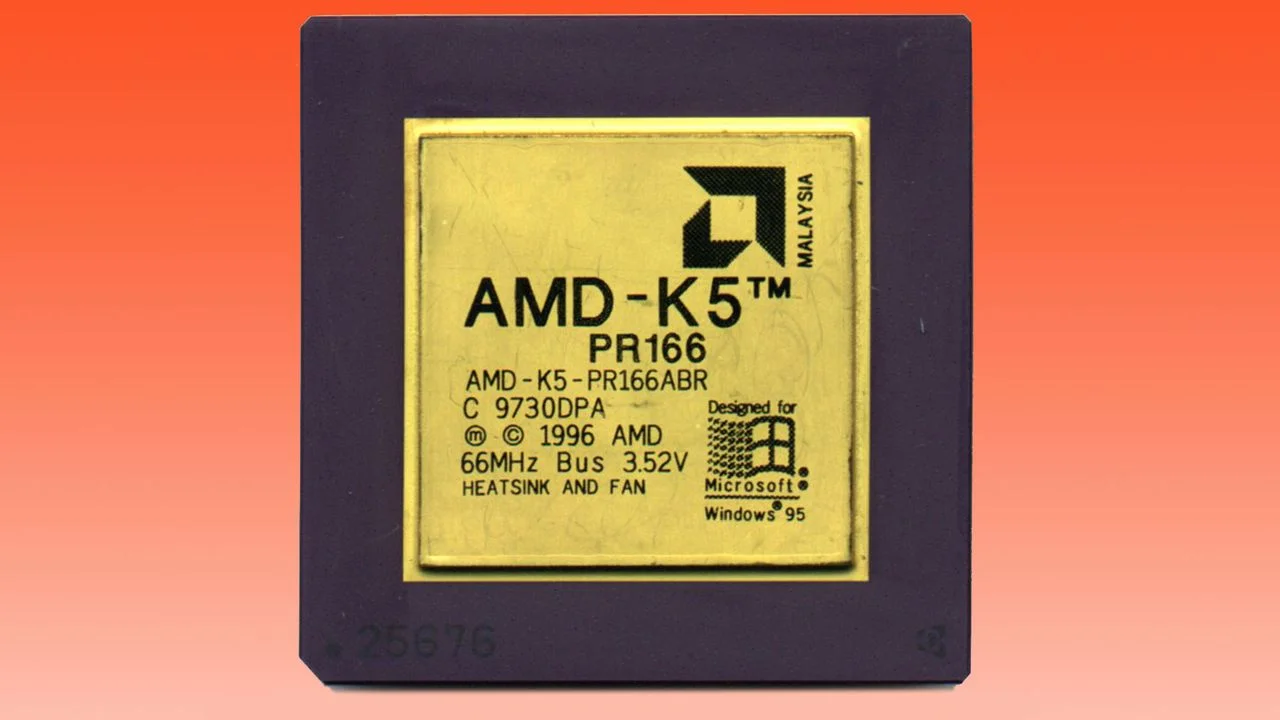
The announcement that the AMD K5 family will be purged from the Linux kernel starting with version 7.2 marks a poignant moment in the history of x86 computing. Launched in 1996, the K5 was AMD’s first internally designed x86 processor, a landmark achievement that signaled the end of its reliance on Intel’s microcode. With 4.3 million transistors, it was a marvel of its time, featuring out-of-order execution and an internal RISC-like architecture that predated similar moves by competitors.
However, in the high-stakes world of modern kernel maintenance, historical sentimentality is often overridden by the pragmatic necessity of streamlining code. The K5 is not being removed because it is ’too old,’ but because it lacks a fundamental feature required for efficient modern computing: the Time Stamp Counter (TSC).
Technically, the TSC is a 64-bit register that counts the number of cycles since reset. Modern Linux kernels rely on the TSC as a primary clocksource for everything from process scheduling to high-resolution networking and cryptographic timestamps. Because the K5 lacks this register, kernel maintainers have been forced to keep ’legacy fallback’ code paths active.
These fallbacks use older, slower hardware timers like the 8254 PIT or HPET, which introduce significant latency and prevent the kernel from utilizing the fast path for timekeeping. Maintaining these exceptions constitutes a significant ‘coding burden,’ requiring developers to test and validate core timing code against a chip that has not been in production for nearly three decades. As the kernel moves toward version 7.2, the focus is on reducing ‘Technical Debt’—the accumulated cost of maintaining legacy workarounds that complicate the codebase and increase the surface area for bugs.
From a senior analyst’s perspective, this move reflects the maturing lifecycle of the Linux kernel. For years, Linux took pride in running on ’everything,’ including refrigerators and 30-year-old PCs. However, as the architectural gap between a 4.3-million-transistor K5 and a multi-billion-transistor Zen 5 grows, the overhead of maintaining functional compatibility becomes an obstacle to innovation.
By removing K5 support, kernel developers can assume the presence of TSC on all supported x86 hardware, allowing for cleaner, faster, and more secure low-level code. While this signals the end of the K5’s 30-year software run, it highlights the essential balance between honoring architectural history and ensuring that the world’s most critical operating system remains lean and capable of meeting the demands of modern cloud and edge computing infrastructures.