🔍 Executive Summary
- This technical analysis explores the growing discrepancy between industrial noise compliance and the physiological reality of infrasound emitted by AI data centers, where low-frequency vibrations bypass standard acoustic monitoring yet cause significant community health issues.
Strategic Deep-Dive
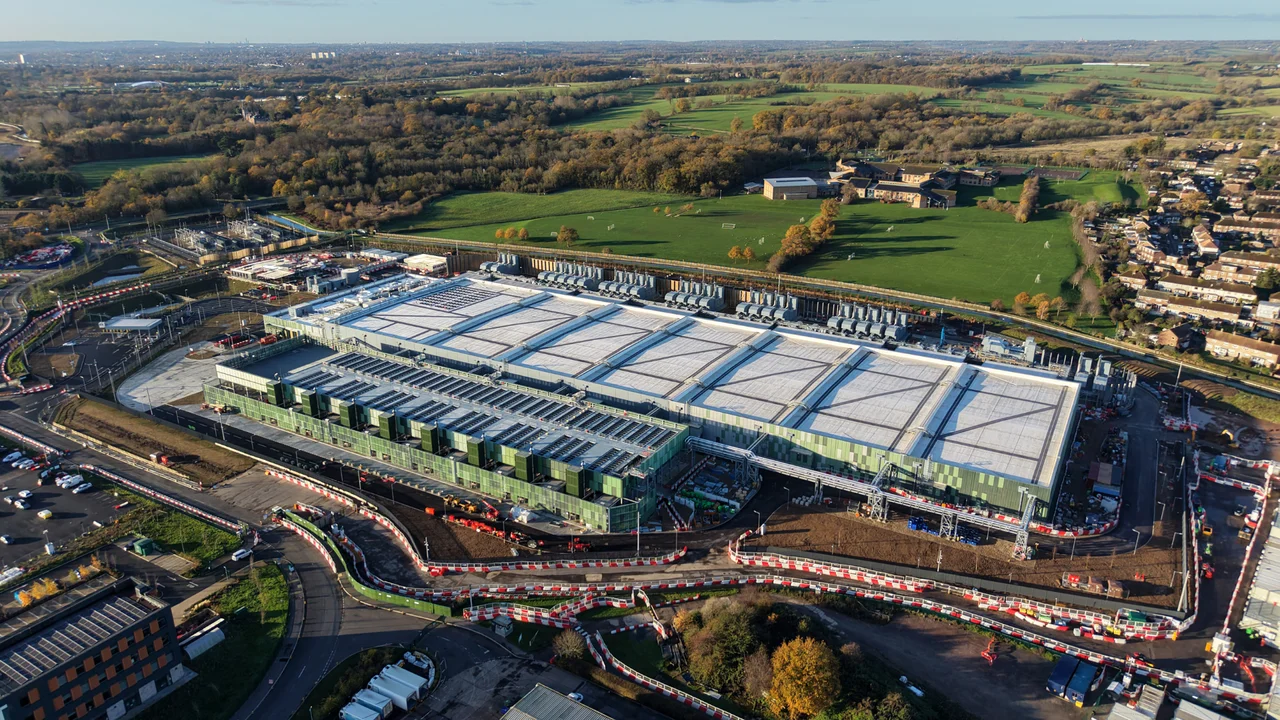
The global surge in AI infrastructure has introduced a stealthy environmental pollutant: infrasound. As data centers scale up to accommodate power-hungry H100 and B200 clusters, the resulting thermal management systems—comprising massive industrial fans, high-velocity pumps, and massive electrical transformers—generate a constant low-frequency hum. Unlike typical audible noise, infrasound operates at frequencies below 20Hz.
The physics of long-wave propagation means these sounds do not dissipate quickly; instead, they possess the kinetic energy to penetrate double-glazed windows and reinforced concrete, often resonating within the internal cavities of residential buildings like a drum skin.
From a technical standpoint, the current regulatory framework is fundamentally flawed. Standard acoustic monitoring relies on A-weighted decibel (dBA) scales, which filter out the very low frequencies that characterize data center emissions. This creates a ‘regulatory vacuum’ where a facility can be in 100% legal compliance while simultaneously subjecting neighbors to constant physiological stress.
Residents living near these 24/7 facilities describe a sensation of ‘feeling’ the noise—a persistent pressure in the chest or a vibration in the inner ear—rather than hearing it. This phenomenon is increasingly linked to ‘Vibroacoustic Disease’ (VAD), a condition characterized by the thickening of cardiovascular structures and chronic vestibular disruption.
The engineering challenge lies in the sheer scale of the energy being displaced. Traditional sound-absorbing materials are effective against high-frequency waves but are virtually invisible to the long, powerful waves of infrasound. To mitigate this, future data center architecture must prioritize ‘Acoustic Modeling’ that accounts for ground-borne and air-borne low-frequency resonance.
Solutions such as seismic-grade vibration isolation pads for cooling towers and the implementation of massive-scale Active Noise Control (ANC) systems—which emit an out-of-phase wave to cancel the infrasound—are no longer optional luxuries but infrastructure necessities. Furthermore, global data systems analysts must advocate for a shift toward ‘Z-weighting’ or unweighted peak-to-peak measurements in environmental impact assessments. As the density of AI server racks increases, the acoustic footprint will only intensify.
Failure to address the bio-mechanical impact of infrasound will inevitably lead to litigation and localized resistance, potentially stalling the physical rollout of the hardware necessary for the AI revolution. Integrating public health metrics into data center cooling efficiency models is the only sustainable path forward for the industry.