🔍 Executive Summary
- A 6.2 million-square-foot data center project in Georgia consumed 29 million gallons of water without authorization over 15 months. Despite local outages and resident complaints, officials have waived fines, highlighting a failure in Big Tech oversight.
Strategic Deep-Dive
The breakneck speed of AI infrastructure development is increasingly outstripping the capacity of local regulatory frameworks to protect essential resources. A stark example of this systemic failure has emerged in Georgia, where a massive data center project managed by QTS consumed a staggering 29 million gallons of water over a 15-month period without proper authorization. To put this in perspective for a non-technical audience, this volume is equivalent to roughly 44 Olympic-sized swimming pools or the annual water usage of hundreds of average American households.
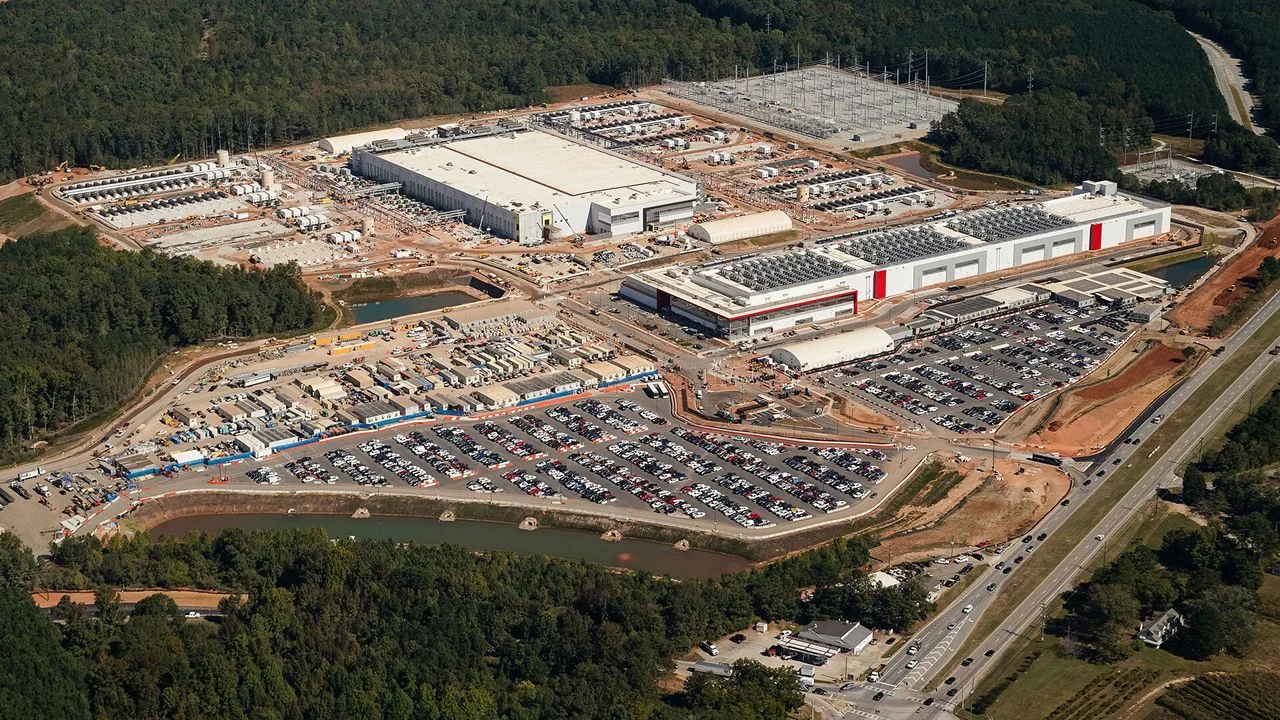
This drain occurred during the pre-operational phase of a 6.2 million-square-foot facility, a scale of construction that effectively functions as a massive, unregulated industrial operation nested within a residential utility grid.
The consumption only came to light when local residents began reporting persistent drops in water pressure and unexpected outages, symptoms of a utility system pushed beyond its design limits. QTS attributed the usage to ’temporary construction activities,’ such as dust suppression and massive-scale concrete production. While these are standard requirements for a project of this magnitude, the unauthorized nature of the usage highlights a critical gap in oversight.
More concerning than the consumption itself is the response from local officials. Despite the clear breach of utility protocols, no fines or penalties have been issued. The rationale provided—that the project represents significant economic investment—creates a dangerous ’too big to regulate’ precedent.
It signals to Big Tech that environmental and utility constraints are negotiable, or even ignorable, if the capital investment is high enough.
This incident underscores the broader environmental overhead of the AI boom. While much of the global conversation focuses on the power consumption of GPUs and the cooling requirements of active servers, the water-intensive nature of data center construction and site preparation is often overlooked. A 6.2 million-square-foot facility represents a massive impervious surface that alters local hydrology and places immense strain on local aquifers even before the first server is racked.
As data center operators scramble to build capacity for LLM training, they are effectively competing with local citizens for fundamental resources. The Georgia case serves as a definitive call for more rigorous Environmental, Social, and Governance (ESG) mandates. Without a legal framework that imposes real financial consequences for resource misappropriation, the tech industry will continue to externalize its environmental costs onto local communities, turning the AI gold rush into a resource crisis for the regions that host it.