🔍 Executive Summary
- India is accelerating its high-tech manufacturing ambitions by approving major semiconductor and Micro LED projects, led by industry giants Tata and Yotta, as it positions itself as the primary alternative to the China-centric supply chain.
Strategic Deep-Dive
India is strategically repositioning itself at the epicenter of the global high-tech supply chain through a series of landmark approvals for semiconductor fabrication and next-generation display technologies. As of May 2026, the Indian government has greenlit several high-priority projects focused on Mini LED and Micro LED manufacturing, signaling a move to bypass traditional LCD production in favor of future-proof technologies. This ’leapfrog’ strategy aims to establish India not just as a consumer market, but as a critical sourcing hub for the next decade of electronics.
By fostering a domestic ecosystem that integrates semiconductor logic with advanced optoelectronics, India is capitalizing on the global ‘China + 1’ diversification trend, offering a stable and scalable alternative for international OEMs.
The drive is spearheaded by a powerful alliance of domestic conglomerates, most notably Tata Electronics and Yotta Data Services. Tata Electronics is rapidly expanding its footprint into semiconductor assembly and testing, as well as complex component manufacturing, acting as the industrial muscle of this transformation. Conversely, Yotta Data Services is building the digital backbone, investing heavily in AI-specific data centers and high-performance computing (HPC) infrastructure.
This synergy creates a holistic environment where chips produced in Indian fabs can be immediately utilized within domestic AI clusters, reducing latency and logistical overhead. For a senior tech journalist, this reflects a sophisticated industrial policy that aligns hardware production with the burgeoning demand for local AI compute power.
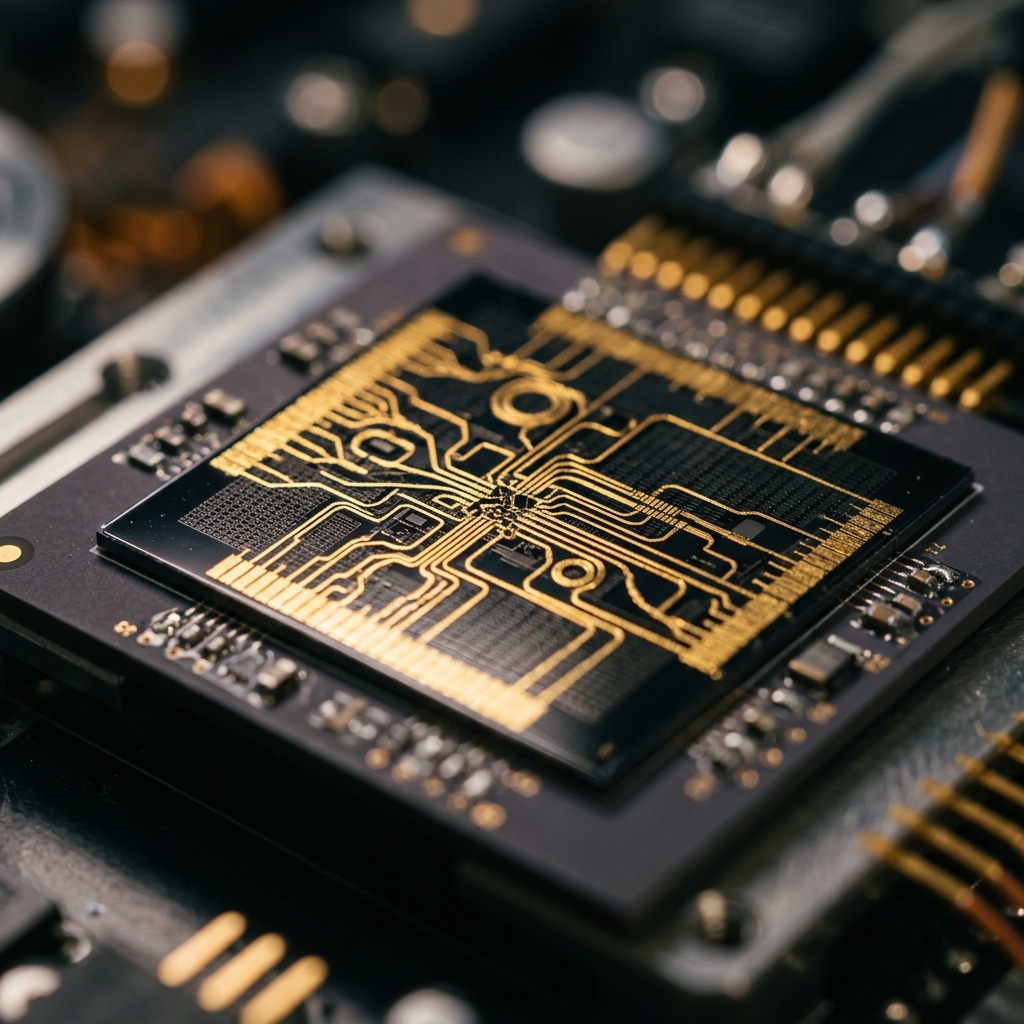
Technically, the push into Micro LED is particularly significant. Micro LED production requires advanced semiconductor lithography and mass transfer processes, which are inherently compatible with high-end chip fab facilities. By developing these capabilities in tandem, India is building a cross-disciplinary talent pool and infrastructure that can serve both the display and semiconductor sectors.
This integrated approach mitigates the risk of becoming a single-commodity manufacturer. Furthermore, the Indian government’s Production Linked Incentive (PLI) schemes are evolving to support these high-tech clusters, attracting global partners who seek to de-risk their reliance on East Asian manufacturing hubs. As infrastructure hurdles like stable power and water for fabs are addressed by the ‘India Roundup’ developments, the nation is steadily transforming from a low-end assembly site into a sophisticated hub for silicon and photonics.
The long-term implication is a potential dilution of the manufacturing hegemony currently held by South Korea and Taiwan, as India emerges as a formidable player in the global semiconductor and display arena.