🔍 Executive Summary
- A technical guide and rationale for building custom external SSDs using NVMe drives and USB-C enclosures to achieve superior performance and cost-efficiency compared to off-the-shelf solutions.
Strategic Deep-Dive
The paradigm of external storage is shifting from proprietary pre-built units to modular, user-constructed solutions. Building a DIY external SSD is no longer a niche hobby for hardware enthusiasts but a strategic move for any professional seeking maximum Return on Investment (ROI). The core advantage lies in the decoupling of the storage medium (the M.2 NVMe drive) from the interface controller (the USB-C enclosure).
When purchasing a pre-made external SSD, consumers often pay a premium for a sleek design while receiving mid-tier NAND flash or DRAM-less controllers that throttle under heavy sustained loads.
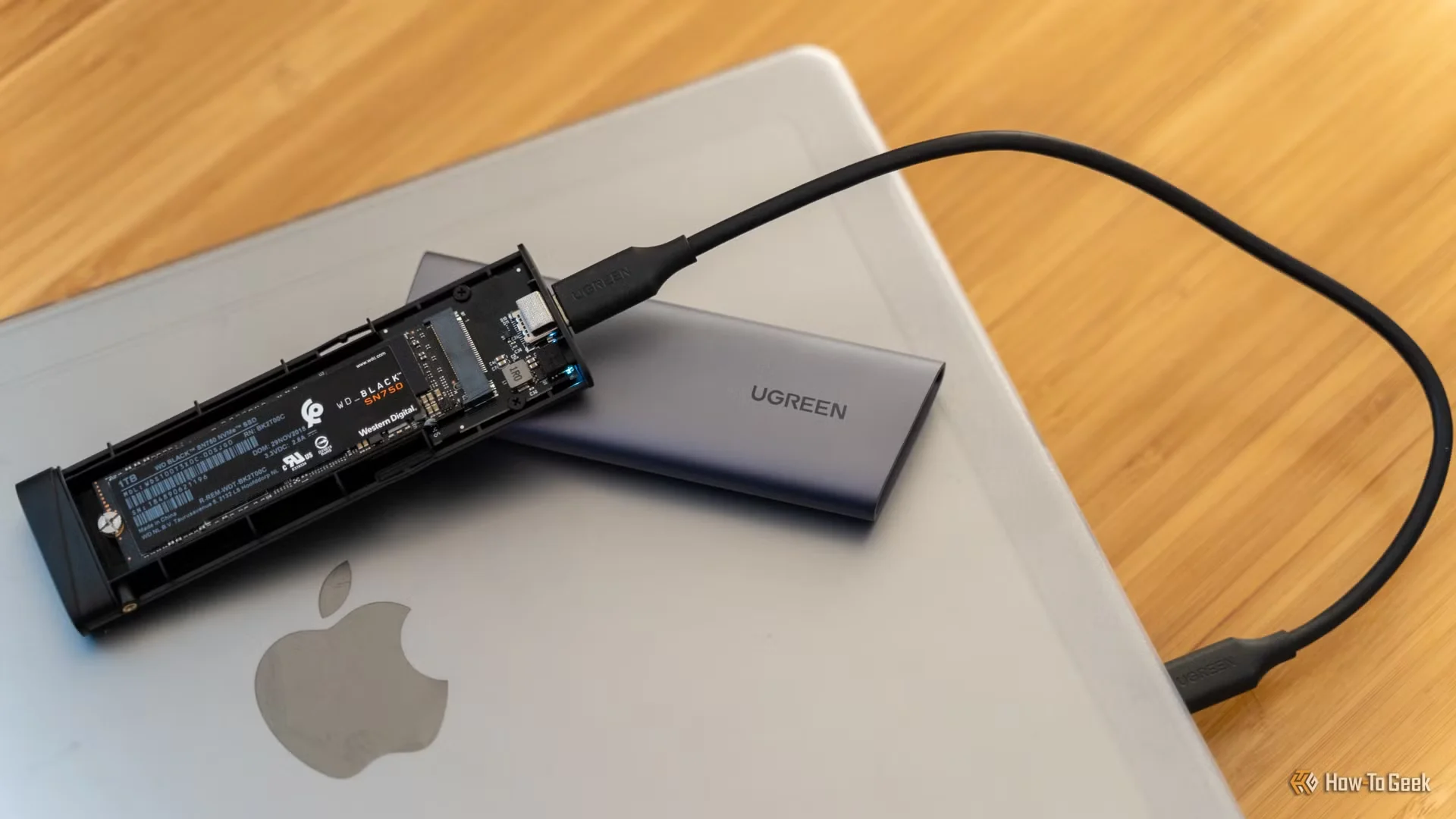
By selecting a high-performance internal drive like the WD Black series and pairing it with a high-quality enclosure from brands such as Ugreen, users can ensure they are utilizing a top-tier bridge chip. Most premium DIY enclosures utilize the ASMedia ASM2464 or Realtek RTL9210 series controllers, which offer superior stability compared to the generic chips often found in commercial portable drives. This architectural choice is critical for maintaining stable transfer speeds during long file migrations.
From a technical standpoint, the DIY approach allows for precise matching of the drive’s PCIe generation with the enclosure’s USB bridge chip capability (e.g., matching a Gen 4 SSD with a 40Gbps USB4 enclosure).
Furthermore, thermal management is significantly improved in DIY setups. Most premium enclosures are made of aluminum and utilize thermal pads to dissipate heat directly from the SSD to the outer shell, preventing the thermal throttling common in plastic-shrouded pre-built units. In terms of longevity, the DIY route offers a clear exit strategy: if the USB interface fails or becomes obsolete, the SSD itself remains functional and can be moved to a newer enclosure or installed directly into a PC.
This modularity reduces electronic waste and provides a level of customization—choosing specific capacities and performance tiers—that off-the-shelf products simply cannot match.