🔍 Executive Summary
- An analytical look at the common causes of USB-C hub disconnections, highlighting the distinction between hardware failure and power delivery mismanagement.
Strategic Deep-Dive
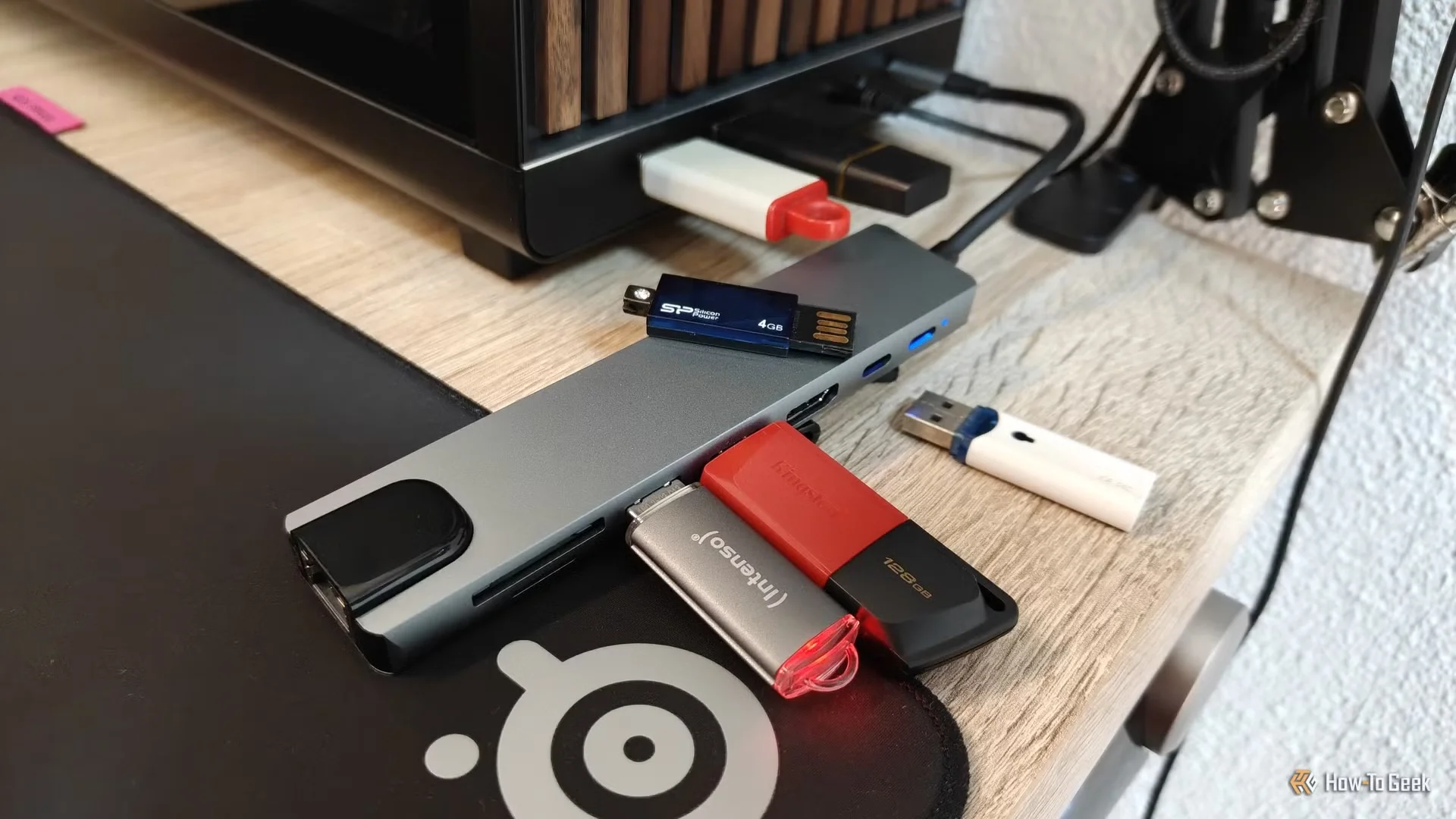
The ’throwaway culture’ in modern tech is exemplified by the premature disposal of USB-C hubs. A significant number of users report device disconnections and assume their hub is defective, when in reality, the issue lies in the complex physics of Power Delivery (PD) and protocol overhead. Understanding why USB devices fail to maintain a stable connection requires looking beyond the hardware shell into how power is allocated across a shared bus.
A typical USB-C hub acts as a bridge, but it is also a power consumer itself. Many users attempt to run high-drain peripherals without connecting an external power source to the hub’s PD port. When the total power draw exceeds what the host computer’s port can provide (often limited to 900mA for standard USB 3.0 ports), the hub’s controller initiates a safety shut-off.
Furthermore, bandwidth congestion is a silent killer. USB 3.1 Gen 1 utilizes 8b/10b encoding, meaning 20% of the theoretical 5Gbps bandwidth is lost to signaling overhead. In contrast, Gen 2 (10Gbps) uses 128b/132b encoding, which is much more efficient.
If a user saturates a Gen 1 bus with a 4K display and an SSD, the controller will inevitably drop packets, leading to perceived device ‘failure.’ To optimize hardware longevity, users must practice ’load balancing’—ensuring that high-power devices are supported by external PD and understanding the throughput limits of their specific USB generation.