🔍 Executive Summary
- Micron SVP Jeremy Werner highlighted that memory has become the strategic bottleneck for AI inference, often leaving expensive GPUs in latent states. By prioritizing HBM and advanced storage architectures, data centers can multiply effective compute output without expanding their processor fleet.
Strategic Deep-Dive
The narrative surrounding AI hardware has long been dominated by the pursuit of raw TFLOPS, but Micron’s Senior Vice President Jeremy Werner suggests this focus is fundamentally misplaced. Speaking on ‘The Circuit’ podcast, Werner articulated a critical challenge facing the next generation of AI deployment: the ‘Memory Wall.’ As AI inference models grow in complexity, the gap between GPU processing speed and memory access latency has widened, leaving some of the world’s most expensive silicon frequently idling while waiting for data ingestion.
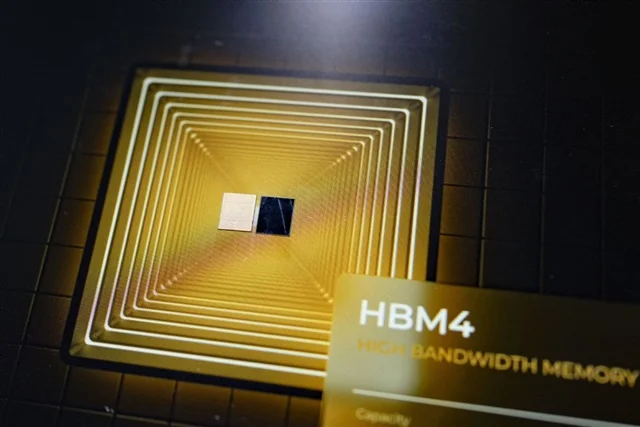
From a data systems architecture perspective, this is a crisis of efficiency. Werner noted that insufficient memory bandwidth and bus width efficiency are the primary drivers of ’latent GPU cycles’—periods where an accelerator’s compute units are active but unproductive because the data pipeline is stalled. By integrating advanced memory solutions such as HBM3 and the latest HBM3e standards, data center operators can effectively de-bottleneck their existing infrastructure.
In some scenarios, upgrading the memory architecture can yield a greater increase in total system throughput than simply adding more GPU nodes, offering a more cost-effective path to scaling AI services.
This shift in focus from raw compute to holistic system throughput is essential for the economic viability of AI. If the memory subsystem cannot sustain the massive I/O requirements of large language models, the return on investment for data centers will inevitably diminish. Micron’s warning serves as a technical imperative: the industry must stop measuring AI power solely through processor specs and start evaluating the synergy between the compute core and the high-speed memory architecture that feeds it.
Only by overcoming the memory bottleneck can the full potential of today’s silicon be realized.