🔍 Executive Summary
- A deep-dive technical analysis into the Toyota Prius platform, examining how its Power Split Device (PSD) and aerodynamic architectural choices maintain its status as the industry's definitive fuel efficiency benchmark.
Strategic Deep-Dive
The global automotive landscape is currently undergoing a profound transformation toward total electrification, yet the Toyota Prius continues to stand as a monumental testament to the enduring sophistication of hybrid engineering. Years after its current iteration hit the market, it remains the undisputed king of fuel savings, establishing a technical benchmark that many modern competitors still fail to match. This Japanese hatchback is not merely a vehicle; it is a complex data point in the evolution of thermal efficiency and systemic energy management.
At the heart of its dominance is the Toyota Hybrid System (THS), a highly integrated architecture that utilizes a Power Split Device (PSD) to seamlessly blend power from its internal combustion engine and dual electric motors (MG1 and MG2).
Unlike rival systems that rely on traditional stepped transmissions or simpler motor-assist setups, the Prius employs a planetary gear set that eliminates the need for a torque converter or clutch, significantly reducing parasitic power loss. The engine itself, an Atkinson-cycle inline-four, is tuned for a peak thermal efficiency exceeding 40%, a feat few mass-produced engines achieve. This is paired with sophisticated IGBT (Insulated Gate Bipolar Transistor) switching frequencies in the inverter to ensure that the transition between gasoline and electric propulsion is virtually undetectable to the user, while maximizing the energy recovery during regenerative braking phases.
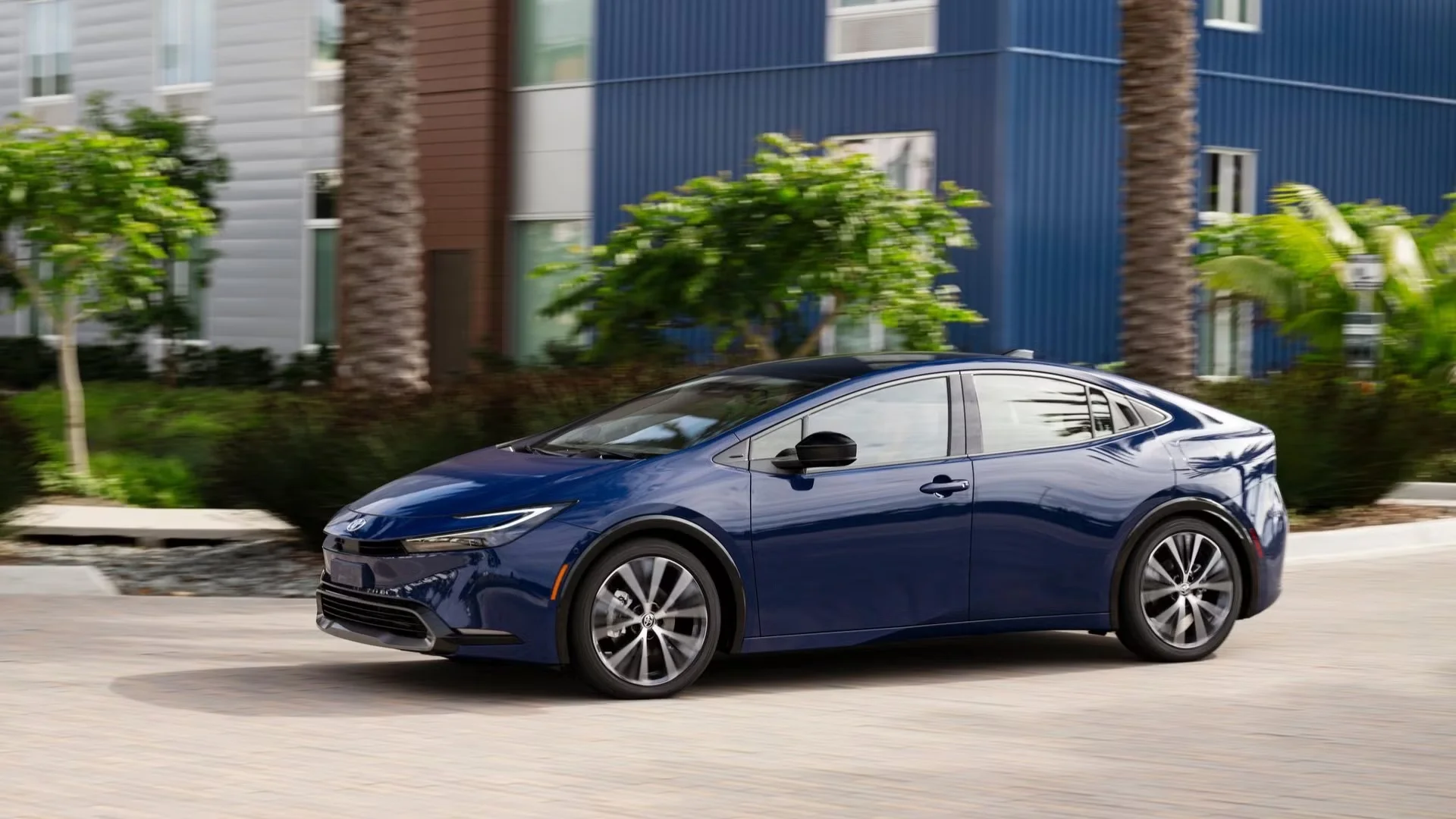
From an architectural perspective, the ‘Japanese hatch’ philosophy of extreme aerodynamic optimization is realized through the iconic Kammback design. This profile, characterized by a sloping roofline and a vertical rear cutoff, meticulously manages airflow to achieve a drag coefficient (Cd) of approximately 0.25, minimizing high-speed wind resistance and further bolstering highway efficiency metrics.
Technically, the vehicle’s ability to maintain its benchmark status is rooted in its holistic approach to energy flow. While other hybrids often experience a sharp drop in efficiency during cold-start cycles or high-load cruising, the Prius platform utilizes advanced thermal management systems to keep the battery and engine within optimal operating windows. Even as the industry shifts toward Plug-in Hybrids (PHEV) and Battery Electric Vehicles (BEV), the standard hybrid version of this hatchback serves as a critical bridge.
It proves that optimized fossil fuel usage, when combined with superior electrical architecture, can deliver environmental and economic results that are often more sustainable than current EV alternatives when accounting for battery lifecycle and charging infrastructure constraints. Its continued relevance suggests that the pinnacle of hybrid engineering was reached through decades of iterative refinement—a data-driven mastery of mechanical and electrical synergy that competitors are still attempting to replicate in their quest for the ultimate fuel-efficient platform.