🔍 Executive Summary
- Chinese semiconductor toolmakers are aggressively moving into front-end processes in Southeast Asia, utilizing localized branding and subsidiaries in Singapore and Malaysia to bypass geopolitical export controls.
Strategic Deep-Dive
The Strategic Infiltration of the Front-end Market
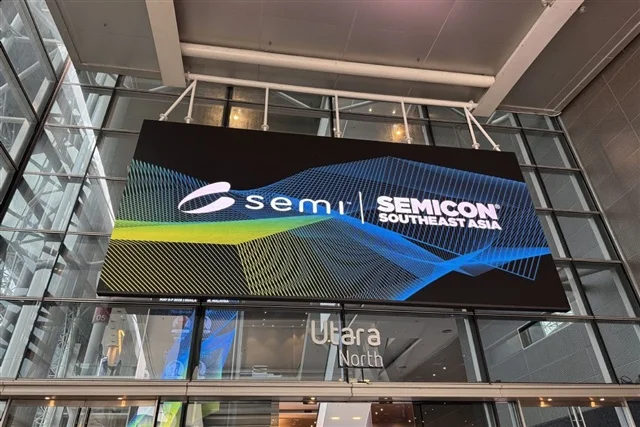
At SEMICON Southeast Asia 2026, held in Kuala Lumpur, the regional semiconductor narrative took a sharp turn toward the East. Chinese semiconductor equipment manufacturers, previously confined to the back-end OSAT (Outsourced Semiconductor Assembly and Test) sectors, have now launched a coordinated offensive into the front-end process segment. This shift was characterized by the widespread exhibition of Atomic Layer Deposition (ALD), PECVD (Plasma-Enhanced Chemical Vapor Deposition), and mature-node etching and lithography tools targeted at 28nm processes and above.
From a Data Architect’s perspective, this expansion is a calculated move to capture the massive demand for legacy and mature-node manufacturing in Southeast Asia, which remains a vital component of the global supply chain for automotive and industrial electronics. By providing high-throughput, cost-effective front-end solutions, Chinese players are filling the vacuum left by Western providers who are increasingly focused on sub-7nm leading-edge technologies.
Localized Branding: Navigating the Geopolitical Maze
To mitigate the risks associated with US-led export controls and the growing scrutiny of the entity list, Chinese manufacturers are employing sophisticated ‘brand washing’ or localized branding strategies. By establishing headquarters in Singapore and regional hubs in Malaysia’s Penang tech corridor, these companies are effectively distancing themselves from their mainland China origins. These subsidiaries are often staffed with local talent and operate under new corporate identities, allowing them to participate in global tenders and supply international customers who might otherwise be wary of geopolitical friction.
This localization strategy is not merely cosmetic; it involves building local R&D and technical support teams, ensuring that the ‘Chinese’ technology becomes an integral, inseparable part of the Southeast Asian semiconductor ecosystem. This allow them to maintain access to global components while continuing to export their proprietary front-end toolsets under the guise of regional operations.
Reshaping the Competitive Landscape in Southeast Asia
The influx of Chinese equipment is fundamentally restructuring the regional competitive landscape. For decades, the Southeast Asian market was the undisputed territory of Western and Japanese giants like Applied Materials, ASML, and Tokyo Electron. However, the presence of Chinese front-end suppliers at SEMICON SEA 2026 signals the birth of a parallel, resilient supply chain.
These Chinese firms are not just selling hardware; they are offering vertically integrated solutions that appeal to the price-sensitive nature of the region’s expanding fab capacity. As Southeast Asian nations like Malaysia and Vietnam strive to move up the value chain from assembly to wafer fabrication, the availability of accessible Chinese front-end equipment provides a low-entry-cost pathway. However, this also creates a long-term strategic dependency.
For the global market, this means that the decoupling of the semiconductor supply chain is not resulting in a withdrawal of Chinese technology, but rather its camouflage and deeper integration into the ’neutral’ territories of Southeast Asia, presenting a new set of challenges for Western policy makers and industry architects alike.