🔍 Executive Summary
- POWEV, a prominent sub-brand of the Chinese memory giant Jiahe Jinwei, has officially penetrated the DDR5 market with a comprehensive range of 64GB modules. Spanning UDIMM, SODIMM, and RDIMM form factors, this launch represents a major milestone in China's pursuit of semiconductor self-sufficiency. By delivering high-density memory solutions at a time of peak global demand, POWEV is positioning itself as a formidable alternative to the established DRAM triumvirate of Samsung, SK Hynix, and Micron.
Strategic Deep-Dive
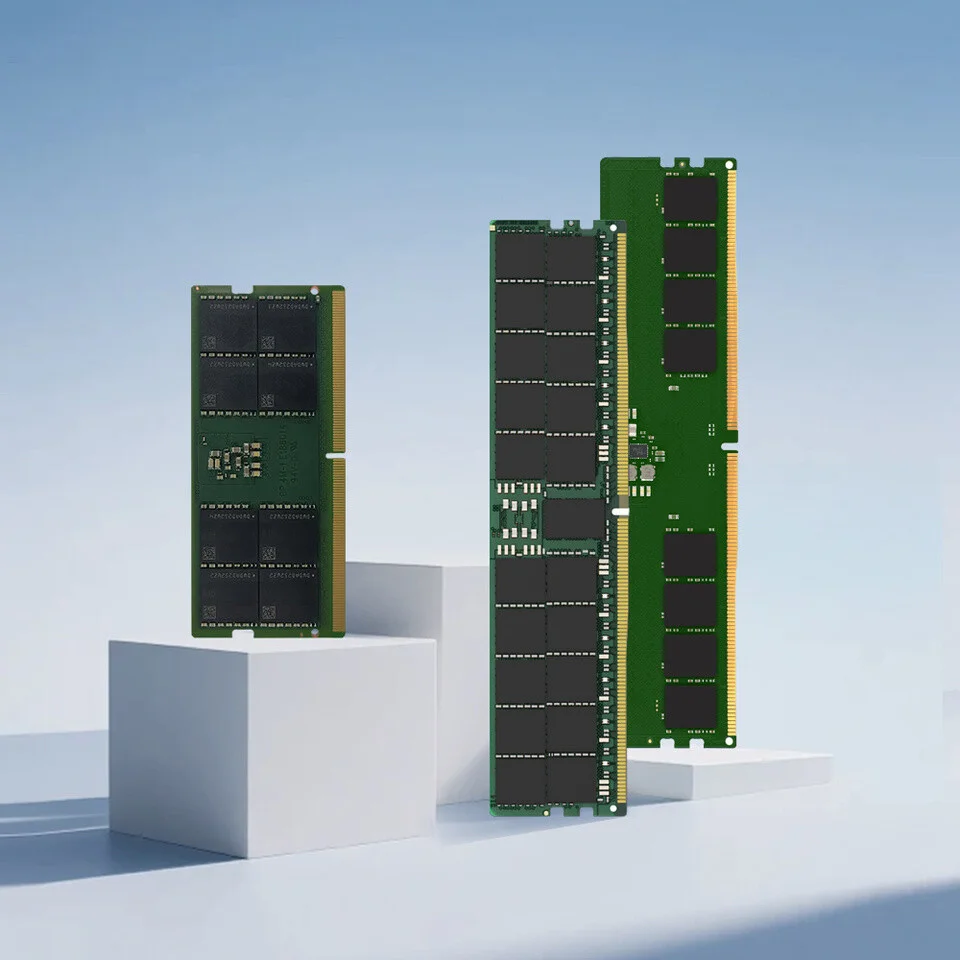
The global DRAM landscape is undergoing a significant shift as POWEV, a strategic sub-brand of China’s Jiahe Jinwei, officially enters the DDR5 market with a high-capacity product portfolio. This move is particularly impactful as it covers the full spectrum of modern memory requirements, including Unbuffered DIMMs (UDIMM) for the consumer desktop market, Small Outline DIMMs (SODIMM) for premium mobile workstations, and Registered DIMMs (RDIMM) for the critical enterprise and data center segments. The announcement centers on the availability of 64GB modules, a density threshold that signifies POWEV’s transition from a regional player to a global contender capable of challenging the established hierarchies of Samsung, SK Hynix, and Micron.
Strategically, this launch is the fulfillment of a roadmap first teased nearly half a decade ago, arriving precisely when DDR5 adoption has become the standard across both Intel and AMD platforms. The geopolitical implications of POWEV’s entry cannot be ignored; as China continues its aggressive push for semiconductor self-sufficiency amidst increasing trade restrictions, domestic brands like POWEV are vital for reducing reliance on Western and allied technology. By offering 64GB RDIMMs, POWEV is directly targeting the hyper-scale data center market, where memory density is a primary driver of operational efficiency and virtual machine density.
Technically, these modules are designed to handle the rigorous duty cycles of modern enterprise workloads, emphasizing stability and high-bandwidth throughput. For the global market, POWEV’s presence introduces a new layer of competitive pricing pressure. As production yields stabilize, the influx of high-density Chinese DRAM could potentially accelerate the downward price curve of DDR5, benefiting system integrators but squeezing the profit margins of legacy leaders.
However, the long-term viability of POWEV on the global stage will depend on its ability to maintain rigorous quality control and reliability standards that meet the expectations of mission-critical environments. Regardless, the 64GB rollout serves as a clear signal that the Chinese memory ecosystem has matured to the point where it can now produce complex, high-capacity components at scale, marking a new chapter in the ongoing struggle for dominance in the global semiconductor supply chain.