🔍 Executive Summary
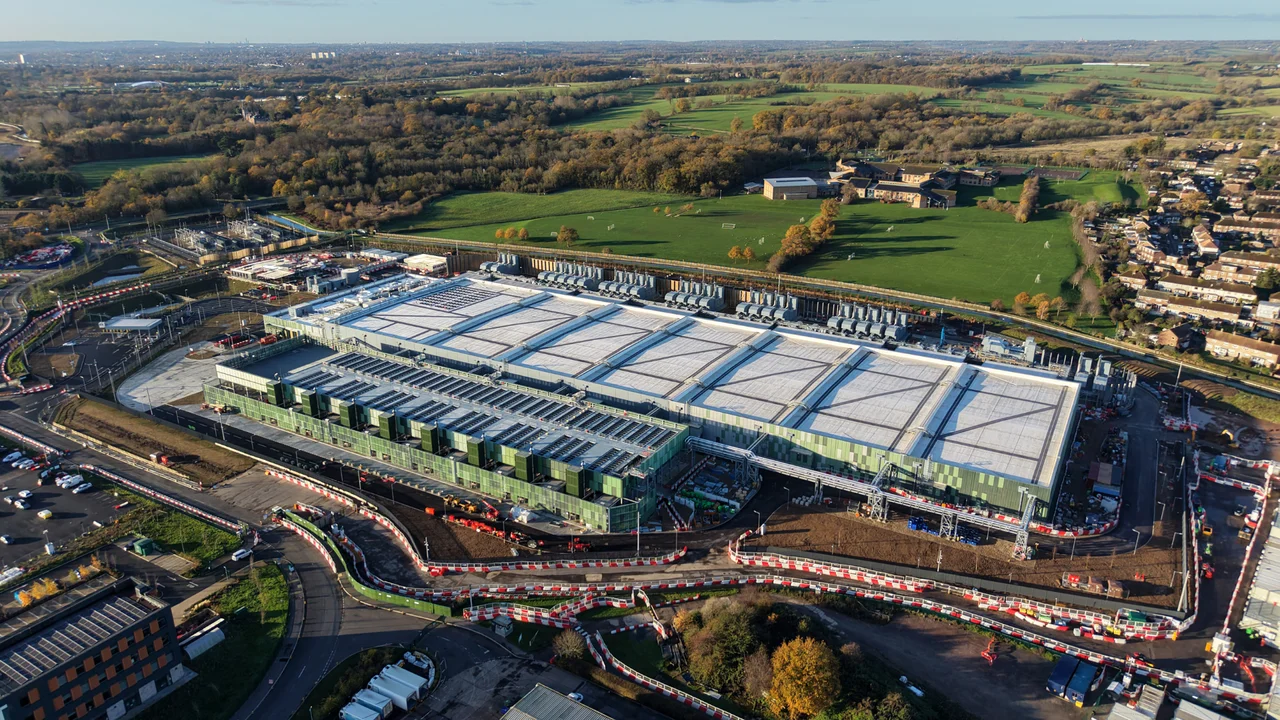
- A major data center consumed 30 million gallons of water unnoticed for months, highlighting a critical disconnect between IT operations and physical resource management.
- The incident reveals a massive blind spot in current data center observability frameworks, where SCADA and utility telemetry failed to flag anomalous consumption.
- As the AI industry markets sustainability, its inability to monitor its own environmental footprint raises serious ethical and technical concerns.
Strategic Deep-Dive
Architectural Blind Spots: Why Data Centers Fail to Monitor Physical Resources
The revelation that a major data center consumed 30 million gallons of water unnoticed for months is a textbook case of a failure in full-stack observability. In the hierarchy of data center management, significant emphasis is placed on upper-layer metrics—CPU utilization, memory pressure, and network throughput. However, the lower-layer utility telemetry, specifically SCADA systems governing cooling loops and hydraulic flows, remains largely siloed.
This incident suggests a catastrophic disconnect where the digital twin of the facility did not account for the physical mass balance of water entering and leaving the site. From a systems architect’s perspective, failing to detect a 30-million-gallon anomaly is not just a billing error; it is a fundamental design flaw in the resource accounting layer. It indicates that the automation thresholds were either set too high or that the telemetry integration between the facility’s management system and the local utility provider was non-existent.
The Sustainability Paradox: AI vs. the Physical World
As the tech industry aggressively markets AI as a tool for solving climate change and optimizing resource management, the reality on the ground paints a different picture. The AI industry’s ’thirst’ for water is driven by the extreme heat density of modern GPU clusters, which require massive evaporative cooling systems. This case serves as a grim reality check: the very industry promising intelligent automation cannot even manage its own cooling fluid effectively.
This sustainability paradox is deepening. While we use AI to optimize supply chains and power grids, we are failing to apply basic anomaly detection to our own infrastructure’s environmental footprint. The ‘outlook not so good’ sentiment regarding AI saving us from its own consumption is rooted in this technical inertia.
We have prioritized ‘compute-to-watt’ efficiency while ignoring the ‘compute-to-resource’ ratio, leading to a situation where digital expansion comes at the expense of local environmental stability.
Engineering the Future: Bridging the Gap Between IT and Utility Telemetry
To prevent such massive resource leaks in the future, data center architecture must evolve to include ‘Utility-Aware Monitoring.’ This involves creating a unified telemetry plane where physical resource consumption—water, electricity, and even chemical usage for cooling—is treated with the same granularity as server logs. We need integrated observability pipelines that cross-reference real-time meter readings with cooling demand models. If the actual water consumption deviates significantly from the modeled evaporation rates based on ambient temperature and server load, the system should trigger an immediate emergency audit.
Furthermore, the industry must adopt a more transparent approach to resource utilization. The ’nobody noticed’ aspect of this story is a failure of technical governance. Moving forward, data center operators must be held accountable for maintaining rigorous resource balance sheets.
Without a fundamental shift toward ‘Full-spectrum Resource Observability,’ the massive infrastructure required for AI will continue to operate as an invisible and irresponsible drain on global resources. We must bridge the gap between the sophisticated software algorithms we build and the rudimentary physical monitoring systems they rely upon.