🔍 Executive Summary
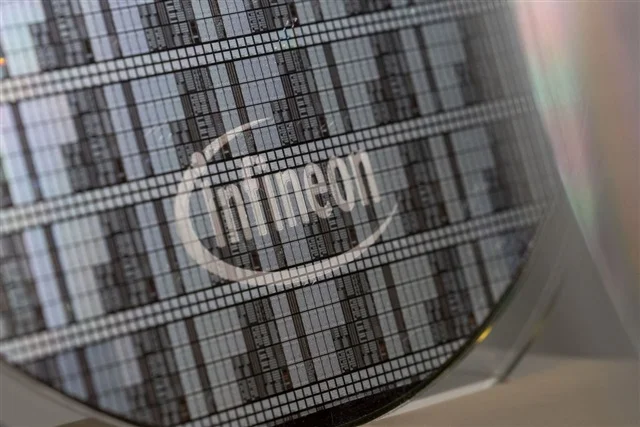
- Beyond the courtroom, the Infineon-Innoscience dispute reflects a deepening rift in global semiconductor trade. As gallium nitride (GaN) becomes central to both green energy and defense applications, the friction between European technological sovereignty and China's semiconductor expansionism is reaching a boiling point.
Strategic Deep-Dive
The intensifying legal warfare between Infineon and Innoscience over gallium nitride (GaN) technology is a microcosm of the broader macro-economic and geopolitical struggle between the West and China. While the dispute is nominally about patents, the underlying subtext is the control of wide-bandgap (WBG) materials, which have been designated as critical strategic assets by the European Commission and the US Department of Commerce. GaN is not just a commercial component; it is a ‘dual-use’ technology essential for advanced military radar, electronic warfare systems, and the infrastructure of the green energy transition.
Europe’s stance has hardened under the ‘European Economic Security Strategy,’ which seeks to prevent the leakage of foundational technologies to systemic rivals. Infineon, as a German semiconductor powerhouse, represents the vanguard of European industrial interests. For the EU, losing ground in the power semiconductor sector is not an option, as it would undermine the Union’s autonomy in automotive and renewable energy sectors.
Conversely, Innoscience is the poster child for China’s ‘Greater Bay Area’ semiconductor strategy, receiving significant support from state-linked investment funds to build the world’s largest 8-inch GaN-on-Si manufacturing capacity. The ITC ruling, therefore, is being viewed in Beijing as a geopolitical instrument used by the West to contain China’s high-tech ascent.
This conflict is driving a mandatory ‘de-risking’ phase in global electronics. Systems architects and procurement officers are increasingly looking at ‘China Plus One’ strategies, not just for manufacturing, but for the fundamental silicon and GaN components themselves. We are witnessing the emergence of two distinct semiconductor ecosystems: one aligned with Western IP standards and ITC-enforced trade boundaries, and another centered around Chinese self-reliance and internal standards.
This bifurcation introduces significant friction into global trade, as devices designed in the West may soon be legally prohibited from incorporating Chinese-sourced power chips if those chips are found to infringe on Western-held patents.
Furthermore, the dispute highlights the shift in the ‘Semiconductor War’ from logic and memory chips to the power domain. While the US focuses on restricting advanced lithography for AI chips (like those from NVIDIA), the battle over GaN is about the energy infrastructure that powers those chips. The ability to efficiently manage power at the rack level in data centers is a strategic advantage.
As this geopolitical rivalry escalates, expect to see more aggressive use of trade instruments, export controls, and patent litigation to gatekeep the hardware foundations of the 21st-century economy. The outcome of the Infineon-Innoscience case will likely set a global precedent for how WBG materials are governed in an increasingly fractured international landscape.