🔍 Executive Summary
- Google is fundamentally re-engineering Android into an intent-centric OS, leveraging Gemini Intelligence to transition from passive app silos to proactive, agentic system-wide workflows.
Strategic Deep-Dive
Google’s recent integration of Gemini Intelligence into the Android ecosystem signals a profound architectural pivot toward an intent-centric user interface. By embedding advanced reasoning capabilities directly into the operating system’s core components, specifically Gboard, Google is effectively transforming the keyboard from a static input peripheral into a primary vector for agentic orchestration. The newly introduced Gboard-based dictation and intelligent form-filling capabilities represent the first phase of this transition, where the AI doesn’t just record text but understands the semantic context of the fields it is populating.
This allows for the automation of repetitive clerical tasks—the ’last mile’ of mobile productivity—thereby reducing the cognitive overhead typically associated with managing data across disparate applications.
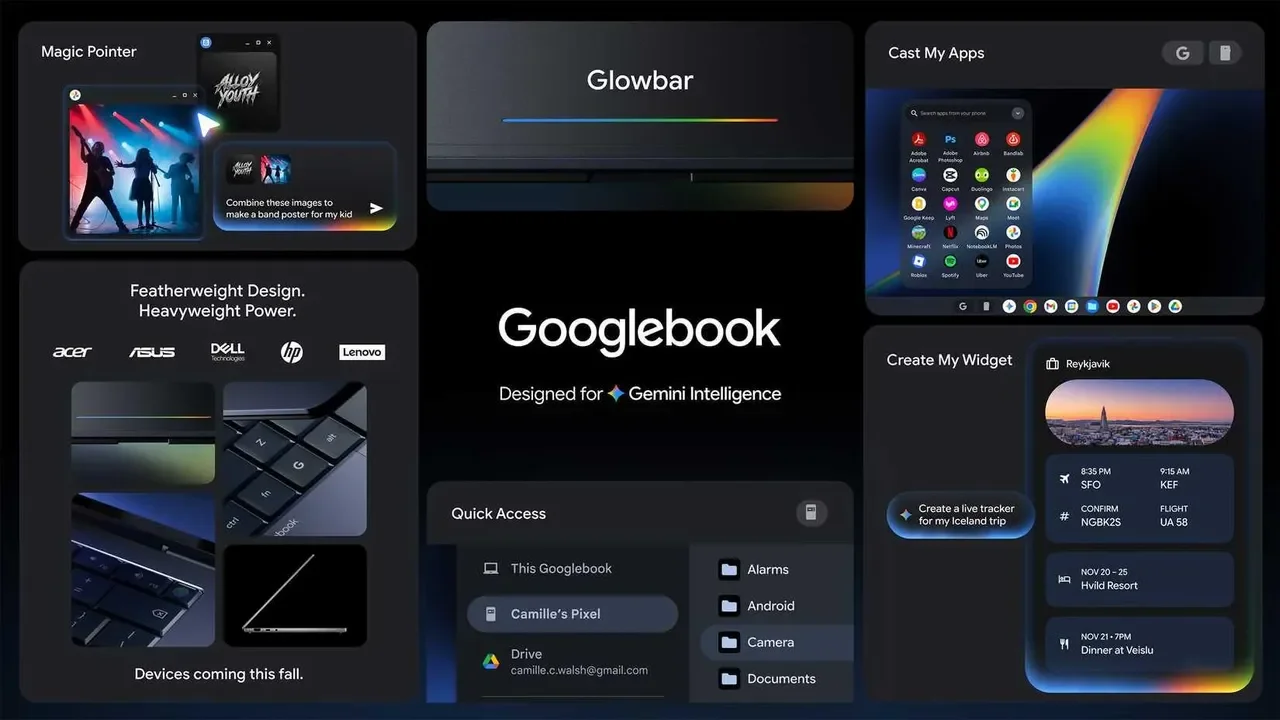
Furthermore, the emergence of ‘vibe-coded’ widgets illustrates a move away from rigid, monolithic application structures toward a more fluid, aesthetic-driven interaction layer. This ‘vibe-coding’ approach suggests that the OS can now dynamically adjust its UI presentation to match the user’s immediate context and intent, blending technical efficiency with emotional resonance. From a research specialist’s perspective, this indicates that Google is positioning the Android OS as an orchestration layer rather than a mere application launcher.
The agentic AI features allow the system to execute multi-step processes that cross traditional app boundaries, effectively displacing the siloed model that has dominated the industry for a decade. This evolution suggests a future where the operating system operates as a unified cognitive agent, anticipating user requirements and executing complex workflows through a seamless integration of large language model (LLM) reasoning and system-level APIs. By prioritizing these agentic capabilities, Google is establishing a new benchmark for mobile interaction, where the efficiency of the device is measured not by hardware specifications, but by the autonomous intelligence of the software environment.