🔍 Executive Summary
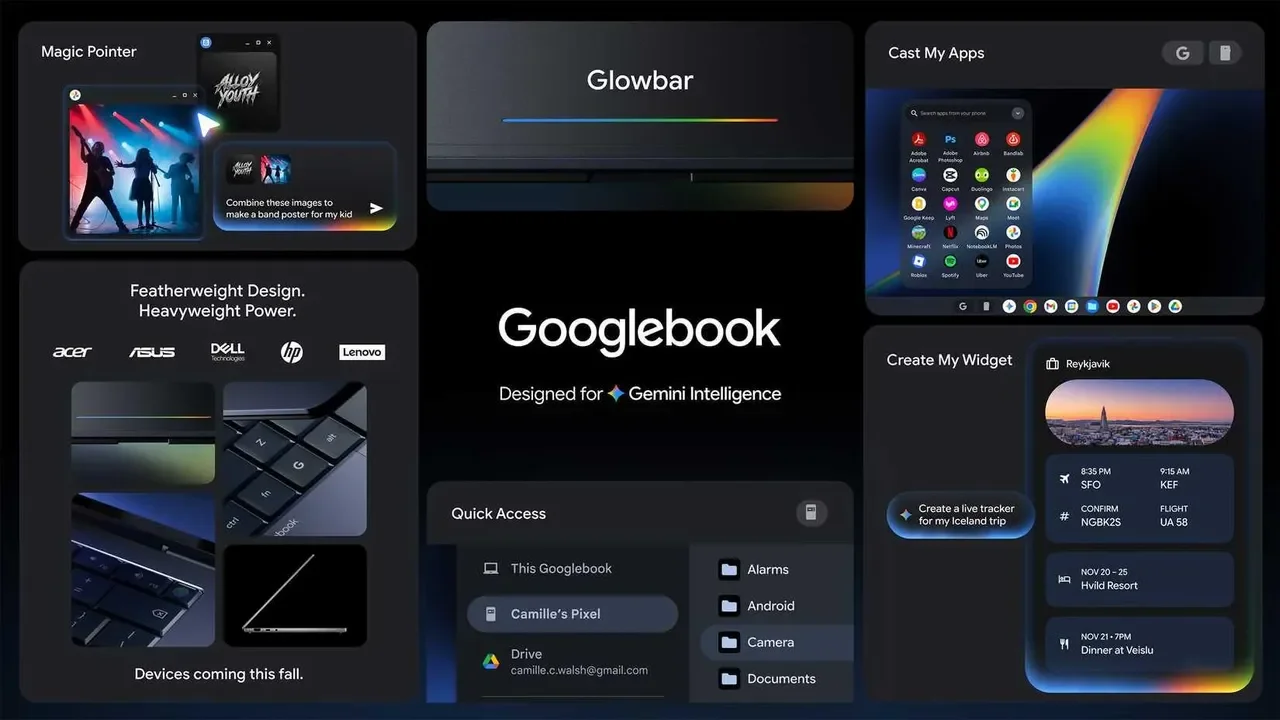
- Marking the end of a 15-year experiment, Google has retired the Chromebook to launch 'Googlebook,' a premium laptop category running on an AI-optimized Android kernel. This shift replaces the browser-as-OS model with a native, AI-first environment where Gemini is embedded at the system level, transforming the cursor into a proactive task agent.
Strategic Deep-Dive
In a move that signals the definitive end of the ’thin-client’ era, Google has officially retired the Chromebook brand after 15 years of market presence. The announcement, made during Monday’s high-stakes ‘Android Show,’ introduces the ‘Googlebook’—a premium hardware category that replaces the aging ChromeOS with a specialized, AI-native version of Android. This pivot represents Google’s admission that a web browser, while revolutionary in 2011, is fundamentally insufficient to serve as the foundation for the next generation of on-device generative AI experiences.
From Browser-as-OS to AI-as-OS
The Googlebook is not just a branding exercise; it is a total architectural realignment. By moving away from the sandboxed limitations of a browser-based environment, Google has been able to embed its Gemini AI directly into the operating system’s kernel. This deep integration allows the AI to access system-level APIs, local file structures, and hardware-accelerated NPU (Neural Processing Unit) resources with zero latency.
Unlike the Chromebooks of old, which were often relegated to education and budget sectors, the Googlebook is designed to compete in the high-end, premium segment currently dominated by Apple’s M-series MacBooks. This hardware shift is necessary to support the local inference requirements of modern LLMs, moving the workload from the cloud back to the device to ensure privacy and responsiveness.
The ‘Cursor-as-Agent’ Revolution in HCI
The most provocative feature of the Googlebook is its reimagining of Human-Computer Interaction (HCI). Since the 1970s, the mouse cursor has been a passive pointer, a digital extension of the human finger. In the Googlebook environment, the cursor evolves into a proactive autonomous agent.
Powered by Gemini, the cursor analyzes the pixels and context beneath it in real-time. For example, hovering over a spreadsheet can trigger an immediate data visualization offer, or moving toward a calendar invite can prompt the agent to cross-reference your availability and draft a response before a single click is made. This transition from a reactive interface to a proactive agent transforms the operating system from a tool into a collaborator.
Strategic Implications for the Hardware Market
This pivot is a calculated gamble to reclaim the premium laptop market. By leveraging the vast Android app ecosystem and combining it with proprietary Tensor silicon and Gemini intelligence, Google is creating a vertically integrated stack that mimics Apple’s success but with a focus on ‘Agentic Computing.’ The death of the Chromebook marks a shift in market logic: a computer’s value is no longer measured by its connectivity to the web, but by the autonomy of its internal intelligence. As the Googlebook prepares for an autumn launch, it forces the entire industry—including Microsoft and Apple—to rethink whether their current operating systems are merely legacy shells waiting to be replaced by AI-first architectures.
For Google, the Googlebook represents a second chance to define what a personal computer should be in the age of artificial intelligence.