🔍 Executive Summary
- In a decisive move for aerospace hardware sovereignty, Hanwha Semitech is set to deploy its advanced Fan-Out Panel-Level Packaging (FO-PLP) solutions for SpaceX networking chips by 2H 2026.
Strategic Deep-Dive
Internal sourcing and supply chain indicators confirm that Hanwha Semitech has reached a critical strategic milestone by securing a high-stakes supply agreement for its Fan-Out Panel-Level Packaging (FO-PLP) equipment. Targeted for deployment in the second half of 2026, these advanced systems are earmarked for the production of sophisticated networking chips designed for SpaceX. As a Senior Data Architect, I recognize this move as a significant shift in the semiconductor packaging hierarchy, where the transition from circular wafers to massive rectangular panels represents a quantum leap in manufacturing throughput.
FO-PLP technology allows for the packaging of multiple dies on a substrate that is significantly larger than a standard 300mm wafer, effectively tripling or quadrupling the number of chips processed in a single cycle. For an entity like SpaceX, which is aggressively expanding its Starlink constellation and requires high-reliability, low-latency networking hardware, the economic and technical advantages of FO-PLP are indispensable.
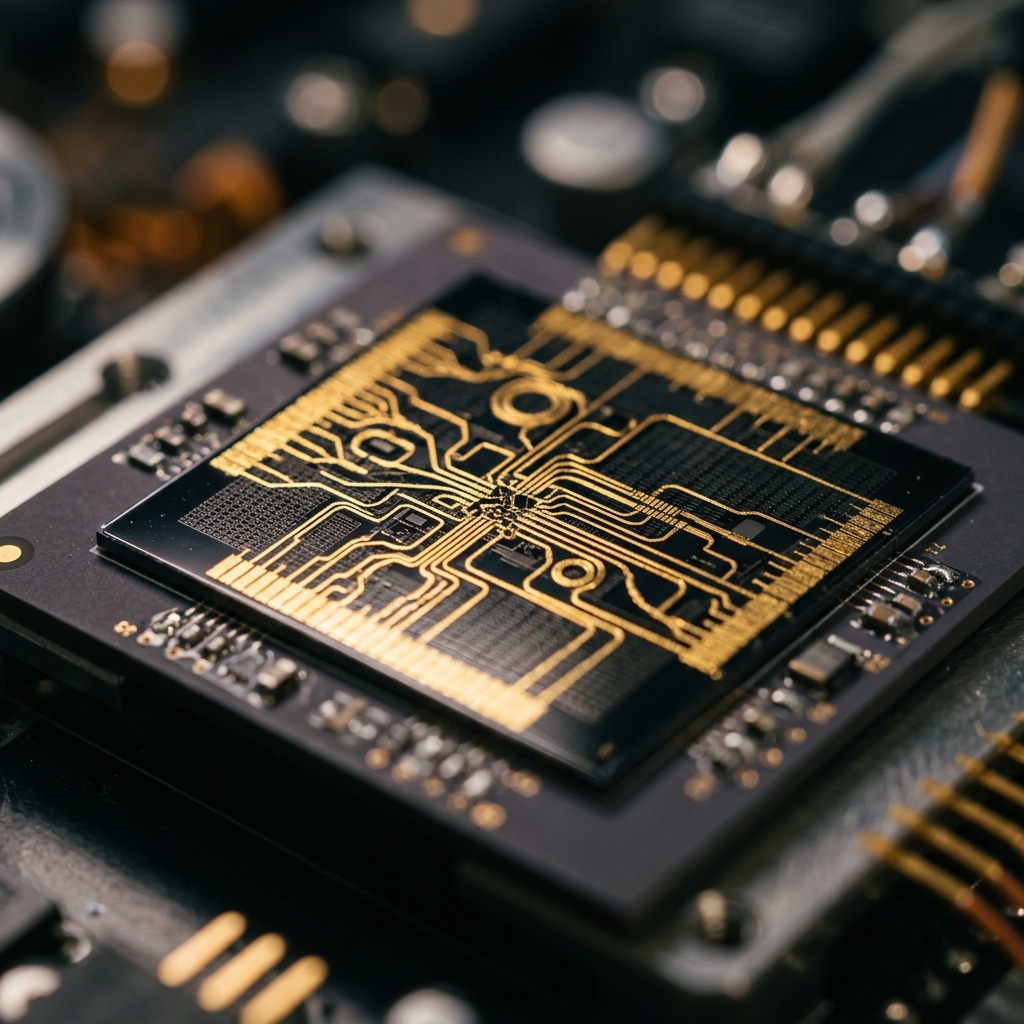
From an investigative perspective, the technical hurdles associated with FO-PLP—specifically substrate warpage and the precision required for high-density Redistribution Layers (RDL)—have historically kept this technology out of the reach of all but the most advanced manufacturers. Hanwha Semitech’s ability to stabilize this process for aerospace-grade silicon suggests a level of engineering maturity that rivals global leaders in the OSAT (Outsourced Semiconductor Assembly and Test) sector. The chips produced using this equipment will likely integrate various RF components and digital logic into a single, compact package, which is essential for the weight and power constraints of satellite hardware.
This integration is not merely a manufacturing win but a geopolitical statement, signaling that South Korean equipment providers are now moving beyond the supply of standardized tools into the realm of specialized, mission-critical infrastructure for the private space race.
Furthermore, the 2H 2026 timeline indicates that Hanwha Semitech has already moved past the prototyping phase and is currently in the validation stage for high-volume manufacturing (HVM). The strategic implications are vast: as Western tech giants look to diversify their supply chains away from traditional hubs, South Korea is positioning itself as a high-tech fortress capable of delivering next-generation packaging solutions. This partnership with SpaceX-linked production lines provides Hanwha Semitech with an elite reference point that will likely open doors to other aerospace and high-performance computing (HPC) contracts.
As we move closer to the 2026 launch window, the industry will be closely monitoring how Hanwha’s FO-PLP systems manage the thermal and mechanical stresses of networking chips that must operate in the extreme environments of orbit. This deal fundamentally reshapes the geography of advanced chip production, placing South Korean engineering at the heart of the global satellite communication infrastructure.