🔍 Executive Summary
- Major technology giants, including Apple and HP, are signaling a potential shift away from Samsung’s manufacturing ecosystem as escalating labor disputes raise existential concerns regarding production continuity and long-term procurement reliability.
Strategic Deep-Dive
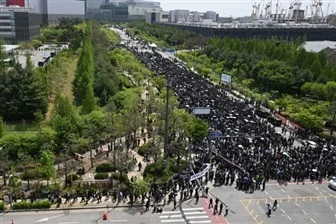
The escalating labor crisis at Samsung Electronics has transcended the boundaries of internal corporate friction, emerging as a significant systemic risk for the global technology supply chain. According to high-level industry reports from DigiTimes, premier clients such as Apple and HP have initiated formal assessments of their reliance on Samsung’s manufacturing ecosystem. These warnings represent a pivotal shift in the strategic calculus of global hardware vendors who have historically relied on Samsung for its unparalleled scale and technical precision.
The ’ecosystem exit’ warnings issued by these giants underscore the fragility of concentrated procurement strategies in an era where labor stability is increasingly viewed as a critical component of operational resilience. From an analyst’s perspective, this suggests that Samsung’s greatest strength—its vertical integration—is now being re-evaluated as a potential liability due to social instability.
As mediation efforts resume between Samsung’s management and its labor unions, the stakes for the broader industry have never been higher. The ripple effects of potential production halts are already being felt across the semiconductor and display sectors, with suppliers and trade groups expressing deep concern over procurement stability. For companies like Apple and HP, any interruption in the supply of critical components—ranging from advanced memory chips to sophisticated display panels—could result in catastrophic delays for upcoming product launches.
This has forced procurement officers to look toward diversified sourcing, potentially favoring competitors like TSMC or Micron if Samsung cannot guarantee a disruption-free production environment. The resumption of talks is a positive sign, but the underlying tension remains a potent threat to the just-in-time manufacturing models that define the modern tech industry.
Beyond immediate logistics, the dispute is eroding investor confidence on a global scale. Institutional investors are increasingly weighing labor relations as a core component of ESG (Environmental, Social, and Governance) risk, and the current impasse suggests a vulnerability in Samsung’s operational continuity. The broader techno-economic implications are profound; if the world’s leading integrated device manufacturer fails to maintain labor harmony, it could signal a shift toward more fragmented and localized supply chains.
Long-term forecasts suggest that if Samsung does not resolve these structural labor issues, it may accelerate the migration of high-end manufacturing to competing foundries and memory providers. This would not only diminish Samsung’s market share but also reshape the competitive landscape of the entire hardware industry. The final outcome of these negotiations will likely set a global precedent for labor relations within the high-tech sector, determining how the industry balances labor rights with the relentless demands of a 24/7 global supply chain.