🔍 Executive Summary
- TSMC is doubling down on its Arizona expansion with a $20 billion allocation, banking on early operational profitability to offset critical bottlenecks in specialized labor, water rights, and long-term energy security.
Strategic Deep-Dive
Analysis: The High-Stakes Calculus of Fab 21
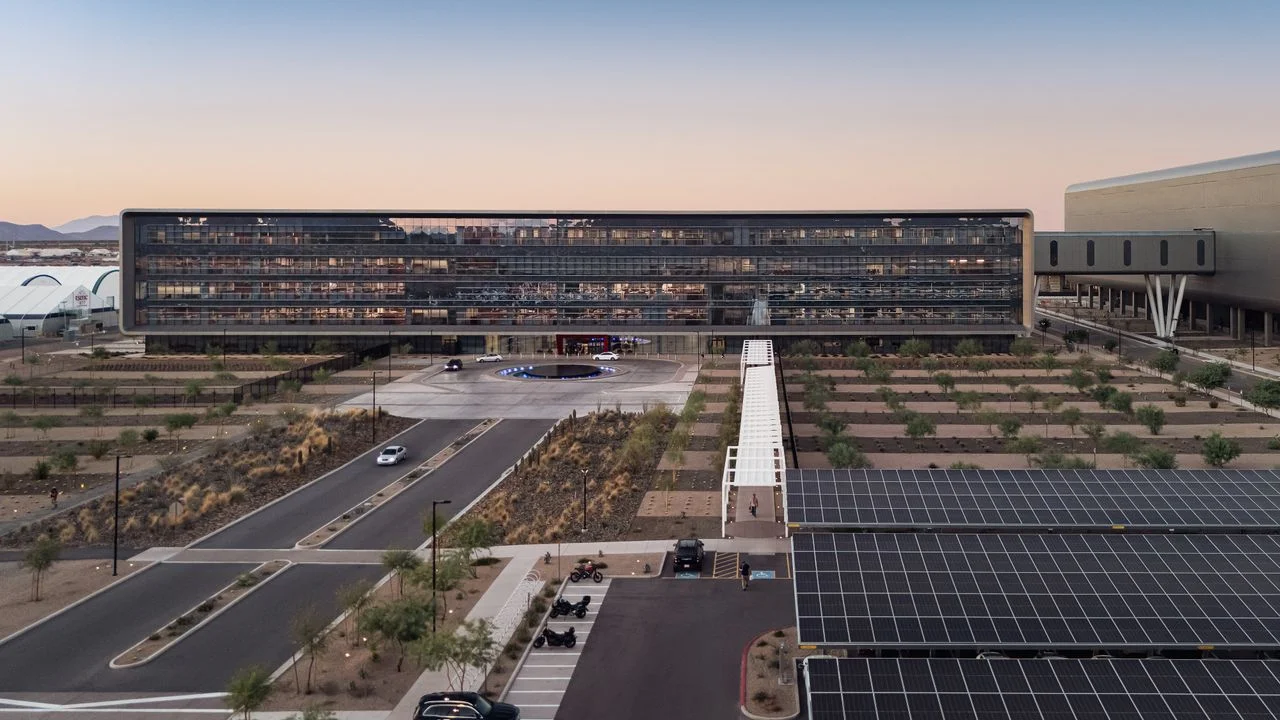
TSMC’s announcement of a $20 billion capital allocation for its Arizona operations marks a watershed moment in the decoupling of the global semiconductor supply chain. The project, centered around the high-profile Fab 21, has defied initial industry skepticism by reporting operational profitability within its first year. This achievement is a testament to TSMC’s relentless process optimization and the premium pricing tier commanded by U.S.-made silicon.
However, as a Global Tech Intelligence Analyst, I must look beyond the balance sheet to the structural frictions that threaten the project’s long-term viability. The Arizona expansion is a paradox: it is a financial success embedded within a logistical and environmental quagmire.
The Triple Threat: Labor, Water, and Power
The primary friction point remains the specialized labor market. TSMC requires a specific breed of lithography engineers and facility managers familiar with the idiosyncrasies of leading-edge nodes. The current U.S.
visa framework has proven too rigid to allow for the mass migration of Taiwanese specialists, creating a skills gap that cannot be filled by local hiring in the short term. This shortage is not merely about headcounts; it is about the institutional knowledge required to ramp up complex EUV (Extreme Ultraviolet) processes where every minute of downtime costs millions.
Environmental sustainability is the second pillar of concern. Arizona’s arid climate is fundamentally at odds with the water-intensive nature of 5nm and 3nm production. While TSMC has implemented advanced reclamation systems, the sheer volume of water required for chemical mechanical polishing (CMP) and wafer cleaning remains a strategic vulnerability.
The source indicates that while the current expansion moves forward, the long-term sustainability of the local water table is a looming variable that neither TSMC nor the state of Arizona has fully mitigated. Furthermore, the concern over the long-term power supply highlights the fragility of the energy grid in the face of massive industrial scaling. Semiconductor fabs are ‘always-on’ facilities; even a momentary voltage sag can result in the loss of entire wafer lots.
Strategic Implications for Global Logistics
The $20 billion commitment serves as a strategic hedge. By doubling down despite these shortages, TSMC is signaling its intent to remain the indispensable partner for U.S. tech giants like Apple and Nvidia, who are under increasing pressure to source chips domestically.
This move is less about manufacturing efficiency and more about geographic resilience. TSMC is betting that the federal subsidies under the CHIPS Act, combined with the premium associated with ‘Made in America’ silicon, will continue to provide a buffer against the higher operating costs. However, the success of this $20 billion gamble depends on a synergistic response from the U.S.
government—specifically in relaxing labor constraints and investing in localized utility infrastructure. Without these systemic adjustments, TSMC’s Arizona footprint may remain an expensive, albeit profitable, island in an industrial desert.