🔍 Executive Summary
- In a high-stakes legal revelation, Satya Nadella’s internal communications from April 2022 unveil a deep-seated fear: that Microsoft was on the verge of becoming a legacy entity like IBM. This existential dread catalyzed the most aggressive capital deployment in AI history, pivoting the company's entire infrastructure toward OpenAI’s neural networks to preempt a fatal platform shift.
Strategic Deep-Dive
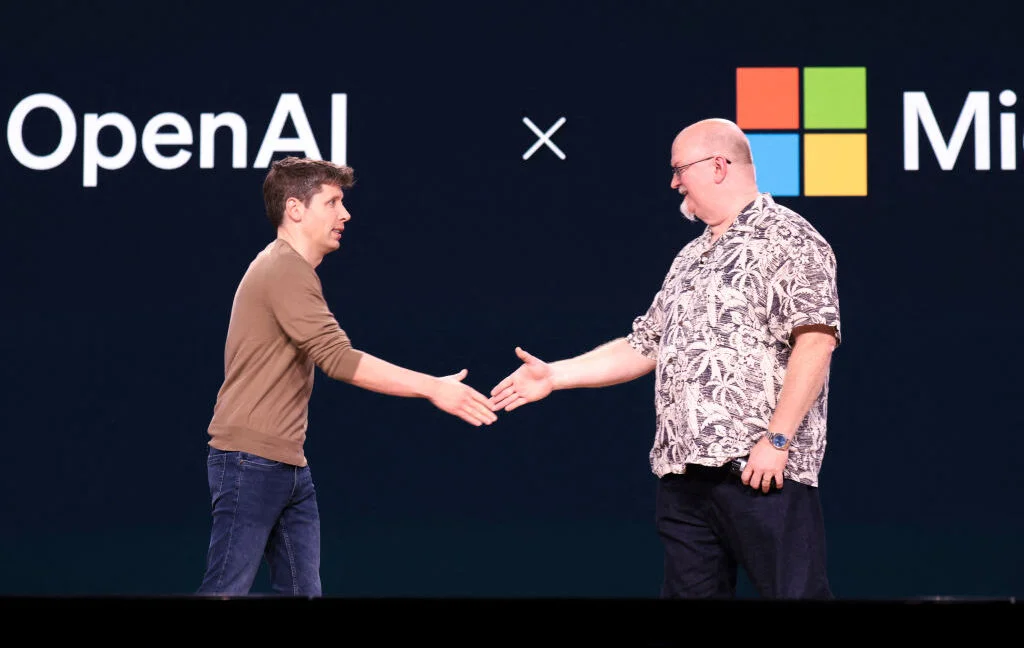
In the volatile theater of global technology, the line between dominance and obsolescence is razor-thin. Recently surfaced legal testimonies from Satya Nadella have provided a rare, unvarnished look into the psyche of a Big Tech leader navigating a paradigm shift. An internal email dated April 2022, produced by Elon Musk’s legal team during discovery, reveals that Nadella was haunted by a specific historical specter: the decline of IBM.
His primary fear was that Microsoft would be relegated to the status of a legacy vendor—a ‘Next IBM’—while the nimble OpenAI ascended as the ‘Next Microsoft,’ defining the architectural standards of the artificial intelligence era.
This isn’t merely corporate drama; it is a masterclass in strategic existentialism. For a Senior Investigative Journalist, the data paints a clear picture of a titan recognizing its own vulnerability to infrastructural inertia. Nadella’s testimony underscores that the multi-billion dollar partnership with OpenAI was not a standard venture investment, but a survivalist hedge against a total platform shift.
Historically, IBM failed to navigate the transition from mainframes to the client-server and cloud models with sufficient agility, losing its grip on the developer ecosystem. Nadella saw the same pattern emerging with Generative AI. If Microsoft didn’t control the foundational models, its Windows and Azure empires risked becoming mere pipes for someone else’s intelligence.
The ‘IBM Fear’ explains the aggressive integration of GPT models across the Microsoft stack. From a Data Architect’s perspective, this was a move to ensure that Microsoft’s data pipelines and enterprise API layers remained indispensable. By anchoring OpenAI’s compute requirements to the Azure cloud, Nadella effectively synchronized the fate of the two companies, preventing OpenAI from building a competitive infrastructure that could bypass Microsoft.
This strategy addresses the ‘Innovator’s Dilemma’ by cannibalizing existing product lines before a competitor can do it for them.
Furthermore, the context of the Elon Musk lawsuit highlights the friction between the original non-profit vision of AI and the brutal reality of corporate capital allocation. Nadella’s admission reveals that in the age of intelligence, capital is the ultimate weapon for incumbents to freeze the market. Microsoft’s investment bought more than just technology; it bought a seat at the table of the future, ensuring the company remains the primary architect of the digital world rather than a footnote in a history book.
For investors and analysts, this signals that the ‘AI Arms Race’ is driven less by the pursuit of new revenue and more by the terror of structural irrelevance. Nadella’s gamble suggests that the only way to escape the ‘IBM cycle’ is to embrace the very disruption that threatens you, regardless of the cost. The trial disclosures prove that Microsoft’s leadership viewed the AI transition not as an opportunity for growth, but as a fight for the company’s very soul, where the price of failure was a slow descent into legacy oblivion.