🔍 Executive Summary
- In response to the global AI boom and geopolitical volatility, Singapore is orchestrating a regional shift to transform ASEAN from a backend assembly provider into a resilient, high-value node in the semiconductor lifecycle.
Strategic Deep-Dive
The Strategic Evolution of Southeast Asia’s Silicon Landscape
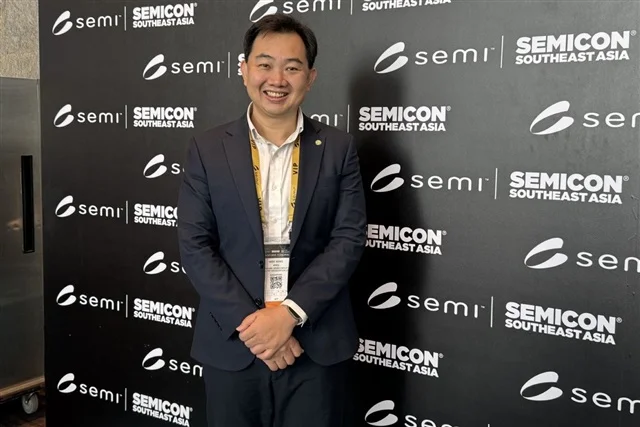
For half a century, Southeast Asia was the ’engine room’ of the semiconductor world—the place where chips went to be packaged, tested, and shipped in high volumes with low margins. Today, that narrative is being rewritten. Under the leadership of the Singapore Semiconductor Industry Association (SSIA), a new vision is emerging: the transformation of ASEAN into a ‘resilient hub’ that rivals the traditional powerhouses of East Asia.
This is not a mere rebranding exercise; it is a calculated response to the historic restructuring of global logistics. As AI reshapes the demand for specialized hardware, the geographical concentration of supply chains in the Taiwan Strait and mainland China has become a risk factor that multinational corporations can no longer ignore.
The Resiliency Play: Beyond Backend Manufacturing
Singapore’s push for an ASEAN alliance is grounded in the reality of the ‘China-plus-one’ strategy. Global manufacturers are looking for redundancy, and Southeast Asia offers a unique combination of established infrastructure and geopolitical neutrality. However, to move up the value chain, the region must evolve.
Singapore is positioning itself as the central architect, utilizing its premier status as a financial and logistical nexus to coordinate a regional specialization strategy. In this model, Malaysia expands its high-end OSAT (Outsourced Semiconductor Assembly and Test) capabilities, Vietnam attracts more front-end assembly, and Singapore focuses on advanced R&D and supply chain orchestration.
This shift is catalyzed by the specific needs of AI. Artificial intelligence chips require advanced packaging technologies, such as Chip-on-Wafer-on-Substrate (CoWoS), which demand high-precision environments and sophisticated logistics. By fostering a unified alliance, Singapore aims to offer a seamless, cross-border ecosystem that can handle these complex requirements.
The goal is to move from being a service provider to becoming a strategic partner in the semiconductor lifecycle, ensuring that even if one node in the chain is disrupted, the ASEAN network can absorb the shock and maintain output.
Geopolitics as a Growth Engine
Ultimately, Singapore is capitalizing on the global trend toward ‘friend-shoring.’ By creating a transparent and highly efficient regulatory environment within ASEAN, the alliance provides a compelling alternative for Western and Japanese firms looking to de-risk their operations. The transition from ‘backend base’ to ‘resilient hub’ signifies a move toward high-value activities, including semiconductor design and specialized material science. If successful, this regional alliance will not only secure Southeast Asia’s economic future but will also become a stabilizing force in the global tech ecosystem, providing a reliable buffer in an increasingly volatile world.
The focus is no longer just on how many chips can be produced, but on how securely they can be delivered to a world hungry for AI computing power.