🔍 Executive Summary
- As supply chains for Intel and AMD tighten, Chinese CPU vendors are rapidly seizing market share by positioning their hardware as the primary engine for the burgeoning AI inference sector.
Strategic Deep-Dive
The global competition for AI computing power is undergoing a fundamental structural realignment as the industry faces a dual-threat shortage of both high-end GPUs and server-grade CPUs. While the narrative for the past 24 months has been dominated by Nvidia’s supply chain challenges, a new critical bottleneck has emerged from the industry’s traditional titans, Intel and AMD. As these companies struggle with manufacturing yields and logistical constraints, Chinese CPU vendors are strategically aggressively filling the void.
This trend is driven by a profound shift in data center architecture: the transition from ‘AI Training’ dominance to the era of ‘AI Inference’ and autonomous agents. In inference tasks—where pre-trained models must deliver near-instantaneous responses to user queries—the CPU’s role is being re-evaluated. Unlike training, which requires massive parallelization, inference and agent-based workflows often demand high single-core performance and sophisticated branch prediction to manage complex logical sequences.
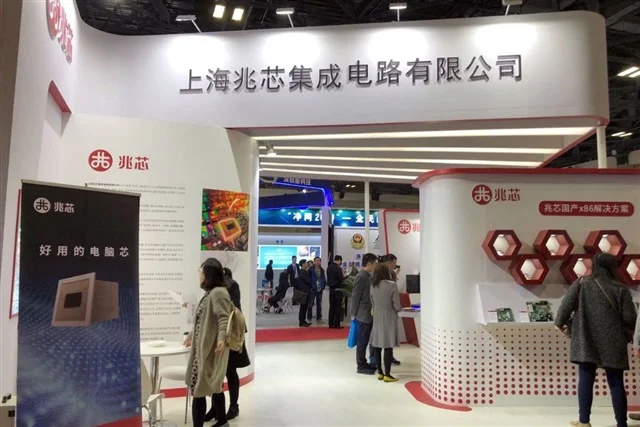
As a Senior Technology Data Architect, I have observed that the logic-heavy demands of AI agents are taxing the traditional CPU-GPU relationship. When Intel and AMD cannot deliver the required volume of processors, data center operators are increasingly open to alternative architectures. Chinese manufacturers, including players like Loongson (utilizing LoongArch) and Zhaoxin (leveraging x86 licenses or domestic alternatives), are capitalizing on this window of opportunity.
They are no longer merely producing low-cost clones; instead, they are integrating specialized AI instruction sets that enhance the efficiency of Large Language Model (LLM) inference tasks on the CPU level. This push is further bolstered by the ‘Xinchuang’ policy, China’s national initiative for IT innovation, which provides a captive domestic market for these vendors to iterate and improve their hardware at an accelerated pace. This domestic scaling provides the necessary volume to eventually challenge Western incumbents in emerging global markets where price and availability currently outweigh brand loyalty.
Investigative insights suggest that the current supply tightness from Intel and AMD is acting as a catalyst for Chinese semiconductor sovereignty. By seizing the surge in AI inference demand, these vendors are proving that their silicon can handle high-performance workloads in real-world data center environments. If the supply constraints from the United States and Europe persist through late 2026, the temporary adoption of Chinese CPUs could harden into long-term architectural commitments.
We are witnessing a moment where the CPU is transforming from a supporting component into a central protagonist of the AI narrative. The geopolitical implications are profound: as Chinese vendors solidify their grip on the inference market, they are building a resilient hardware ecosystem that is less vulnerable to external trade pressures. This strategic pivot ensures that China’s AI ambitions are not solely dependent on restricted GPU technology, but are instead supported by a robust and increasingly sophisticated domestic CPU foundation.