🔍 Executive Summary
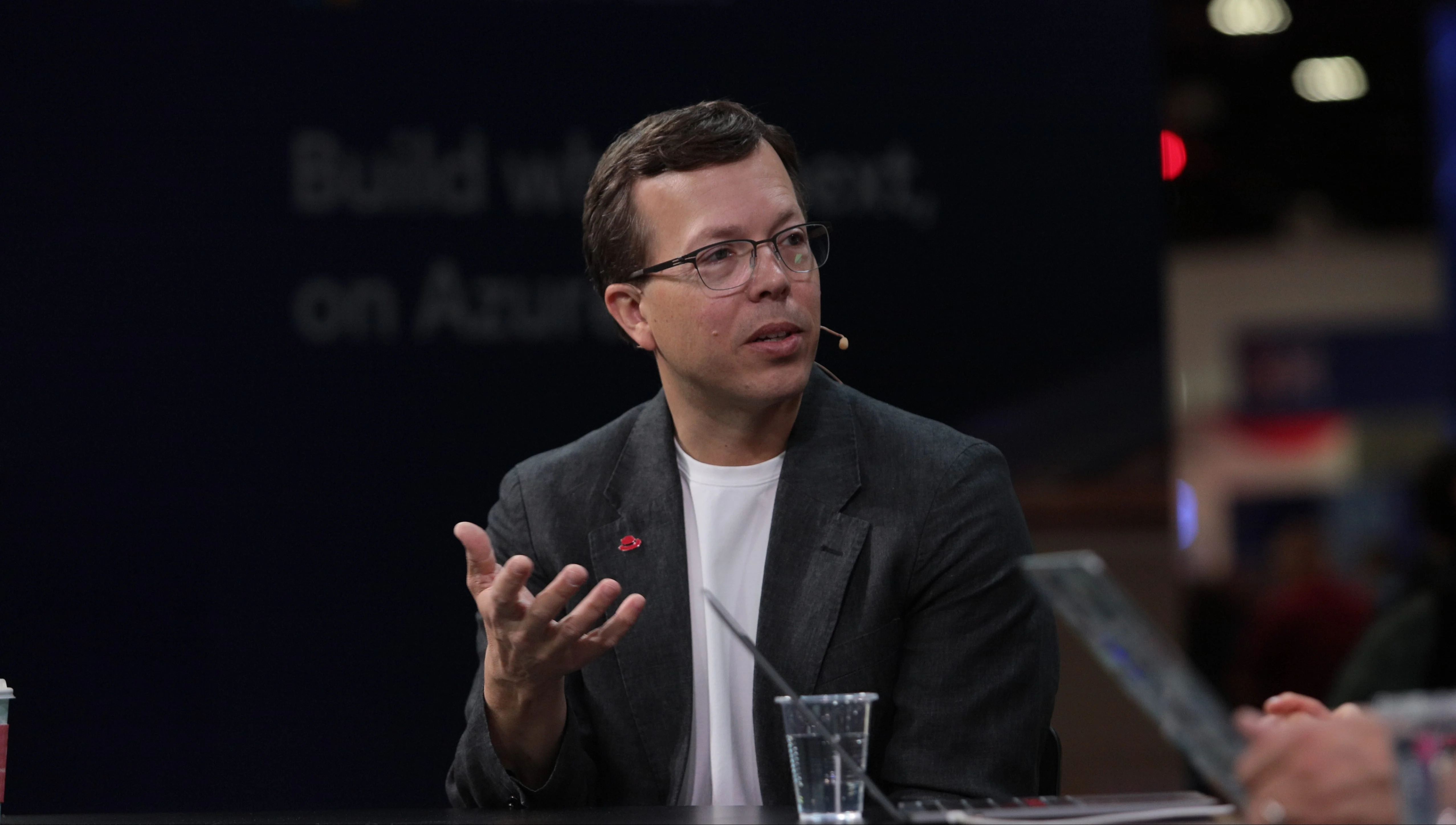
- The enterprise AI landscape in 2026 has arrived at a volatile crossroads where the intoxicating pull of generative AI ambition is being neutralized by a decade of systemic neglect in core IT infrastructure. During his keynote at the Red Hat Summit, CEO Matt Hicks delivered a stark investigative assessment: the industry is currently suffering from a massive collision between aggressive AI integration goals and the 'deferred maintenance' of legacy systems that has accumulated since the mid-2010s. This is not merely a budgetary hurdle; it is an architectural crisis that threatens the viability of...
Strategic Deep-Dive
The enterprise AI landscape in 2026 has arrived at a volatile crossroads where the intoxicating pull of generative AI ambition is being neutralized by a decade of systemic neglect in core IT infrastructure. During his keynote at the Red Hat Summit, CEO Matt Hicks delivered a stark investigative assessment: the industry is currently suffering from a massive collision between aggressive AI integration goals and the ‘deferred maintenance’ of legacy systems that has accumulated since the mid-2010s. This is not merely a budgetary hurdle; it is an architectural crisis that threatens the viability of production-grade AI.
For over ten years, organizations prioritized rapid feature delivery and cloud-native sprawl while allowing the underlying plumbing of their data centers and private clouds to stagnate. This technical debt has manifested as fragmented data silos, unpatched security vulnerabilities, and manual, brittle infrastructure lifecycles. Hicks argues that the industry’s obsession with the ‘AI gold rush’ has led many to forget that AI is fundamentally an infrastructure-heavy workload.
To move beyond the ’experimental hype’ phase and into scalable, agentic implementation, enterprises must undergo a painful but necessary refactoring of their backend environments.
Central to this modernization is the rise of Platform Engineering as the bridge between raw compute and AI-driven business value. Hicks emphasized that returning to ‘IT fundamentals’—the disciplined automation of infrastructure, the standardization of container orchestration, and the rigorous management of data flows—is the only path to survival. Legacy monolithic data pipelines are fundamentally incompatible with the dynamic, high-throughput requirements of Retrieval-Augmented Generation (RAG) and autonomous AI agents.
Without a modernized platform layer to abstract this complexity, the cost of managing AI at scale becomes unsustainable.
From a lead data architect’s perspective, this is a clarion call to address the structural integrity of the enterprise stack. The transition requires a strategic pivot: shifting resources away from peripheral AI pilots and toward the deep-tissue modernization of the operating environment. The goal is to create a seamless, automated infrastructure lifecycle that can support scalable inference without manual intervention.
As the industry moves into the ‘practical implementation’ era, the competitive winners will not be the organizations with the most sophisticated prompts, but those who have cleared their technical debt and established a robust, modernized infrastructure capable of orchestrating complex data and compute demands at scale. The decade-long holiday from infrastructure maintenance is officially over; the AI bill has come due, and it must be paid with rigorous platform engineering and architectural modernization.