🔍 Executive Summary
- Intel's partnership with Googlebook signals a strategic expansion of Google's Gemini AI ecosystem into the x86 domain, challenging ARM's recent dominance in the AI-native portable computing market.
Strategic Deep-Dive
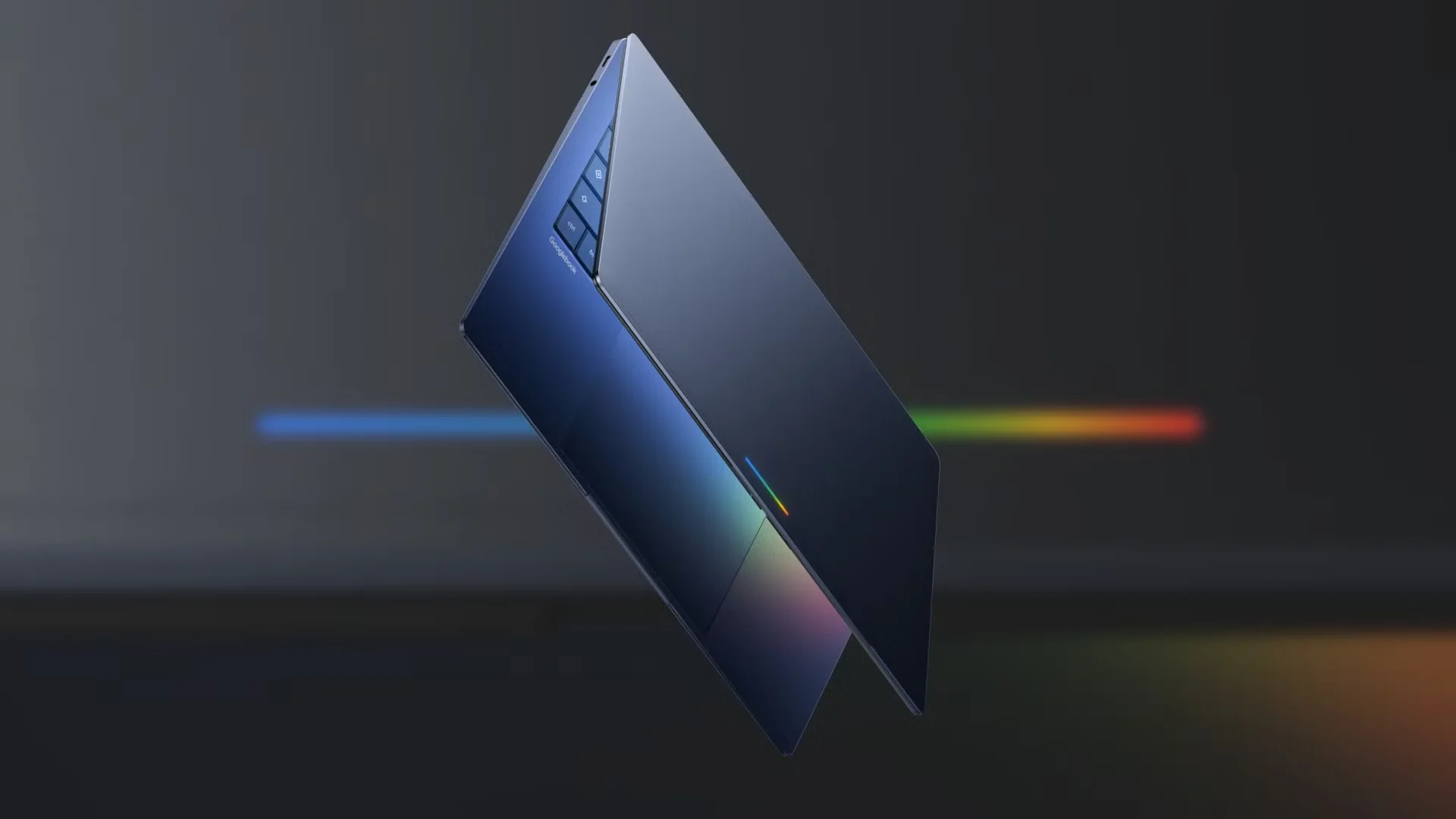
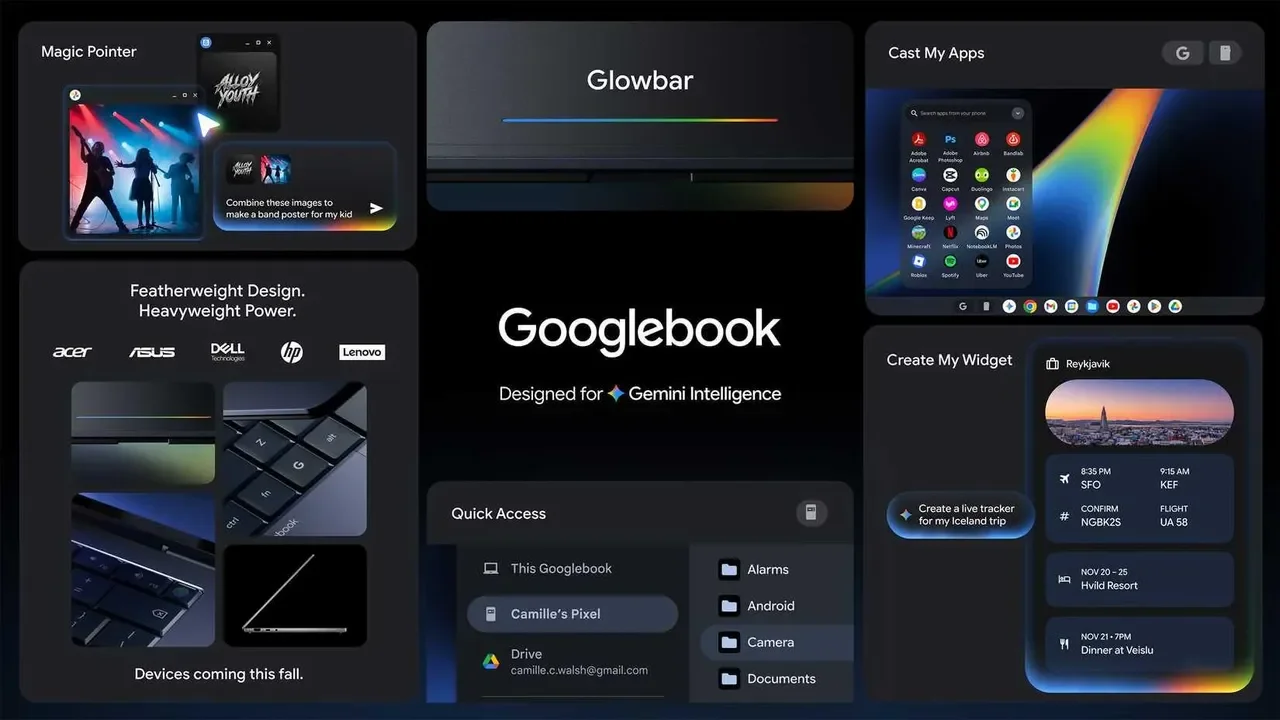
The formalization of the Intel and Googlebook partnership marks a significant milestone in the convergence of high-performance silicon and generative AI software. Intel has confirmed its pivotal role in powering the upcoming Googlebook lineup, a move that integrates Google’s Gemini AI ecosystem directly into the x86 architecture. This collaboration is a strategic counterweight to the rapid rise of ARM-based AI laptops, providing a robust hardware platform for Google’s ambitious new AI-centric operating system.
By leveraging Intel’s silicon roadmap, Google ensures that its Gemini models—ranging from the cloud-based Pro versions to the on-device Nano variant—have the necessary compute overhead to deliver seamless user experiences.
Technically, the partnership focuses on maximizing the throughput of Intel’s dedicated Neural Processing Units (NPUs). In an ‘AI-First’ OS, the NPU handles the heavy lifting for tasks such as real-time language translation, contextual search, and generative content creation, effectively offloading these processes from the CPU and GPU. This architectural efficiency is critical for maintaining battery life while providing the sustained performance required for modern AI workloads.
Unlike cloud-dependent services, the on-device Gemini integration allows for near-zero latency inference, a requirement for fluid user interface interactions and privacy-sensitive data handling. Intel’s x86 advantage also brings a wealth of legacy software compatibility to the table, potentially allowing the Googlebook to bridge the gap between a simple web-centric device and a full-fledged professional workstation.
Google’s multi-vendor strategy, which includes Qualcomm and MediaTek alongside Intel, indicates a desire to saturate the market across various price points and performance tiers. However, the Intel-powered models are expected to occupy the premium segment, where raw computational power and multi-threaded performance are paramount. This move also forces a shift in the competitive landscape for Windows-based OEMs.
As Googlebook evolves into a more capable AI platform, it challenges the traditional dominance of x86-Windows machines in the corporate and educational sectors.
Competitive Landscape Analysis: The success of this partnership will depend on how well Intel’s hardware can translate raw TOPS (Tera Operations Per Second) into tangible productivity gains within the Gemini environment. For data architects, the focus will be on memory bandwidth and local cache management, as generative AI models are notoriously memory-intensive. If Intel can provide a superior thermal envelope and efficiency profile compared to its ARM rivals, the Googlebook could become the definitive hardware standard for the next generation of AI-native computing.
This collaboration confirms that the future of laptops is being rewritten not by speed alone, but by the intelligence of the silicon-to-software handshake.