🔍 Executive Summary
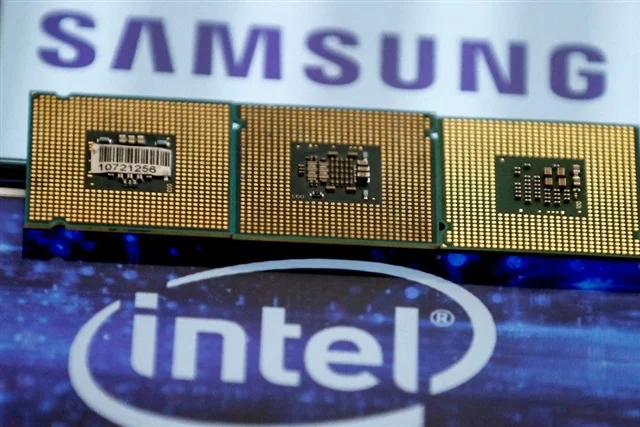
- Intel's preliminary agreement to manufacture chips for Apple, backed by aggressive U.S. government support, signals a major shift in the foundry landscape, placing immense pressure on Samsung Electronics' market ambitions.
Strategic Deep-Dive
The reported preliminary agreement between Intel and Apple for chip manufacturing is a watershed moment for the global semiconductor foundry industry. For years, the leading-edge foundry market has been a duopoly shared by TSMC and Samsung Electronics. However, Intel’s resurgence, fueled by the strategic imperatives of the U.S.
CHIPS Act and a renewed focus on the foundry business model, is now directly challenging that status quo. This development places Samsung Electronics under unprecedented pressure. While Samsung was the first to implement Gate-All-Around (GAA) transistor architecture, it has struggled to translate this technical milestone into a dominant market share in the mobile and high-performance computing (HPC) segments.
Intel’s move to secure Apple—the industry’s most coveted and demanding client—suggests that Intel’s 18A process node is maturing faster than many analysts anticipated. The concept of ‘Silicon Nationalism’ is at the heart of this shift. As geopolitical tensions in East Asia complicate the global supply chain, major technology firms like Apple are increasingly incentivized to diversify their manufacturing footprint toward U.S.-based fabs.
Intel, leaning heavily on government subsidies and political support from Washington, is positioning itself as the primary domestic alternative to Asian foundries. For Samsung, the counter-strategy must involve more than just technical specifications. To compete with an Intel that offers proximity to U.S.
design headquarters and favorable government backing, Samsung must accelerate its own 2nm and 1.4nm roadmaps while significantly improving yield consistency, which has been a recurring pain point. Furthermore, Samsung may need to pivot toward a more integrated ’turnkey’ model, combining its advanced memory technologies (HBM) with its foundry services to offer a unique value proposition that Intel cannot yet match. The Intel-Apple deal is not just a commercial transaction; it is a symptom of a broader structural realignment in the global semiconductor economy, where geographic sovereignty over manufacturing is becoming as important as the nanometers of the transistors themselves.
As Intel gains momentum, the battle for the #2 spot in the foundry rankings will likely hinge on who can best manage the intersection of cutting-edge lithography and geopolitical stability.