🔍 Executive Summary
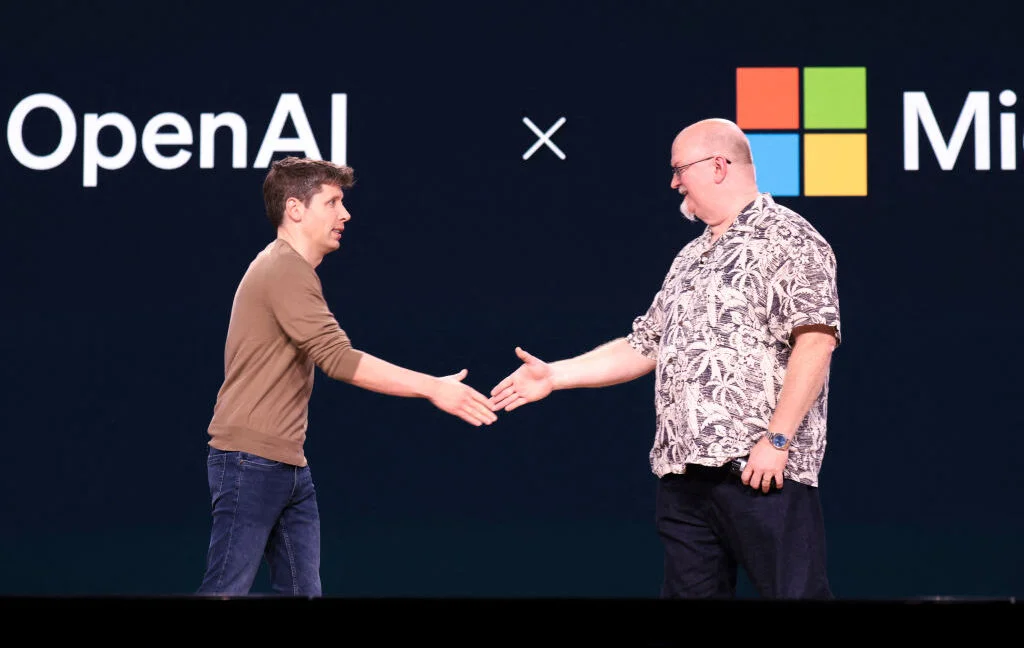
- In a landmark strategic shift, Microsoft and OpenAI have officially moved to a non-exclusive partnership model. While the core alliance is solidified through 2032, the removal of exclusivity allows OpenAI to diversify its infrastructure providers, signaling a new era of multi-cloud resilience and a mitigation of single-vendor dependency risks.
Strategic Deep-Dive
The formal transition of the Microsoft-OpenAI alliance from an exclusive marriage to a non-exclusive partnership marks a pivotal moment in the history of hyperscale computing. For years, the industry viewed the duo as a monolithic entity where OpenAI provided the algorithmic intelligence and Microsoft provided the specialized Azure silicon and networking fabric. However, the new agreement, which extends their collaborative roadmap to 2032, effectively deconstructs this exclusivity, allowing OpenAI to explore infrastructure alternatives beyond the Azure ecosystem.
This shift is not merely a legal formality; it is a profound architectural pivot. From a Data Systems Architect’s perspective, this enables OpenAI to implement a robust multi-cloud strategy that mitigates the inherent risks of single-vendor dependency.
One of the most significant technical drivers behind this move is the diversification of specialized AI hardware. While Microsoft has been aggressively developing its Azure Cobalt CPUs and Maia accelerators, OpenAI has simultaneously explored its own custom silicon initiatives. By removing the exclusivity clause, OpenAI can now benchmark and deploy its massive Large Language Models (LLMs) on diverse hardware targets, potentially leveraging Google’s TPUs or specialized inference chips from emerging providers.
This flexibility is critical for optimizing training costs and reducing latency for global deployments. Furthermore, the 2032 timeline suggests a long-term stability that allows both companies to plan multi-generational hardware and software cycles without the immediate threat of a complete split.
Regulatory pressure cannot be ignored in this context. Global antitrust authorities have been scrutinizing the ‘gatekeeper’ status of big tech firms, and the Microsoft-OpenAI deal was a primary target. By formalizing a non-exclusive relationship, Microsoft effectively lowers its regulatory profile while retaining its 49% economic interest and its role as the lead provider of high-performance computing (HPC) clusters.
For OpenAI, the freedom to ‘see other clouds’ provides a strategic lever in negotiations for compute pricing and credits. It also allows them to meet specific data residency requirements of enterprise customers who might have existing commitments to AWS or GCP. In the long run, this evolution will likely lead to a more modular AI stack where the model layer is increasingly decoupled from the underlying hardware, forcing cloud providers to compete on raw performance-per-watt and the efficiency of their networking interconnects rather than purely on exclusive software access.
The ripple effects of this decision will encourage a broader move toward interoperability standards across the entire generative AI ecosystem.