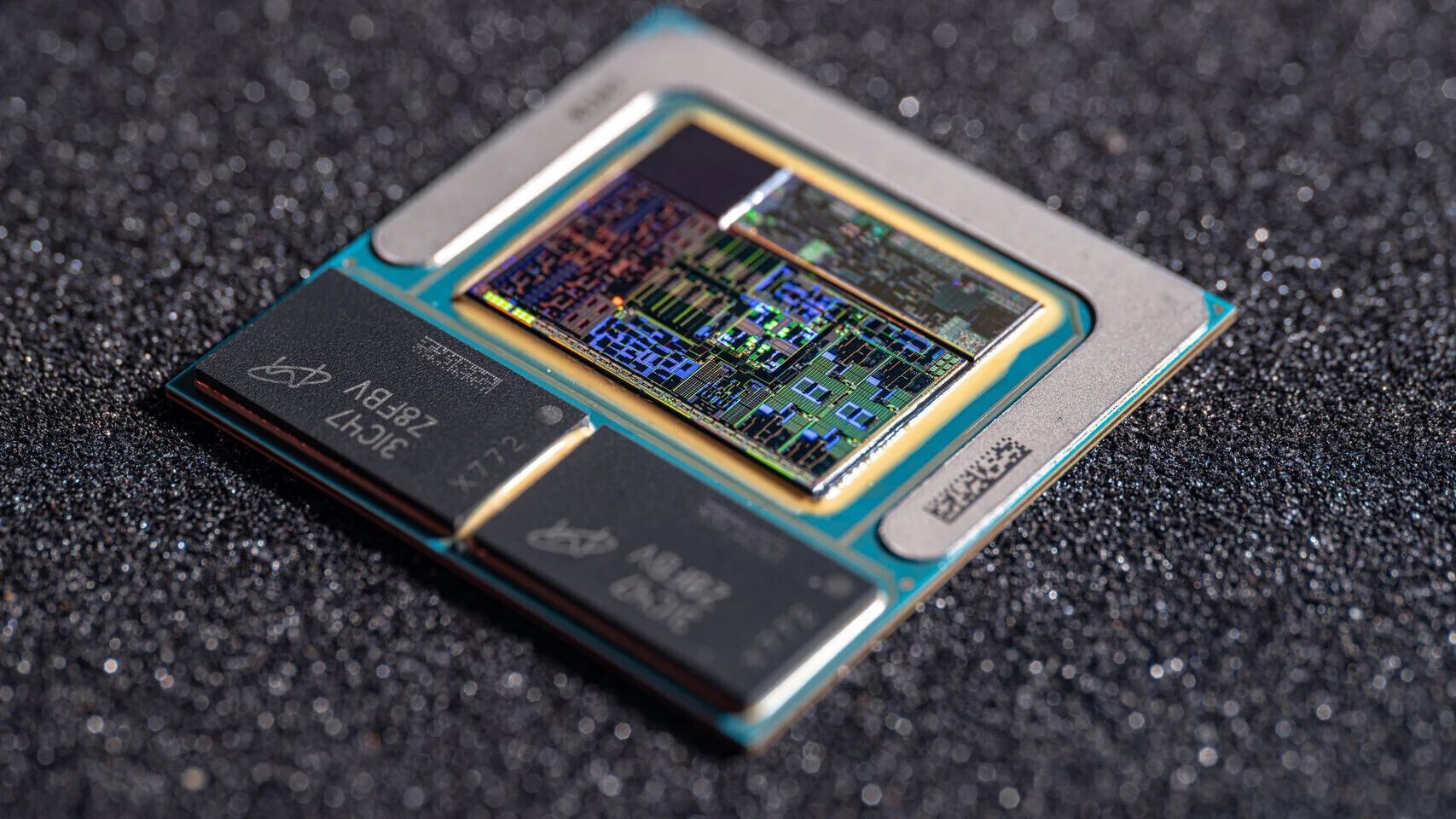
🔍 Executive Summary
- Intel is reportedly preparing a massive leap in integrated graphics performance with its upcoming 'Razor Lake-AX' processors. Leaked specifications indicate a flagship configuration featuring up to 32 Xe3P cores, utilizing the 'Battlemage' architecture scale to challenge entry-level discrete GPUs and establish a new benchmark for mobile computing power.
Strategic Deep-Dive
Intel’s upcoming ‘Razor Lake-AX’ processor family is poised to deliver a paradigm shift in the integrated graphics (iGPU) landscape, fundamentally altering how we perceive internal silicon capabilities. According to extensive data leaks sourced from industry insiders and reported by TechPowerUp and Overclock3D, Intel is moving away from the conservative scaling of its integrated graphics. The centerpiece of this revolution is the ‘Xe3’ architecture, but with a critical distinction: the emergence of the ‘Xe3P’ variant, which suggests a performance-optimized tier specifically designed to handle massive throughput requirements in a single-die or tiled configuration.
Prominent leaker Jaykihn has provided high-fidelity details regarding the potential SKUs within the Razor Lake-AX lineup. The leaks suggest that Intel is developing two primary iGPU configurations. While the mainstream version will likely feature 16 Xe3P cores, the flagship variant is rumored to boast a staggering 32 Xe3P cores.
To grasp the magnitude of this leap, one must compare it to the upcoming Panther Lake architecture, which is expected to top out at 12 Xe3 cores. By nearly tripling the core density in its flagship Razor Lake-AX variant, Intel is effectively moving from an integrated graphics mindset to a ‘discrete-on-die’ philosophy. This massive increase in execution units requires a complete rethink of internal interconnect fabric and memory bandwidth, as 32 cores will necessitate significant data feeding to avoid starvation during heavy computational loads.
The technical community has begun referring to this configuration as the ‘Big Battlemage’ scale integrated into a mobile/desktop chip. Battlemage, Intel’s next-generation discrete graphics architecture, was built to compete in the dedicated GPU space. Shrinking this level of scale into the Razor Lake-AX package indicates that Intel has achieved major breakthroughs in thermal management and power delivery.
The phrase associated with this leak—that Intel is ‘cooling something BIG’—points toward a sophisticated thermal solution, perhaps utilizing advanced heat spreader technology or AI-driven power gating to manage the heat generated by 32 high-performance cores during peak boost clocks. For consumers, this translates into a device that can handle high-frame-rate 1080p or even 1440p gaming without the thermal and physical bulk of an Nvidia or AMD discrete GPU.
Furthermore, the implications for the ‘Razor Lake-AX’ extend beyond gaming. The 32 Xe3P cores provide a formidable foundation for AI acceleration and creative workflows. With the industry shifting toward AI-integrated operating systems and applications, having 32 cores capable of hardware-accelerated matrix multiplication directly on the CPU package reduces latency and improves overall system responsiveness.
As we look toward the 2026 launch, this development suggests that the low-end discrete GPU market—currently occupied by mobile versions of the RTX 3050 or RX 6500—may face obsolescence. Intel is not just updating its graphics; it is attempting to eliminate the necessity for third-party entry-level hardware by providing a superior, integrated alternative. If the yield rates and thermal targets for Razor Lake-AX remain on track, Intel could finally realize its long-term vision of becoming a dominant force in the graphical ecosystem, leveraging its silicon manufacturing prowess to squeeze the competition out of the mobile and small-form-factor segments.