🔍 Executive Summary
- OpenAI is intensifying its partnership with Cerebras as the latter moves toward a US IPO, signaling a fundamental shift in the AI compute supply chain. By integrating Cerebras’s Wafer-Scale Engine (WSE) technology, OpenAI aims to bypass the interconnect bottlenecks of traditional GPU clusters. This move provides OpenAI with critical leverage against NVIDIA while addressing the financial and operational pressures stemming from ongoing legal disputes with Elon Musk.
Strategic Deep-Dive
The deepening alliance between OpenAI and Cerebras Systems has transitioned from a quiet collaboration to a centerpiece of OpenAI’s supply chain restructuring strategy, particularly as Cerebras prepares for its high-profile IPO in the United States. From a market intelligence perspective, OpenAI is playing the ‘Cerebras card’ to create a credible alternative to NVIDIA’s market hegemony. By fostering a secondary hardware ecosystem, OpenAI is not just securing capacity; it is fundamentally altering the power dynamics of the AI hardware industry.
The strategic necessity of this move is underscored by the current scarcity and high TCO (Total Cost of Ownership) associated with NVIDIA’s Blackwell architecture, forcing top-tier AI labs to seek disruptive architectural alternatives.
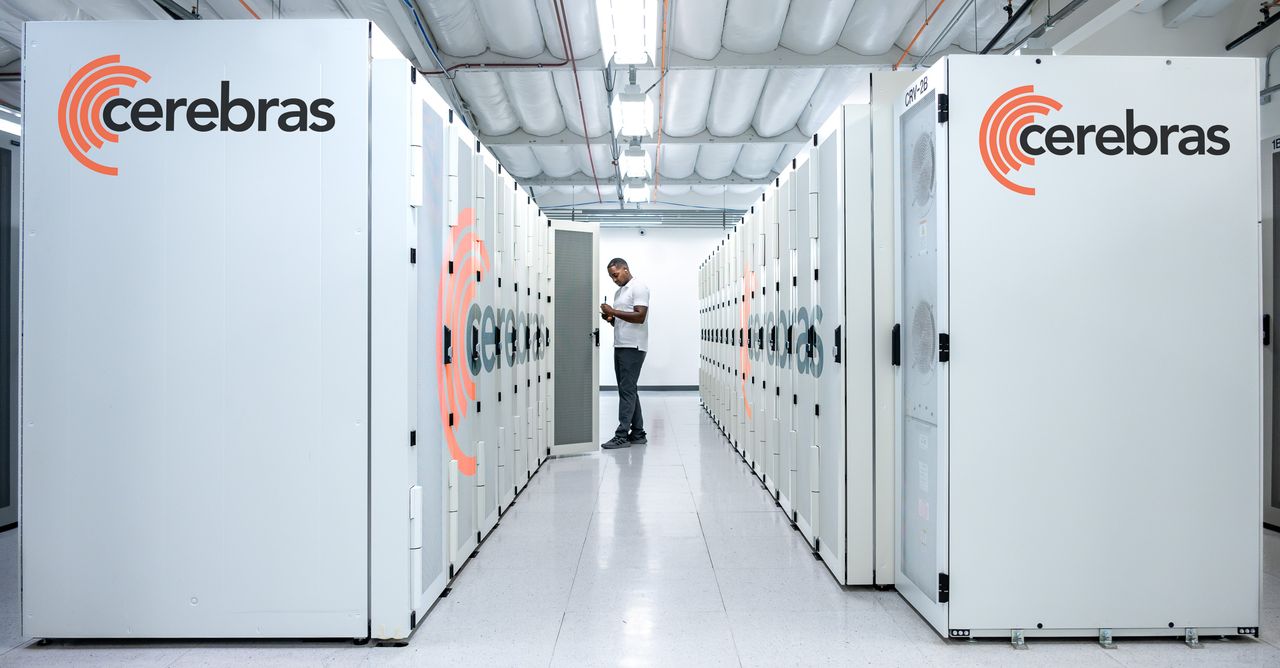
At the heart of this partnership is the Cerebras Wafer-Scale Engine (WSE). Unlike traditional GPU-based clusters that suffer from significant latency and bandwidth bottlenecks due to inter-chip communication (even with advanced interconnects like NVLink), the WSE-3 utilizes an entire silicon wafer for a single processor. This architecture provides unprecedented on-chip memory and interconnect bandwidth, making it uniquely suited for the massive parameter counts of next-generation generative AI models.
For OpenAI, integrating WSE clusters offers a path to faster iteration cycles for its research teams, potentially shaving months off the training time for successors to GPT-4.
The timing of this public endorsement is also deeply intertwined with OpenAI’s external pressures. The ongoing legal dispute with Elon Musk has cast a spotlight on OpenAI’s operational efficiency and its commercial transitions. In this climate, diversifying the compute supply chain serves as a defensive maneuver against accusations of resource mismanagement and provides a strategic hedge against supply shocks.
Furthermore, a successful Cerebras IPO would provide OpenAI with a well-capitalized hardware partner capable of sustaining the R&D required to challenge NVIDIA’s roadmap. This is a classic ‘co-opetition’ play: OpenAI remains one of NVIDIA’s largest customers while simultaneously providing the oxygen needed for a rival to flourish. This multi-vendor strategy ensures that OpenAI’s mission remains resilient against both market volatility and individual supplier failures.