🔍 Executive Summary
- In response to a cyclical downturn in consumer electronics, Taiwan's panel makers are repurposing large-scale glass production lines for FOPLP and CPO, targeting the high-growth AI semiconductor packaging market.
Strategic Deep-Dive
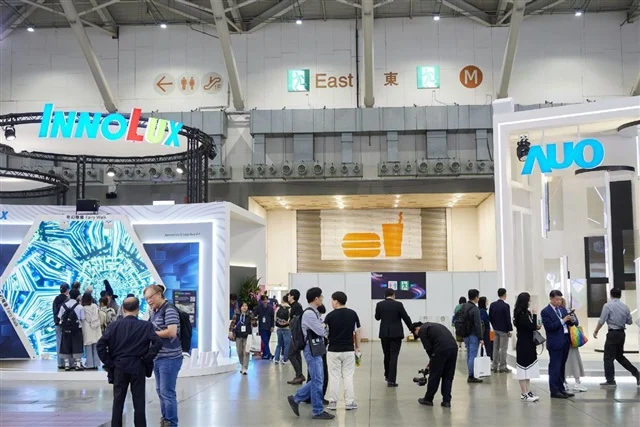
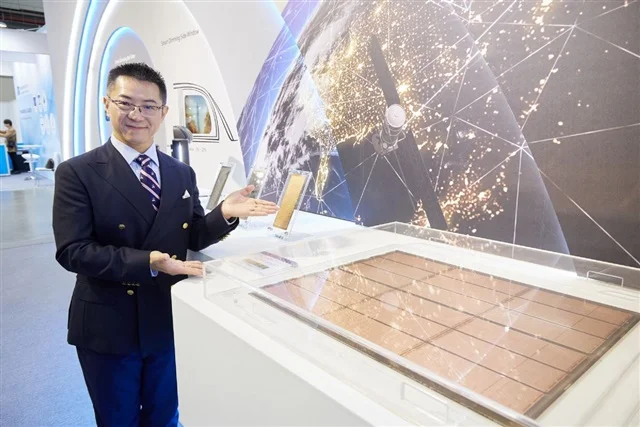
Taiwan’s display industry is undergoing a structural metamorphosis. Facing a softening consumer electronics market in April 2026, industry leaders such as AUO, Innolux, and HannStar are aggressively pivoting toward advanced semiconductor packaging technologies: Fan-Out Panel Level Packaging (FOPLP) and Co-Packaged Optics (CPO). This transition is a strategic masterstroke, repurposing decades of experience in large-scale glass substrate handling for the burgeoning AI hardware sector.
As the ‘pull-forward’ demand from the beginning of the year dissipates, the urgency to find high-margin revenue streams has never been higher.
The technical rationale for this pivot lies in the inherent advantages of glass substrates over traditional organic substrates in FOPLP. As AI chips grow larger and integrate more HBM stacks, the substrate’s dimensional stability becomes critical. Organic substrates often suffer from warping due to the high temperatures involved in the bonding process.
In contrast, the glass substrates used in panel manufacturing possess a low Coefficient of Thermal Expansion (CTE) and superior flatness, making them ideal for ultra-high-density interconnects. By utilizing their existing Gen 3.5 or even Gen 6 LCD lines, panel makers can achieve a significantly larger surface area for packaging compared to 300mm wafer-level processes, drastically reducing the cost-per-die and improving overall throughput for AI processors.
Furthermore, the move into CPO addresses one of the most significant technical challenges in modern data centers: the ‘power wall’ associated with high-speed electrical interconnects. As SerDes (Serializer/Deserializer) speeds exceed 112G or 224G, signal loss in traditional copper traces becomes prohibitive. CPO solves this by bringing optical interconnects directly onto the chip package, reducing parasitic capacitance and power consumption.
For Taiwanese panel makers, mastering the precision assembly required for CPO offers a path out of the commodity display business and into the heart of the AI infrastructure stack. The technical barriers are high—specifically mastering the alignment of optical fibers and ensuring long-term reliability of glass-based packages—but the payoff is a central role in the next generation of high-performance computing. This pivot effectively transforms ‘display companies’ into ‘advanced systems packaging’ firms, a necessary evolution in an era defined by AI-driven hardware demand.