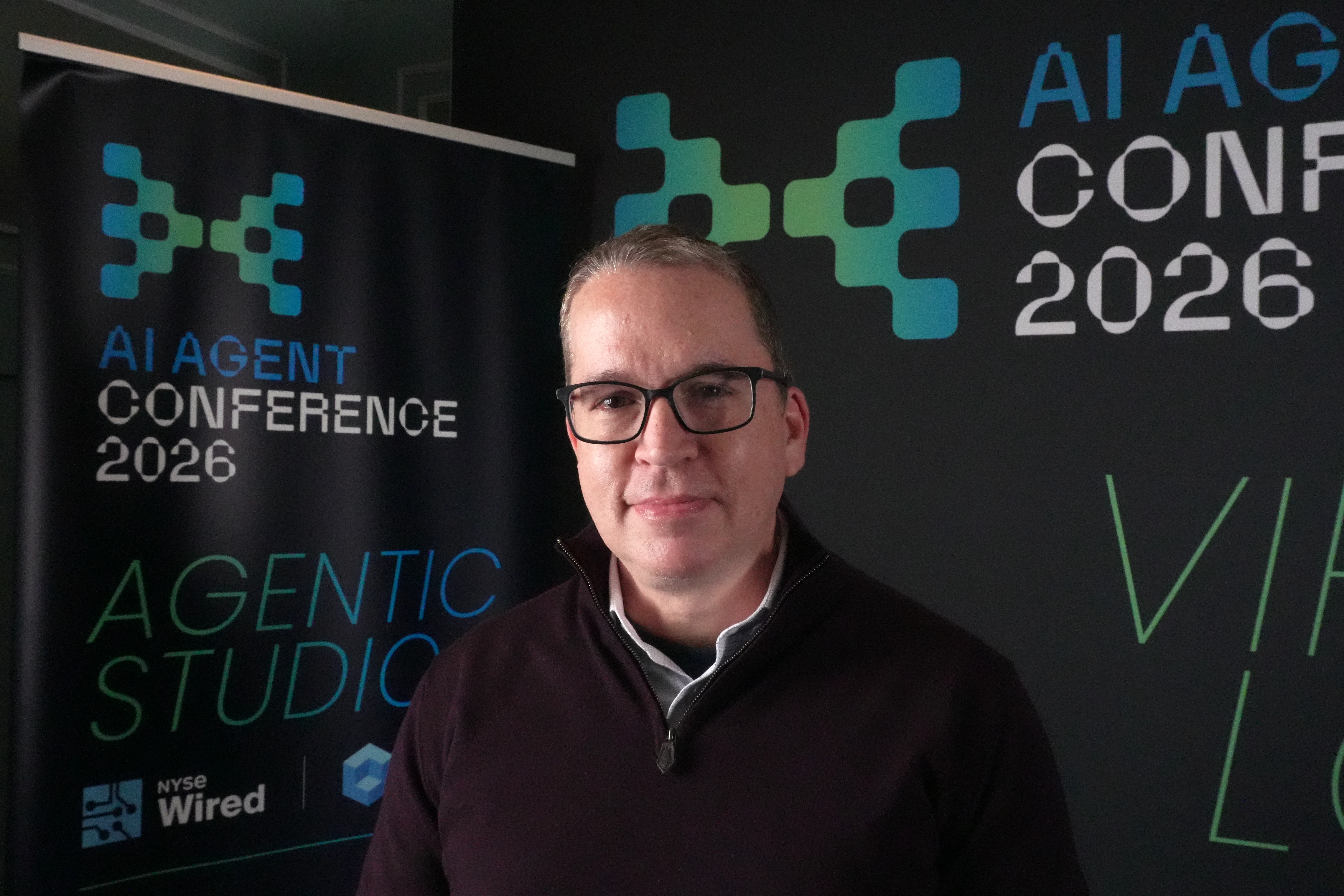
🔍 Executive Summary
- The enterprise artificial intelligence landscape is witnessing a crucial transition as 'agentic AI' moves from theoretical promise to production reality. However, insights gathered from theCUBE and NYSE Wired’s AI Agent Conference reveal that the transition is fraught with challenges that technology alone cannot solve. The primary takeaway from the first wave of deployment is that building capable agents is no longer the bottleneck; the real hurdle is providing these agents with the strategic grounding and organizational context necessary to function effectively within a business environment. ...
Strategic Deep-Dive
The enterprise artificial intelligence landscape is witnessing a crucial transition as ‘agentic AI’ moves from theoretical promise to production reality. However, insights gathered from theCUBE and NYSE Wired’s AI Agent Conference reveal that the transition is fraught with challenges that technology alone cannot solve. The primary takeaway from the first wave of deployment is that building capable agents is no longer the bottleneck; the real hurdle is providing these agents with the strategic grounding and organizational context necessary to function effectively within a business environment.
Even the most advanced AI systems stall when they lack a clear understanding of their operational parameters and the broader corporate strategy.
The ‘7 lessons’ identified during the conference highlight a critical shift in perspective. First, success requires bridging the ‘context gap’—the distance between a model’s general knowledge and a company’s specific operational data. Second, governance must be baked into the agentic workflow from day one to ensure safety.
Third, the focus must shift from ‘building’ to ‘grounding’—integrating AI into high-value workflows. Fourth, enterprises must prioritize data quality over raw compute power. Fifth, agentic autonomy requires clear limits of authority.
Sixth, the interoperability of multiple agents is essential for scaling. Seventh, the transition requires a move from generic investment to outcome-based strategic architecture.
As we navigate 2026, the defining problem of the agentic era has been transformed from a technical coding challenge into a strategic architectural one. For AI agents to deliver on their promise of autonomy, they must be deeply integrated into the enterprise stack, possessing access to real-time internal data and a structured governance framework. Technology leaders are now realizing that the value of an AI agent is not inherent in its underlying large language model, but in its ability to navigate the complexities of production-scale environments with precision and reliability.
The focus for the Enterprise AI Stack is thus moving toward ‘strategic grounding’—ensuring that every AI deployment has a direct, measurable link to business outcomes.