🔍 Executive Summary
- Toyota is deploying a $2 billion capital expenditure strategy to establish a high-tech assembly plant in Texas, leveraging data-driven site selection and advanced logistical synchronization to fortify its North American production resilience.
Strategic Deep-Dive
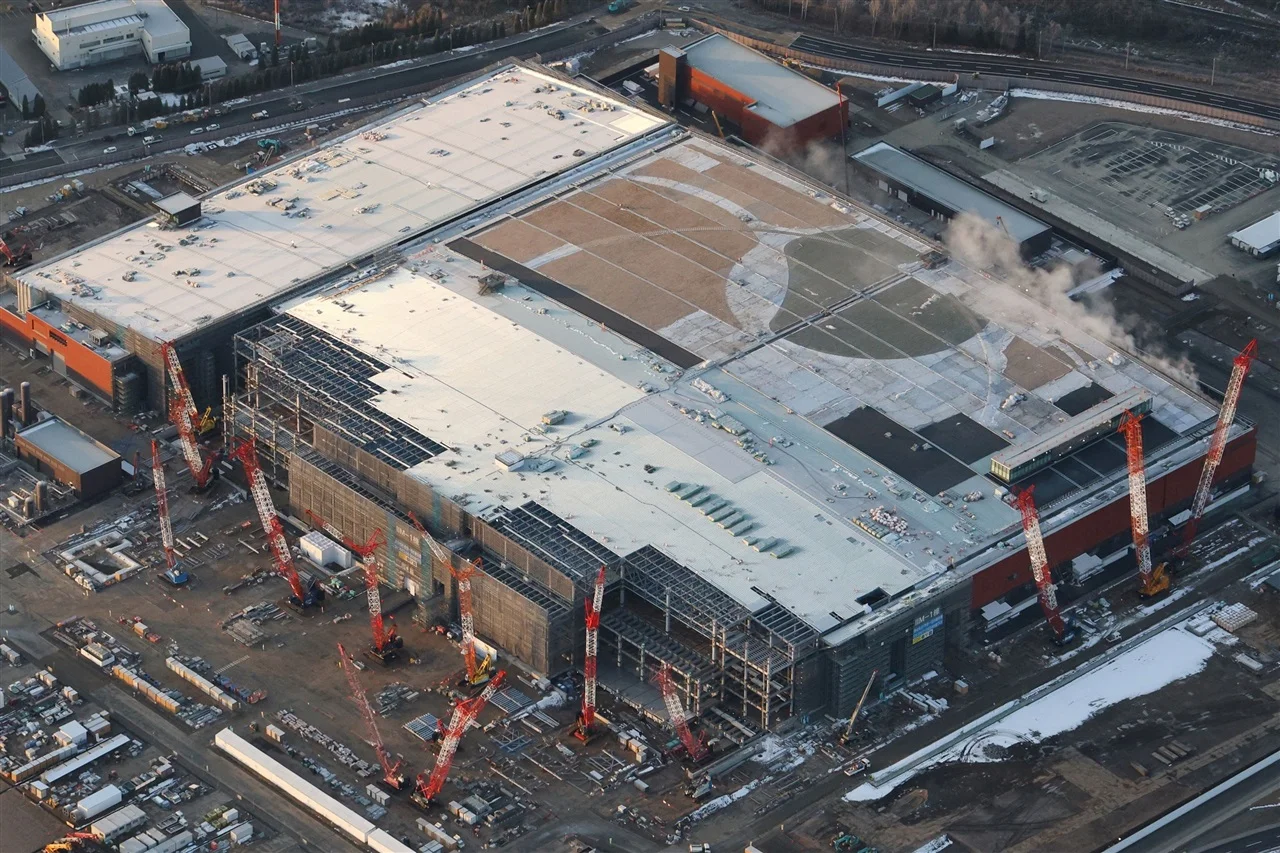
Toyota Motor Corporation has formally greenlit a $2 billion capital expenditure (CAPEX) project to construct a next-generation assembly plant in Texas, a move that underscores a shift toward a data-centric manufacturing architecture. From the perspective of a data analytics architect, this investment is a calculated play in Geographic Information System (GIS) optimization. By situating the facility within the Texas tech corridor, Toyota is not merely building a factory; it is integrating a massive node into its global Cyber-Physical System (CPS).
This site was selected using advanced predictive modeling that accounts for logistics latency, regional labor elasticity, and the proximity of tier-1 suppliers, ensuring that the supply chain remains synchronized via high-fidelity JIT (Just-In-Time) data flows.
The technical backbone of this $2 billion facility will be its reliance on Digital Twin technology. By creating a virtual mirror of the entire assembly line, Toyota’s engineers can perform real-time simulations to identify bottlenecks before they manifest in the physical world. This is complemented by an extensive IoT sensor grid integrated into the factory floor, which feeds into a centralized data lake for predictive maintenance analytics.
This approach shifts the maintenance paradigm from reactive to proactive, significantly reducing unplanned downtime and optimizing the Total Cost of Ownership (TCO) of the production machinery.
Furthermore, this Texas plant represents a strategic pivot toward ‘Market Localization 2.0.’ In an era of heightened geopolitical volatility and shifting trade tariffs, embedding high-capacity, flexible manufacturing within the primary consumer market is a hedge against international logistics disruptions. The facility is designed for modularity, allowing Toyota to rapidly reconfigure production lines between Internal Combustion Engine (ICE), Hybrid, and Electric Vehicle (EV) models based on real-time market demand signals processed through their regional analytics hub. This level of agility is critical as traditional legacy automakers face mounting pressure from agile, tech-driven entrants.
Economically, the multiplier effect of this investment will be profound. The data-driven synchronization of the Texas plant with its surrounding supplier ecosystem will catalyze the development of a high-tech automotive cluster, fostering innovation in smart-factory logistics and materials science. By leveraging Texas’s growing pool of technical talent and engineering expertise, Toyota is positioning itself to lead the industry in the integration of AI-driven assembly processes.
Ultimately, this $2 billion injection is a testament to Toyota’s commitment to the North American market, proving that the future of automotive manufacturing lies at the intersection of heavy industrial CAPEX and sophisticated data analytics.