🔍 Executive Summary
- Following its IPO on the Emerging Stock Board, QBit Semiconductor is leveraging its dominance in printer ICs to pivot toward the high-growth Edge AI ASIC market.
Strategic Deep-Dive
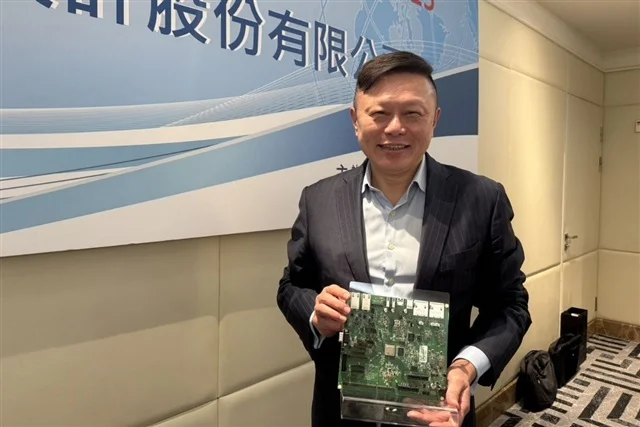
The listing of QBit Semiconductor on the Emerging Stock Board on May 15, 2026, marks a watershed moment for a company that has long operated in the shadows of the broader consumer electronics market. Under the seasoned leadership of Chairman Simon Shen, formerly an executive at the electronics manufacturing giant Kinpo, QBit is executing a high-stakes transition. The company is strategically moving from its traditional base in printer and copier ICs—a sector characterized by mature technology and oligopolistic stability—toward the volatile but exponentially more lucrative world of Edge AI ASICs (Application-Specific Integrated Circuits).
Historically, QBit has thrived by providing the ‘brains’ for high-end office automation tools. These chips require sophisticated image processing capabilities and high reliability, creating a technical moat that few competitors can breach. However, with the copier market entering a period of saturation, Shen’s vision is to repurpose QBit’s expertise in image signal processing (ISP) for the burgeoning AI-at-the-edge movement.
Edge AI involves moving the inferencing layer from centralized cloud servers directly onto terminal devices, such as industrial robots, smart security cameras, and intelligent home appliances. This requires a unique blend of low power consumption and high computational throughput, areas where QBit’s existing SoC (System-on-Chip) architecture shows significant promise.
The financial resources secured through the IPO are earmarked for a massive R&D expansion. Designing for Edge AI requires mastery of neural processing units (NPUs) and efficient memory subsystems. QBit aims to develop bespoke silicon that allows devices to perform complex tasks—like facial recognition or predictive maintenance—without the latency and privacy concerns inherent in cloud processing.
By targeting the ASIC market specifically, QBit is positioning itself as a flexible alternative to generic AI processors, offering customers optimized performance tailored to their specific hardware constraints.
This strategic pivot reflects a broader industry trend where specialized IC firms must innovate or face irrelevance. QBit’s advantage lies in its proven track record of handling high-volume production for complex imaging tasks. If the company can successfully integrate AI acceleration into its core silicon offerings, it stands to capture a significant share of the ‘intelligent device’ market.
For investors and industry analysts, QBit’s trajectory serves as a litmus test for whether legacy semiconductor firms can effectively bridge the gap between traditional imaging controllers and the next generation of AI-driven silicon. The success of this transition will depend on the firm’s ability to attract top-tier hardware engineers and forge deep relationships with system integrators looking for energy-efficient AI solutions beyond the standard offerings of larger incumbents.